Emperor of Nothing by Blake J Harris review – the definitive portrait of Larry David
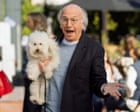
Larry David agreed to this authorised biography with a five-word email: “Oh Jesus. If we must.” As Blake J Harris tells it, the comedy writer has always been adept at finding reasons not to do something, or to stop doing it, even when there’s nothing to fall back on. As a peppery standup in 1970s New York, David was notorious for storming off stage if the audience displeased him. He walked out of his first TV job, on the Saturday Night Live clone Fridays, because “I stunk.” He twice quit Seinfeld, the sitcom he co-created in 1989, over meddling by NBC executives and fantasised about the network giving him an excuse to leave for good. In 1992, just before it became the biggest show in America, he told friends, “Honestly, I would rather spend a year in prison than do another season of Seinfeld. It would be peaceful. Nobody would make me write anything.” He was only half joking.
David’s career proves that it is in fact possible to be immensely, groundbreakingly successful without ever displaying great ambition. Growing up in Brooklyn amid a boisterous extended family, Lawrence Gene David loved baseball and tall tales but, oddly, not making people laugh. “I can’t recall him ever saying a funny thing,” remembers his older brother Ken. After a spell in the army reserve, he drifted through low-effort jobs – limo driver, bra salesman – and dropped out of acting school, partly because his classmate Jeff Goldblum showed him what a real actor looked like. “Most of the time I was just waiting for other people to stop talking so that I could start talking,” he admits.
Hence standup. In 1977, Variety magazine summed up David’s themes as “sexual fantasies, oriental yodeling, baldness, hypochondria, growing up with Jewish parents, college, porno movies, etc”. Much as they admired his integrity, his peers considered him too self-destructive and uncompromising to make it. One contemporary says that if you had polled New York’s standups, “Larry would have been voted Least Likely to Ever Accomplish Anything. Including by Larry himself!” After a few unhappy forays into television, David was already 41 when he began writing a pilot with the amiable, ultra-professional Jerry Seinfeld.
Authorised biographies tend to flatter their subjects, but then there doesn’t seem to be much dirt to dig. Compared with Harris’s last subject, the obnoxious virtual reality entrepreneur Palmer Luckey, David is a pretty solid guy who still has the close friends he made 50 years ago. There is no evidence here of those familiar funnyman archetypes, the sad clown and the secret monster. Harris was therefore able to access every important figure in his life, including fellow comedian Richard Lewis, his best friend, and Rob Reiner, whose company produced Seinfeld, before they died. Augmented by transcripts and memos, the quotes are so plentiful that the book often feels more like an oral history than a conventional biography, especially the Seinfeld section. If you want to read multi-page breakdowns of classic episodes like The Soup Nazi and The Chinese Restaurant (I do), then you’re in luck.
In the self-referential fourth season, Jerry pitches a sitcom, starring himself, that is “about nothing”. Seinfeld itself was never that but it was the first show to root itself in everyday conversations, altercations and humiliations, many of which David had been recording in notebooks for years. One of the pleasures of this book is encountering a funny incident in the 70s that resurfaces on screen 20 years later. “There are people in this world that funny things happen to,” says Seinfeld. “And he is one of them.” Jason Alexander once complained to David that his character George Costanza had an implausible storyline: nobody would behave like this in real life. “What are you talking about?” David replied. “This happened to me, and this is exactly what I did.”
Making Seinfeld was all-consuming (“I missed the whole 90s,” its star once joked) but a creative dream. David, the stubborn catastrophiser, and Seinfeld, the breezy optimist, would write episodes face-to-face across a double desk and almost never argue. What began as a cult show beneath the dangling sword of cancellation (“too Jewish” was a common critique) suddenly became a cultural juggernaut in season four as David mastered his two great skills: escalating a slim premise into comic delirium and dovetailing multiple storylines with a satisfying click. For a network sitcom, Seinfeld was radically unsentimental – “No hugging, no learning” was the writers’ credo. “I was shocked that they were letting us do this show,” David admits.
Another curious feature of David’s career is that he didn’t become recognisable until he was in his 50s. Even when he was the showrunner and chief writer of the biggest show on television, with more than 35 million viewers a week, he was effectively unknown. That phase ended in 1998 when the divisively downbeat Seinfeld finale coincided with the abject failure of his first movie, Sour Grapes. For want of a better idea, he decided to return to standup.
Curb Your Enthusiasm began as a one-hour HBO special, framing the routine with a mockumentary, but the frame proved funnier than the picture so Curb turned into a show about “Larry David” at war with the world. Like Seinfeld, it built complex stories out of minute observations and petty grievances but this time there was no script, just an outline to improvise around. “Your job, basically, is to push Larry David into a corner so that he comes bursting out even more Larry,” explains his friend Ted Danson, who played himself. As abrasive as David’s buzzsaw voice, Curb made Seinfeld look like Friends. Its success made David famous as his worst self. “I know people don’t realise it,” says Danson’s wife and Curb co-star Mary Steenburgen, “but Larry really is a sweetheart.”
This is the kind of biography you read for the work rather than the life. Fiercely private and averse to analysis, David doesn’t say much about his divorce in 2007 or Lewis’s death in 2024, nor money (he’s worth an estimated $400m), nor politics (he’s a ferocious Trump-basher). Most of the details about his childhood come from his brother Ken. His only hobby is golf. As Harris notes, David is as much an observer of his own life as a participant, turning everything into material.
after newsletter promotion
So what do we learn about Larry David? He’s a loyal friend, a loving father and a generous comedy partner. His comedy idols are Mel Brooks, Woody Allen and Phil Silvers’ character Sgt Bilko. As seen on Curb, he tends to start laughing when people are upset with him and gets absurdly indignant about minor injustices (though less so since becoming a father in 1994). He bypasses niceties – a “social assassin” in Curb-speak. “He’s comfortable being uncomfortable,” summarises Lewis. “He knows exactly what he wants to do. And he doesn’t need praise.”
Perhaps the key is David’s paradoxical self-esteem. According to Alexander, “At any given moment, he could say, ‘I’m the most worthless, pathetic no-talent in the world,’ and ‘Why is no one giving me my due? I should be doing much better than I’m doing!’ And it was all in the same breath.” Such a person either sinks without trace or, very occasionally, triumphs despite himself.
KioskNews shows a cleaned-up reading view extracted from the publisher’s page — the original always lives on their site, not ours.