War of words over Xinjiang erupts between Chinese and Turkish social media users
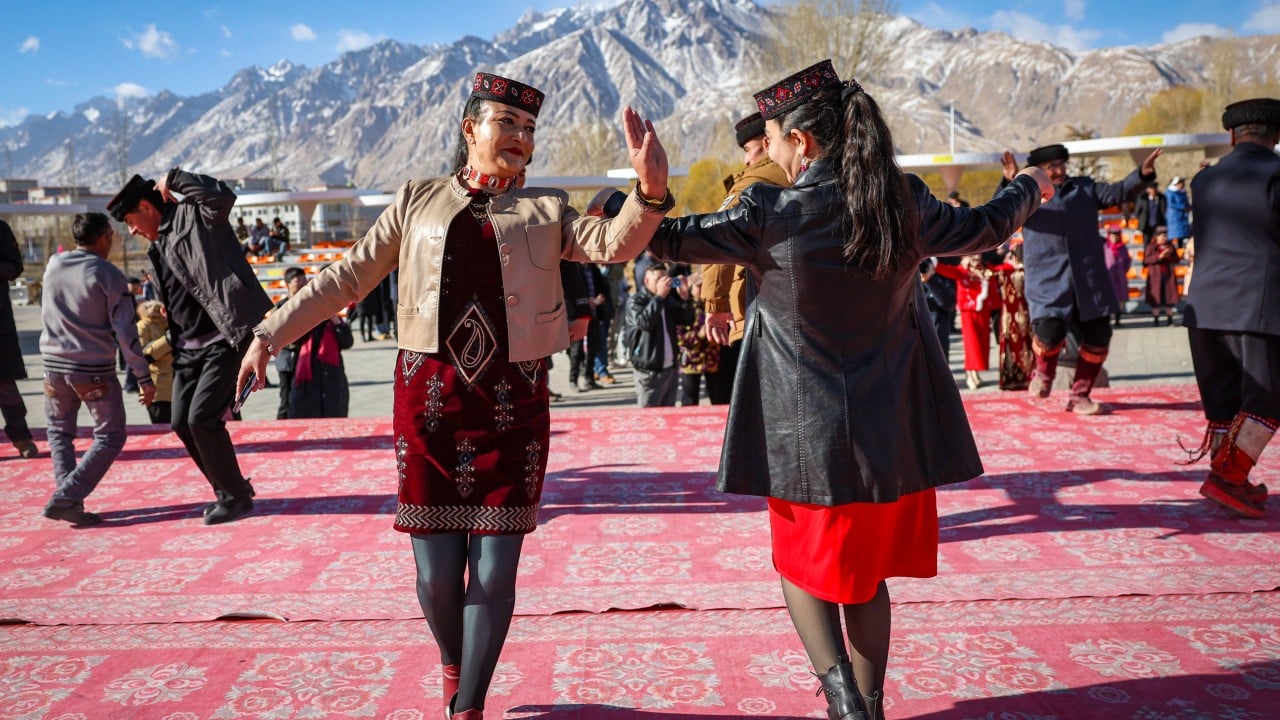
The debate over ethnic identity in Xinjiang has triggered an online clash between Chinese and Turkish social media users.
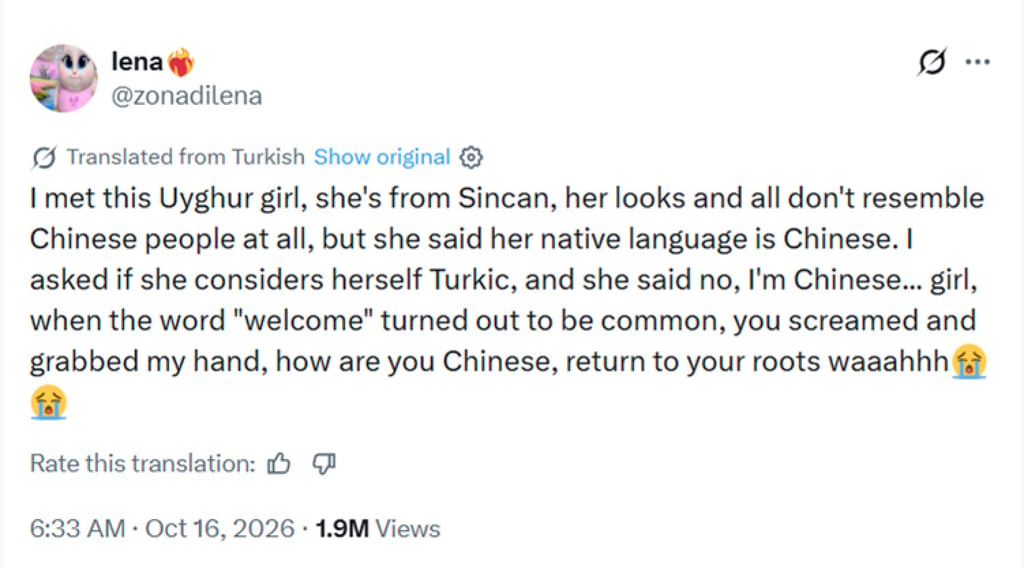
The row began earlier this month when a Turkish social media user recalled an encounter with a Uygur from Xinjiang, the region in China that is home to nearly 12 million mainly Muslim Turkic speakers.
The user wrote that the woman did not look Chinese, but when asked whether she considered herself Turkic, the woman responded: “No, I’m Chinese.” The user also called on her to “return to your roots”.
The post had gained over 2 million views by Friday afternoon before the account was apparently deleted.
The row quickly escalated into an online debate over identity, history and statehood that was amplified by artificial intelligence translation tools used by internet users on both sides to overcome the language barrier.
Tens of thousands of Uygurs are estimated to live in Turkey, making it their largest diaspora community outside Central Asia.
Xinjiang has become one of the most sensitive issues in the relationship between China and Turkey as Ankara pushed to bolster its influence among Turkic-speaking peoples, including the Uygurs.
Beijing has defended its policies in the region, saying they were designed to combat religious extremism, separatism and terrorism.
The row has been further inflamed by new Turkish textbooks that replace the term “Central Asia” with “Turkestan”, which covers parts of Xinjiang and the neighbouring provinces of Gansu and Qinghai.
On Friday, the semi-official China News Service republished a commentary that criticised this as a “distortion” of Chinese sovereignty.
The commentary was first published by social media account Little Compasses, or Xiao Yuan Gui, whose posts are often reposted by the United Front Work Department, the Communist Party body that oversees religious and ethnic affairs related to Xinjiang and Tibet.
Published under the headline “Turkestan? Pure Fantasy!”, the article rejected the idea that there were “historical origins, territorial affiliations or cultural connections” between Xinjiang and “fictitious ‘Turkestan’”.
It argued that linguistic connections should not be equated with territorial belonging and historical lineage. It also said that Turkestan had never been a unified state or sovereign entity, but was rather an umbrella term used to describe areas inhabited by nomadic Turkic tribes.
It said the change to the school textbooks was part of Ankara’s push to rewrite Eurasian history and export its pan-Turkic ambitions.
“The new Turkish textbooks’ forcible inclusion of China’s northwestern territory into a fake ‘Turkestan’ map is a crude distortion of China’s historical sovereignty and a deliberate rupture of the history of Eurasian cultural integration,” the article argued.
“In essence, it uses education to export geopolitical ambitions and engineer regional confrontation.”
Ties between Beijing and Ankara have improved in recent years as Turkey, which has grappled with some of the world’s highest inflation levels, has sought to bolster business and investment ties with China.
Beijing has repeatedly called for the two sides to consolidate mutual political trust and support each other’s core interests
In 2024, Turkish Foreign Minister Hakan Fidan visited Xinjiang, where the two sides pledged to strengthen cooperation on counterterrorism.
This call was echoed by Chinese President Xi Jinping when he met his Turkish counterpart Recep Tayyip Erdogan on the sidelines of the Shanghai Cooperation Organisation summit in Tianjin last year.
KioskNews shows a cleaned-up reading view extracted from the publisher’s page — the original always lives on their site, not ours.