38 Years Later, The Most Important Batman Story Of All Time Is Aging Like Milk

Jared is a writer, editor, and Communications Studies graduate who loves popular nerd culture (almost anything to do with Marvel, DC, Star Wars, or The Lord of the Rings) and the interactive storytelling medium. Jared's first console was the PS1, wherein he fell for Spider-Man, Spyro the Dragon, and Crash Bandicoot.
Considering what the character’s humble beginnings looked like in Detective Comics in 1940, Batman hasn’t aged all that well. You’d be mistaken for believing otherwise, as it’s taken an abundance of retcons to mold Batman across 86 years of DC Comics stories.
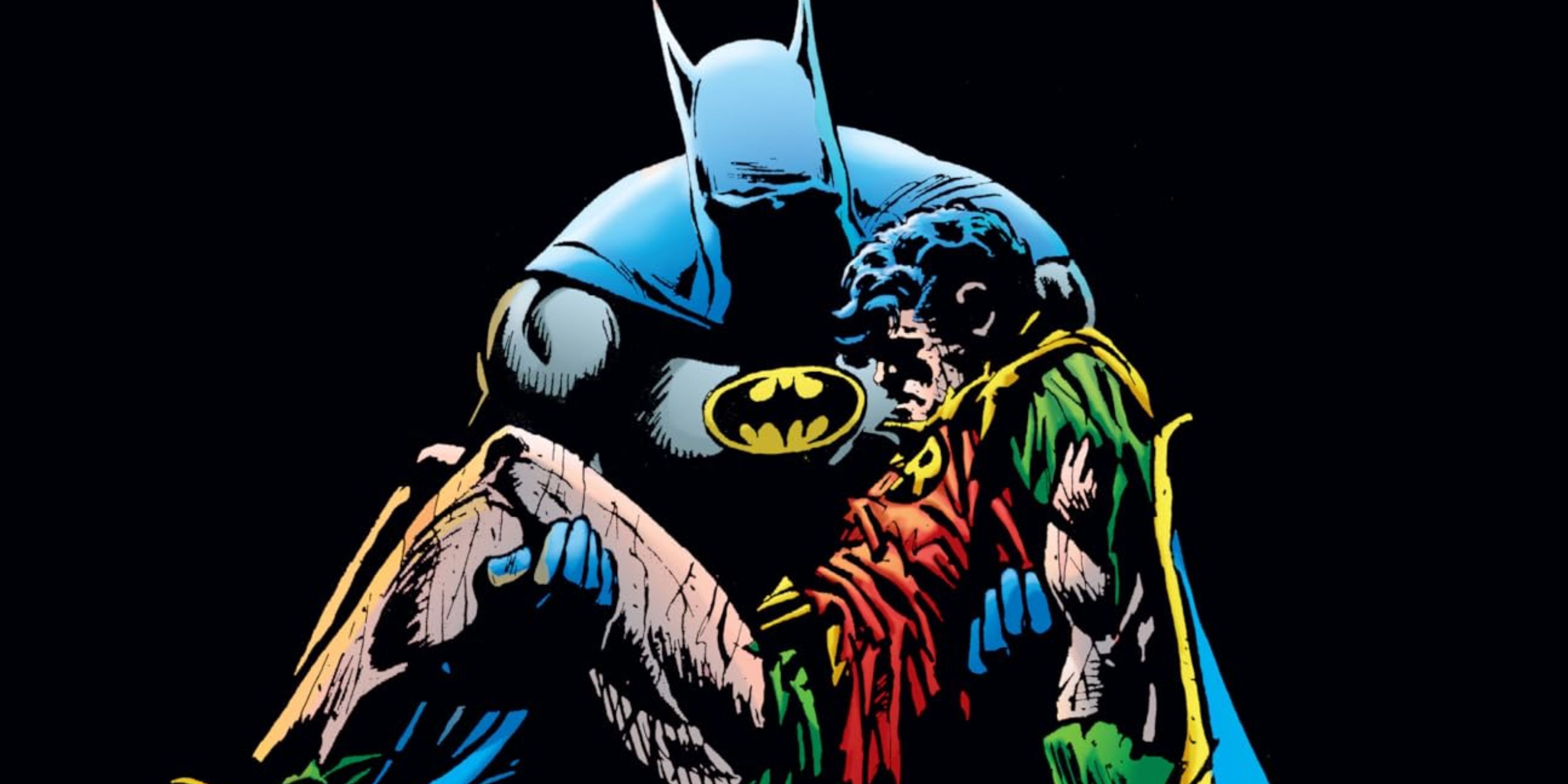
Some classic Batman stories are more seminal than others, for better or worse. While its iconography and influence are undeniable, “A Death in the Family” isn’t the story it’s hyped up to be, and it only gets worse with age.
DC Didn’t Choose Whether Robin Lived Or Died, We Did

DC Comics’ “A Death in the Family” storyline, from writer Jim Starlin, penciler Jim Aparo, inker Mike DeCarlo, colorist Adrienne Roy, letterer John Costanza, and editor Dennis O’Neil, first appeared in Batman (1940) #426–429 in 1988. Most notable for the death of Jason Todd, it’s hard to overlook the fact that it was readers themselves, not Joker, who dealt the killing blow.
It’s technically a cop-out to let readers decide whether Jason lived or died, as it can’t even be said that this was a bold storytelling choice that the creators had devised and stalwartly stuck to, no matter what readers were going to think of their decision. For instance, this is like if The Amazing Spider-Man killing Gwen Stacy was decided by voters, rather than Marvel Comics itself.
Dick Dying Would Have Packed A Much Harder Gut Punch

Jason first appeared in Batman #357 in 1983, before making his debut as Robin in issue #366, meaning he didn’t even make it to 100 issues as a Boy Wonder before being killed in issue #428 in 1988. Five years is obviously a decently long while in real time, but that’s particularly short relative to how Dick Grayson had been around for 48 years (Detective Comics #38) at this point, and Barbara Gordon had been around for 22 years (Detective Comics #359).
At Jason’s funeral, Bruce’s thoughts sum it up perfectly, even if he was merely referring to how few people made an appearance to pay their respects: “Jason’s life was too short for his passing to cause many ripples.” Therefore, this Bat-Family death isn’t as impactful as it would’ve been had Dick died instead.
“A Death in the Family” takes place almost immediately after Batman: The Killing Joke, and thus, it didn’t give itself nearly enough legroom for another massive Bat-Family tragedy to occur and land as significantly. Plus, Barbara getting shot and paralyzed from the waist down was a much more interesting fate than if she had been killed. Nearly 40 years later, one lives in the other’s shadow.
Batman: The Killing Joke also benefits from its utter shock factor. Meanwhile, “A Death in the Family” does everything possible to foreshadow Jason’s death and not blindside readers. This is true even of the cover of the storyline’s first issue, Batman (1940) #426, which states that “sudden and violent death is also waiting for him.” Narration and dialogue don’t help, either, with Bruce thinking and saying, “That attitude is about to get him killed,” or “He dived into those thugs like someone looking to die,” respectively.
The Actual Death Is All That’s Worth Remembering About The Story

Jason’s behavior at the beginning of the arc gives Bruce a touching opportunity to reassess how exploitative and premature it was to have Jason be a Robin before Jason was able to grieve properly. Regardless, “A Death in the Family” is all-around a bizarre story.
If you’ve never read “A Death in the Family,” you’d probably be alarmed to learn that it features a subplot where Joker travels to Lebanon with an enormous cruise missile. The plot basically follows Batman and Robin as they determine who his real mother is between three women, all of whom conveniently reside somewhere in the Middle East, where Joker happens to be.
The twist that his real mother, Sheila Haywood, deceives him and essentially hands Robin to Joker on a platter to then be brutally bloodied and beaten with a crowbar in a warehouse in Ethiopia is genuinely great and unpredictable. What Jason didn’t realize was that he did have a parent who loved him like a son, and that parent wouldn’t get to him quickly enough to do anything but cradle Jason’s corpse.
The excuse “A Death in the Family” gives as to why Batman can’t go after DC’s Clown Prince of Crime? Joker earns international immunity as an Iranian ambassador for the United Nations, meaning that he’s “immunized from retribution for that and any other crime that he’s ever committed,” laughably.
There’s a reason why DC and Batman stories inspired by “A Death in the Family” have trimmed that fat and focused wholly on the crux of a major character’s death (i.e. Tim Drake being killed by Clayface in Absolute Batman, though he’s neither a member of the Bat-Family or a major character in the Absolute universe), or at least the possibility of major characters dying (i.e. the Bat-Family being tortured by Joker in Batman’s “Death of the Family” crossover storyline event).
“A Death in the Family” ends unsatisfyingly, as well. Especially in contrast to Batman: The Killing Joke, which is arguably proof that Joker had broken Batman, it’s brilliant that “A Death in the Family” has Batman dive in the way of a terrorist’s gunfire to protect Joker, who gets shot anyway but survives, as this is a testament that not even the death of his son would push Bruce to let an atrocious serial killer be killed, if he could help it. That said, it’s tough to suspend disbelief enough to accept that Superman somehow wasn’t able to detect a wounded Joker after he vanished amid a helicopter crash, leaving Batman and Joker’s conflict, not to mention the storyline itself, “unresolved.”
- Created By
- Bob Kane, Bill Finger
- First Appearance
- Detective Comics
- Alias
- Bruce Wayne
- Alliance
- Justice League, Outsiders, Batman Family
- Race
- Human
- Franchise
- D.C.
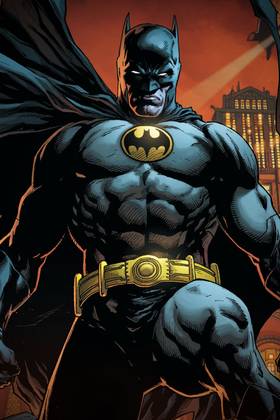
One of DC's most iconic heroes, Batman is the vigilante superhero persona of billionaire Bruce Wayne. Forged by tragedy with the death of his parents, Bruce dedicated his life to becoming the world's leading martial artist, detective, and tactician. Recruiting an entire family of allies and sidekicks, Bruce wages war on evil as the dark knight of his hometown, Gotham City.
KioskNews shows a cleaned-up reading view extracted from the publisher’s page — the original always lives on their site, not ours.