Delhi imposes Rs 11 crore in fines, most for pollution under control certificate violations
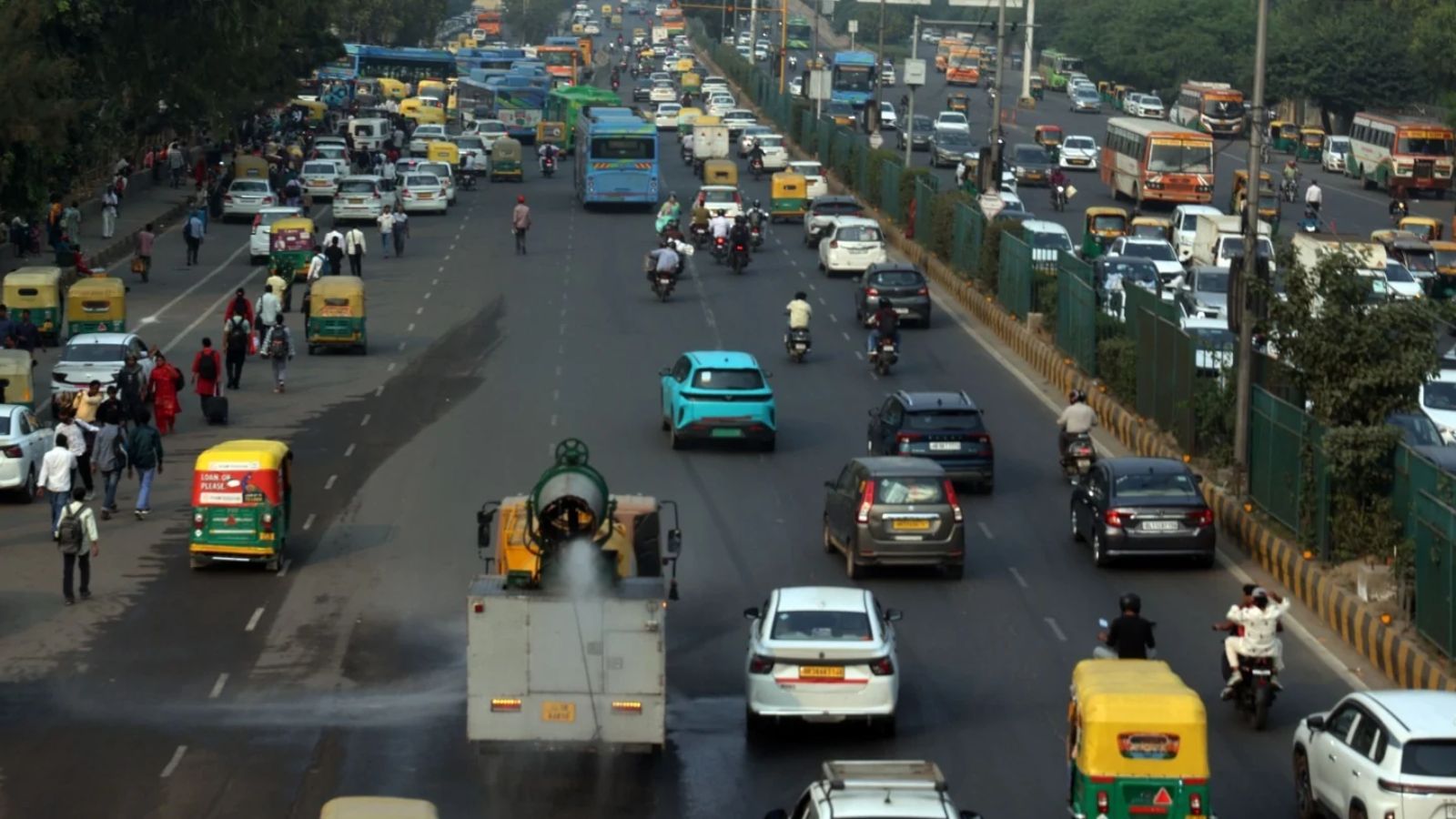
At around 8 crore, penalties for Pollution Under Control Certificates (PUCCs) violations accounted for a majority of fines imposed in Delhi in the first nine days since the Winter Action Plan came into effect in the Capital on November 1. While fines amounting to at least Rs 11 crore have been imposed during this period, violations related to the entry of vehicles below BS-VI emission standards and construction sites accounted for more than Rs 1.5 crore each, according to the data accessed from government sources. Private cars accounted for the highest number of challans among vehicles violating the non-BS-VI emission-related curbs.
For PUCC violations, the consolidated data shows that the Delhi Transport department and the Delhi Police issued 8,288 challans, amounting to Rs 8,28,80,000, as of November 9. Two-wheelers accounted for a majority of these vehicles followed by cars and heavy goods vehicles (HGVs), according to the government sources.
Sources said many two-wheeler owners were found operating vehicles with expired pollution certificates.
Under Section 190(2) of the Motor Vehicles Act and Rule 115(7) of the Central Motor Vehicles Rules, driving a vehicle without a valid PUCC draws a fine of Rs 1,000 for the first offence, which can go up to Rs 10,000 for subsequent offences.
Repeat offenders may also face additional penalties, including the suspension of their driving licences and cancellation of vehicle registrations, officials said.
Most challans to private cars for non-BS-VI curbs
As part of the restrictions on vehicles below BS-VI emission standards, 18,304 vehicles were turned back at Delhi’s borders, while 1,451 were challaned and 119 impounded.
The penalties imposed in these cases amounted to Rs 1,16,28,000. Private cars accounted for the highest number of challans among vehicles violating the BS-VI entry restrictions, with 724 challans amounting to Rs 66.14 lakh. Trucks accounted for 179 challans, while buses were issued just six challans.
Story continues below this ad
Around 80 teams from the Transport department and the Delhi Traffic Police have been deployed at the Capital’s borders and 37 pollution hotspots have been identified to keep a check on vehicles violating the norms.
Over 4,000 construction sites inspected
Meanwhile, teams with officials from the Delhi Pollution Control Committee (DPCC) and the Municipal Corporation of Delhi (MCD) inspected 4,004 construction sites and found 392 violating pollution-control norms.
Of these, 81 sites were ordered to shut down, while 312 were served show-cause notices.
As part of the Delhi government’s Winter Action Plan, outdoor construction activities and dust-generating demolition work have been prohibited until January 31, except for essential public infrastructure projects.
Story continues below this ad
The government has also barred vehicles exceeding their prescribed lifespan from refuelling at 500 petrol pumps equipped with Automatic Number Plate Recognition (ANPR) cameras.
In addition, non-BS-VI petrol and diesel vehicles registered outside Delhi have been prohibited from entering the city. CNG and electric vehicles have been exempted from the restriction.
Earlier, on October 30, citing historically high pollution levels observed in November over the years, the Commission for Air Quality Management (CAQM) in the National Capital Region and Adjoining Areas ordered a 15-day ban on dust-generating demolition and outdoor construction activities across the region. The restriction came into effect on November 5 as a precautionary measure.
The CAQM also directed government and private offices in Delhi and five NCR districts—Gurugram, Faridabad, Sonipat, Ghaziabad and Gautam Buddha Nagar—to allow up to 50% of their employees to work from home during the 15-day period.
KioskNews shows a cleaned-up reading view extracted from the publisher’s page — the original always lives on their site, not ours.