Gender identity vs biological sex: How a new plea in SC seeks to reopen debate
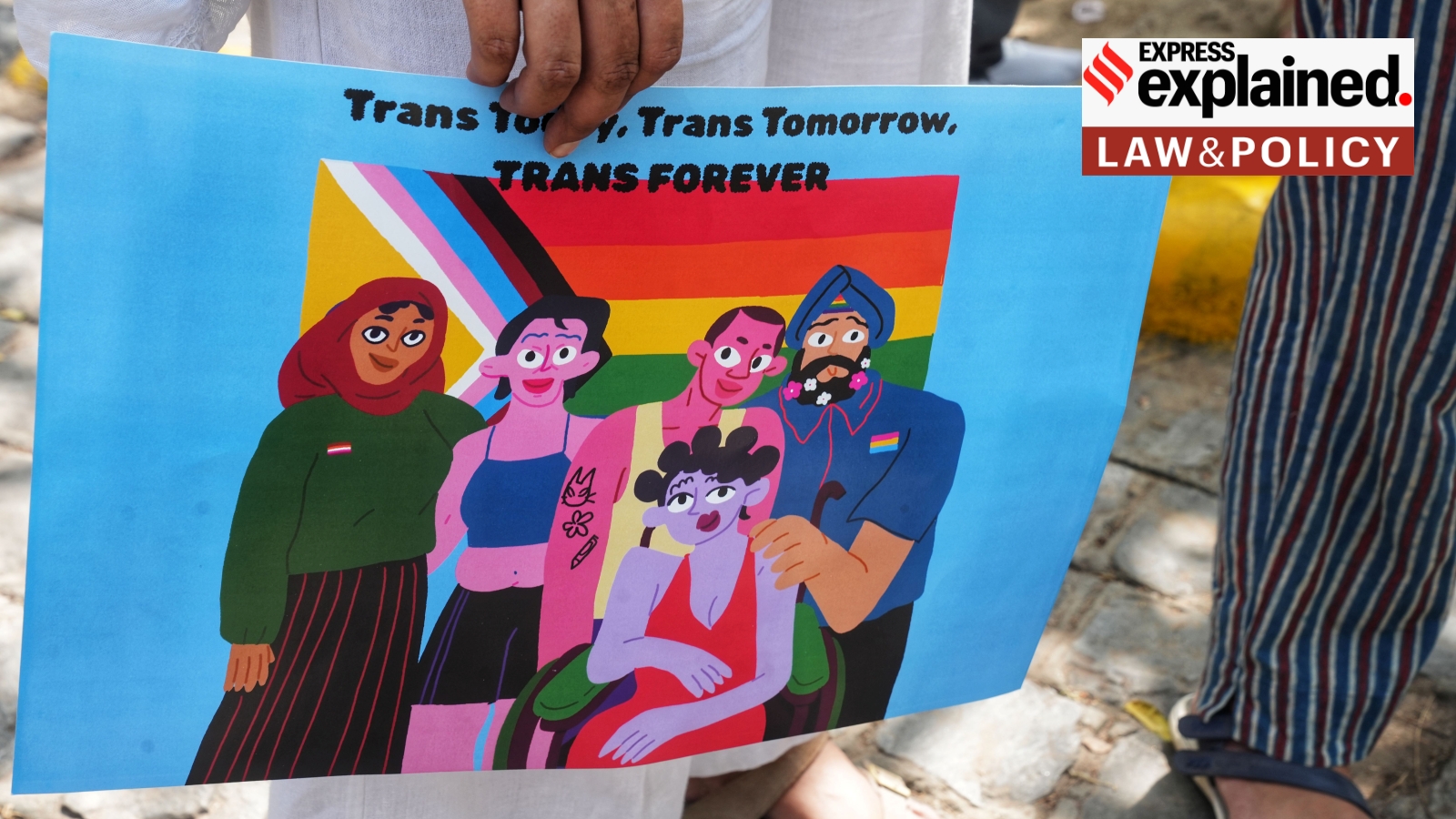
A plea filed in the Supreme Court challenges provisions of the Transgender Persons Act that allow a person to obtain official documents recognising a gender different from the one assigned at birth, arguing that this could affect protections and benefits specifically meant for women.
The plea was filed by the India chapter of the Women’s Declaration International (WDI), a UK-based organisation that advocates for preserving sex-based rights for women. WDI was formed to lobby nations to maintain language protecting women and girls on the basis of sex rather than gender or gender identity.
WDI India filed a plea in the Supreme Court challenging Section 7 of the Transgender Persons (Protection of Rights) Act, 2019, and Rule 7 of the Transgender Rules, which allows a person seeking a change in gender certificate. The plea has also sought consideration of the NALSA judgment that recognised a transgender person’s right to determine their gender identity.
Here’s what to know.
What the 2014 NALSA judgment said
In the landmark 2014 judgment in NALSA v. Union of India, the Supreme Court distinguished a person’s biological sex and their gender identity. It said that while biological characteristics include genitals, chromosomes, and secondary sexual features, gender also involves a person’s self-image and their psychological or emotional sense of identity.
“Both gender and biological attributes constitute distinct components of sex,” the court said, adding that discrimination on the ground of sex under Articles 15 and 16 of the Constitution also included discrimination based on gender identity.
The court said that a person’s gender could not be determined only by their biological characteristics. It said that an individual’s own understanding of their gender should be given primacy. It said that “determination of gender to which a person belongs is to be decided by the person concerned”. The court also located this right within the guarantees of personal liberty and dignity under Article 21 of the Constitution.
It also held that a person could not be required to undergo surgery, sterilisation, or hormonal treatment to have their gender identity legally recognised. “No one shall be forced to undergo medical procedures, including SRS (sex reassignment surgery), sterilization or hormonal therapy, as a requirement for legal recognition of their gender identity,” the order said.
What experts say
Story continues below this ad
Senior Advocate Jayna Kothari told The Indian Express that the petition sought to reopen a question that the Supreme Court had already addressed through its recognition of gender identity. “What it tries to argue is that trans women cannot be considered as women,” she said.
Kothari said that the Supreme Court had made it clear that gender identity was distinct from biological sex and was to be determined by the individual. As per this understanding, undergoing surgery or hormonal treatment was not a condition for identifying as a man or a woman, she said.
The petition also argued that allowing transgender women to compete in women’s sporting categories could affect competitive fairness, particularly in contact sports, because of the physiological differences between biological males and females. Kothari said that such an argument claims that “no benefits given for women should be given to trans persons”, as this goes beyond sports since sporting bodies in India and abroad had mechanisms to address participation-related concerns.
Kothari said transgender persons continued to face discrimination in accessing public services, education and employment despite the legal protections recognised by the Supreme Court. “There is a huge struggle that they are facing and fighting for all their basic rights. When all these issues are pending, and now new issues are raised, that the rights given to them as women should be taken away, that just undermines their status even more.”
Story continues below this ad
Swarupa Deb, faculty at the National Law School of India University, Bengaluru, told The Indian Express that such an argument appears to treat transgender persons as a “risk to be managed”, rather than as individuals entitled to equal rights and citizenship. She said the concerns raised around prisons, hostels and sporting opportunities brought back memories of an earlier period when transgender persons were viewed as potential carriers of HIV and treated as a group that needed to be excluded or segregated.
Deb said that implications could extend beyond the courtroom, particularly as social media could shape public opinion even before the court arrives at a decision. “Public attitude is something that is going to harden very fast,” she said, adding that transgender persons from poorer and marginalised sections, particularly in rural and Adivasi communities, and those dependent on begging and sex work could be most affected.
She said that uncertainty was already affecting how some transgender persons accessed healthcare. People in her circles were becoming apprehensive about visiting doctors, while some medical professionals who had earlier been sympathetic were also worried about the implications of treating them.
“At least NALSA had given some sort of safety net. The 2019 legislation, however bad it was, had given some kind of safety net. If this goes on, everything will be taken away,” she said, adding that community groups were advising transgender persons to preserve their identity documents and remain in touch with reliable legal aid organisations in case they faced harassment and assault.
KioskNews shows a cleaned-up reading view extracted from the publisher’s page — the original always lives on their site, not ours.