Is he a real cop? In Mumbai, you can soon scan a policeman’s QR Code to find out
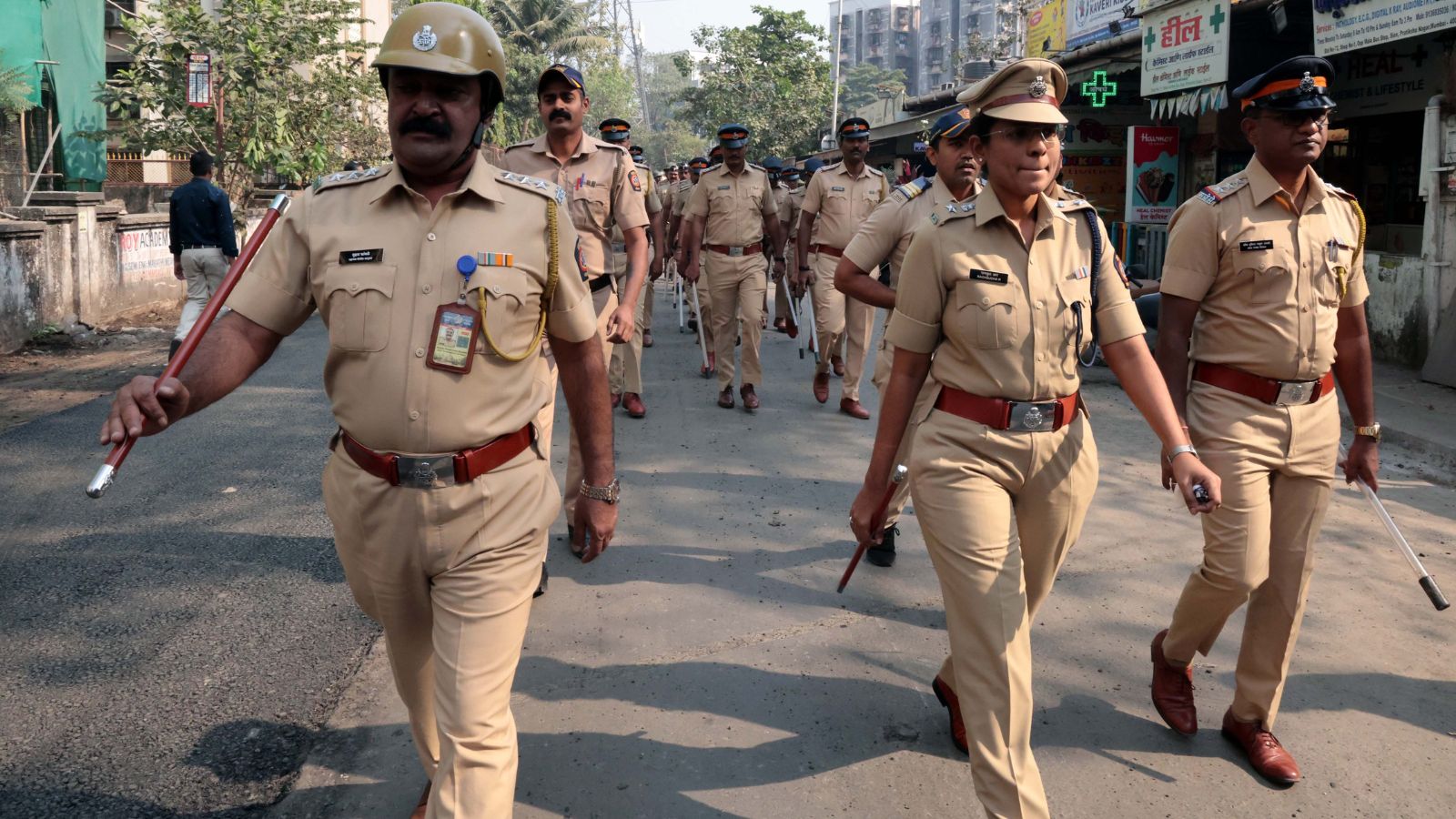
With criminals increasingly posing as police officers, flashing forged identity cards and even claiming to be from the crime branch to extort money from unsuspecting citizens, Mumbai Police is turning to technology to help people distinguish genuine cops from impostors.
The Mumbai Police will issue QR code-enabled smart identity cards to its entire force, allowing citizens to verify an officer’s identity and official credentials by scanning the card with their smartphones. The initiative assumes particular significance amid cases in which fraudsters, often posing as policemen in plainclothes, target senior citizens during morning walks and businessmen, claiming to be conducting investigations or checks.
Chief Minister Devendra Fadnavis on Saturday inaugurated the initiative as part of a series of technology-driven measures aimed at digitising the Mumbai Police force. A few smart cards were distributed to police personnel, including traffic policemen, at the event.
Under the new system, every police personnel will be issued a metal-based identity card carrying an embossed photograph and a unique QR code. Citizens can scan the code through the Mumbai Police Citizen App, which will direct them to an official verification platform displaying the officer’s photograph, name, date of joining and present posting. This will allow people to compare the details on the screen with the person presenting the card.
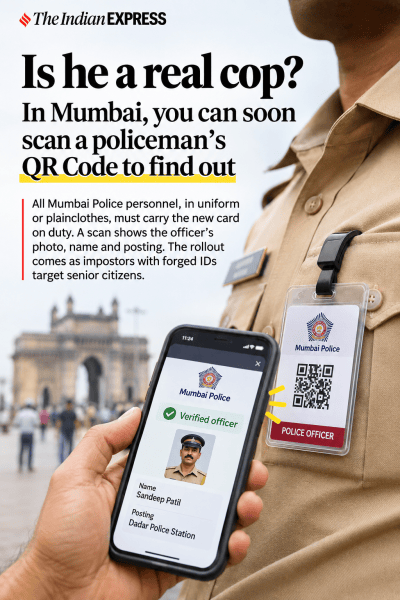
The cards will also have Near Field Communication (NFC) technology, which can be used by authorised personnel for access to restricted police establishments and other purposes.
A senior police officer said the printing of the cards had been completed and all personnel were expected to receive them within a month. The project will cover 51,308 sanctioned posts in the Mumbai Police, for which the government had sanctioned around Rs 4 crore in February this year.
Carrying the smart identity card will be mandatory for policemen while on official duty, whether in uniform or plainclothes. This means officers visiting residential premises, questioning citizens or approaching people during investigations will also have to carry the card, enabling those approached to verify their credentials.
Story continues below this ad
The move comes against the backdrop of a growing pattern of impersonation in which criminals use forged police identity cards and claim to be from the crime branch to intimidate people into handing over cash or valuables. Senior citizens have been among those targeted, with fraudsters stopping them during morning walks and claiming to be conducting checks.
The system could also offer an additional means of verification in cases of so-called digital arrest scams, in which fraudsters pose as police, CBI or other law enforcement officials during video calls and circulate fake identity cards to establish credibility. Citizens will be able to check the credentials of anyone claiming to be a Mumbai Police officer rather than relying only on an identity card shown to them.
Speaking at the inauguration, Fadnavis said criminals were increasingly exploiting technology and the police needed to stay ahead of them.
“We live in a world driven by technology, and criminals are also using it. Therefore, it is essential for the police to stay one step ahead. One of the biggest advantages of technology is that it works objectively, without individual bias, and its integration can significantly improve operational efficiency,” he said.
Story continues below this ad
The smart identity cards are part of a wider digital transformation of the Mumbai Police. The force is also being equipped with around 50,000 Android tablets to give personnel access to investigation-related information, official records and digital evidence while on duty.
Other initiatives inaugurated on Saturday included the Mumbai Police Citizen App, the Mumbai Police Information System (MPIS), and a centralised Fusion Centre that will integrate information from CCTV networks and various police databases to assist investigations and operational coordination.
The MPIS will digitise personnel and administrative records, including transfers, leave, deployment and investigation-related processes. Officials said processes that earlier took three to four hours could now be completed in around 15 minutes.
The broader project will connect more than 50,000 police officers and personnel to an integrated digital system and involve digitisation of nearly one crore legacy records.
KioskNews shows a cleaned-up reading view extracted from the publisher’s page — the original always lives on their site, not ours.