Six lanes to two: What Barapullah can learn from traffic solutions abroad
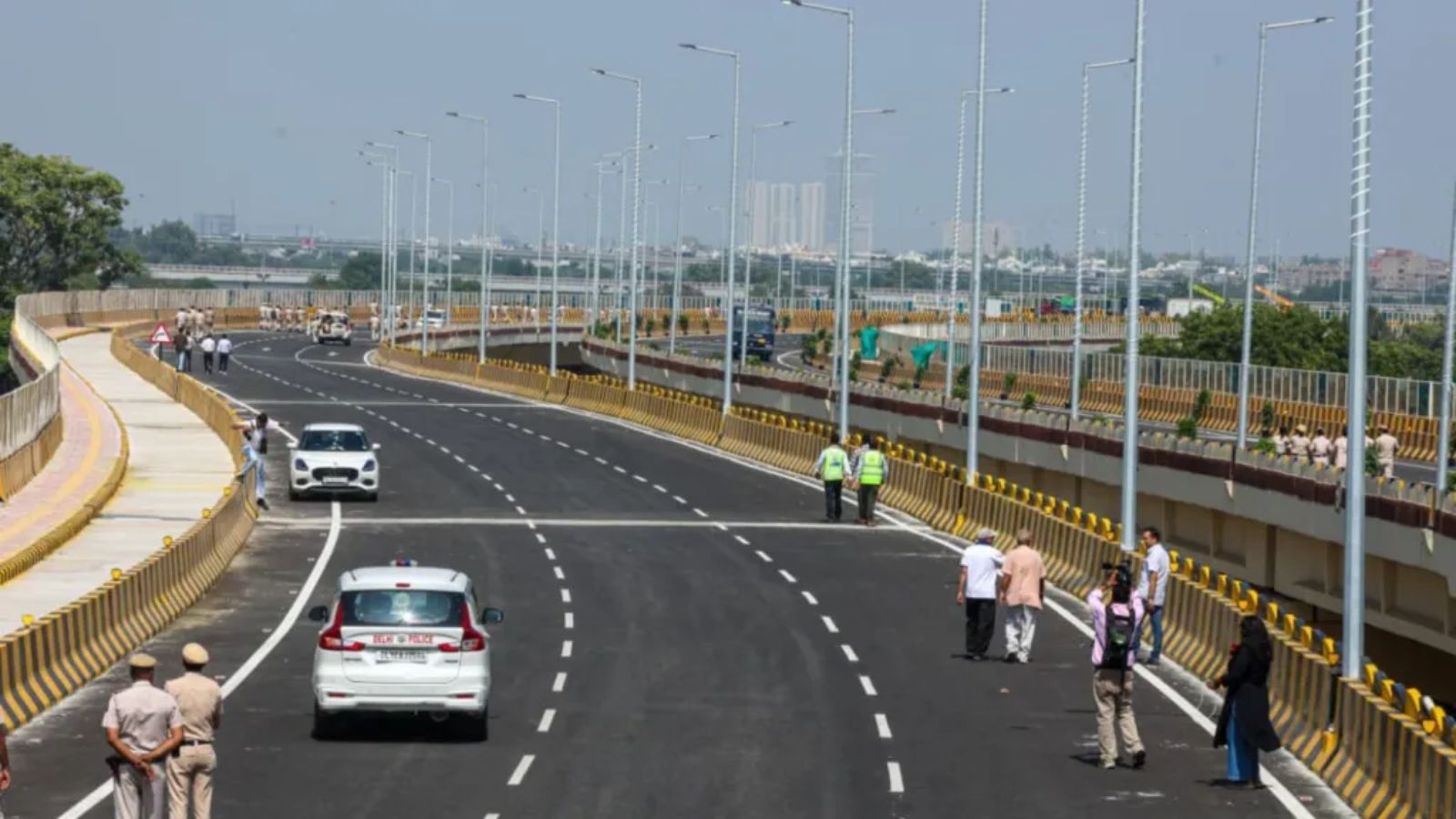
View of Barapullah Face-3, after the inauguration, in New Delhi (Express Photo by Praveen Khanna)
Did Delhi need another flyover?
Four days after the Barapullah Phase 3 flyover opened, the question is no longer just about the bottleneck at its merging point, where traffic from six lanes is forced into two.
It is about the larger idea of putting more traffic on flyovers in a city where congestion keeps shifting from one road to another.
The project was originally scheduled for completion in 2017, but construction delays pushed its opening to 2026. Over these nine years, while vehicle numbers rose significantly, East Delhi and the wider NCR also grew, changing vehicular movement between East Delhi, Noida, Ghaziabad, and South Delhi.
The result: The new stretch is meeting an older, narrower road and the traffic has nowhere to go. Barapullah Phase 3 has six lanes, one in the Mayur Vihar direction and the others towards South Delhi. The six lanes merge into a three-lane carriageway. Ideally, the combined carriageway should have been five lanes wide. It is not and the traffic has to further merge into the two-lane Phase 2 flyover, with vehicles from all lanes competing for space.
This is the problem with flyovers, says urban practitioner Hitesh Vaidya, who used to be associated with the National Institute of Urban Affairs. “A flyover is like shifting the traffic from the ground floor to the first floor,” he said.
Other countries have tried different approaches.
Story continues below this ad
In 2006, near Birmingham in the United Kingdom, bottlenecks in a stretch was solved using a dual system: Hard Shoulder Running (HSR) and Variable Mandatory Speed Limit (VMS). The systems ensured that no more lanes were made and no additional flyovers came up.
Under HSR, an emergency breakdown lane is opened to traffic when sensors detect congestion. VMS uses sensors to change speed limits according to traffic conditions, helping maintain gaps between vehicles and keep traffic moving.
A Transportation Research Board assessment found that the system reduced average travel time by more than 32%, while accident rates also fell.
In 2003, a six-lane highway over Cheonggyecheon River – used by around 160,000 vehicles every day – was demolished to revive the water body. The expectation was that the traffic would be in a deadlock.
Story continues below this ad
But as per an article published in Behavioural Design Academy, the move saw a reduction in congestion with vehicular traffic reducing by over 45%.
According to experts, in India, better planning was needed to solve the Barapullah fiasco. “A detailed survey needs to be done to assess the volume of traffic on the flyover and where it’s moving. I don’t know if they have been done properly. Because the plan was made over 20 years ago, it’s not feasible now,” said Prof P S N Rao, former director of the School of Planning and Architecture, Delhi.
Rao said that in India, the best possible solution is to bolster public transport rather than continuing to build flyovers. “People take the Barapullah because other routes, like through Nizamuddin or ITO, are already choked. You create more alternative routes, more vehicles come. Now that we know that even Barapullah is not going to cut it, just take the Metro,” he said.
“With flyovers, you are shifting traffic from one road to another. Instead of putting more resources to sort the flyover, we need to invest in more Metro lines. Most Western countries are doing it. Even the well-off take public transportation. Why not us?” he asked.
Story continues below this ad
As of now, the solution with the Delhi Police is putting up barricades and an extra traffic light. Based on their drone survey, they are set to manually manage the merging of lanes using the traffic lights and personnel, so that all lanes don’t empty together, say officials.
KioskNews shows a cleaned-up reading view extracted from the publisher’s page — the original always lives on their site, not ours.