New $170 million aviation maintenance and repair facility in Changi Creek to create over 500 jobs
SINGAPORE – A new $170 million airframe maintenance, repair and overhaul (MRO) facility in Changi Creek will employ more than 500 people and deploy new technologies like drones and robots to improve efficiency.
The facility – the fourth airframe MRO firm operated by ST Engineering in Singapore – will tap innovative technology like humanoid robots, drones and 3D printing, which are expected to ease work processes and boost productivity.
The 84,000 sqm facility features four widebody aircraft bays which, when fully operational, will add 40 percent additional capacity to the firm’s widebody airframe MRO network in Singapore, and translate into about 100 more of these aircraft serviced in Singapore a year.
Deputy Prime Minister and Minister for Trade and Industry (Trade) Gan Kim Yong – in his address at the facility’s opening on Oct 9 – said AI, robotics and automation will complement the capabilities of engineers and technicians, and enable them to take on higher-value work.
He added that ST Engineering has long played an important role in strengthening the capabilities of Singapore enterprises and workforce within the sector.
He said: “The new facility is expected to support the creation of more than 500 jobs in ST Engineering’s airframe MRO business, including licensed aircraft engineers, technicians, and planning and production control specialists.
“ST Engineering is also equipping our people to take up these opportunities through in-house training and partnerships with our Institutes of Higher Learning. Over the past three years, it has trained over 250 local new hires.”
Gan added that he would encourage ST Engineering to expand on these efforts as the company grows, so that more Singaporeans can develop their skills and build rewarding careers in the aerospace sector.
ST Engineering, he said, also continues to work with home-grown small and medium-sized enterprises, and the Singapore research and development ecosystem to develop advanced solutions, help firms beef up their capabilities, improve productivity and build a track record in the aerospace sector.
“For example, ST Engineering is currently collaborating with a number of local robotics companies and A*Star to support the deployment of AI-enabled autonomous mobile robots in its operations.
“One such project will improve process time by over 80%, saving employees from walking more than 20,000 km across the warehouse floor and freeing up about 7,800 man-hours annually,” added Gan.
The robots are part of an automated system that transports aircraft parts, tools and materials from storage to the hangar floor, said ST Engineering in a statement on Oct 9.
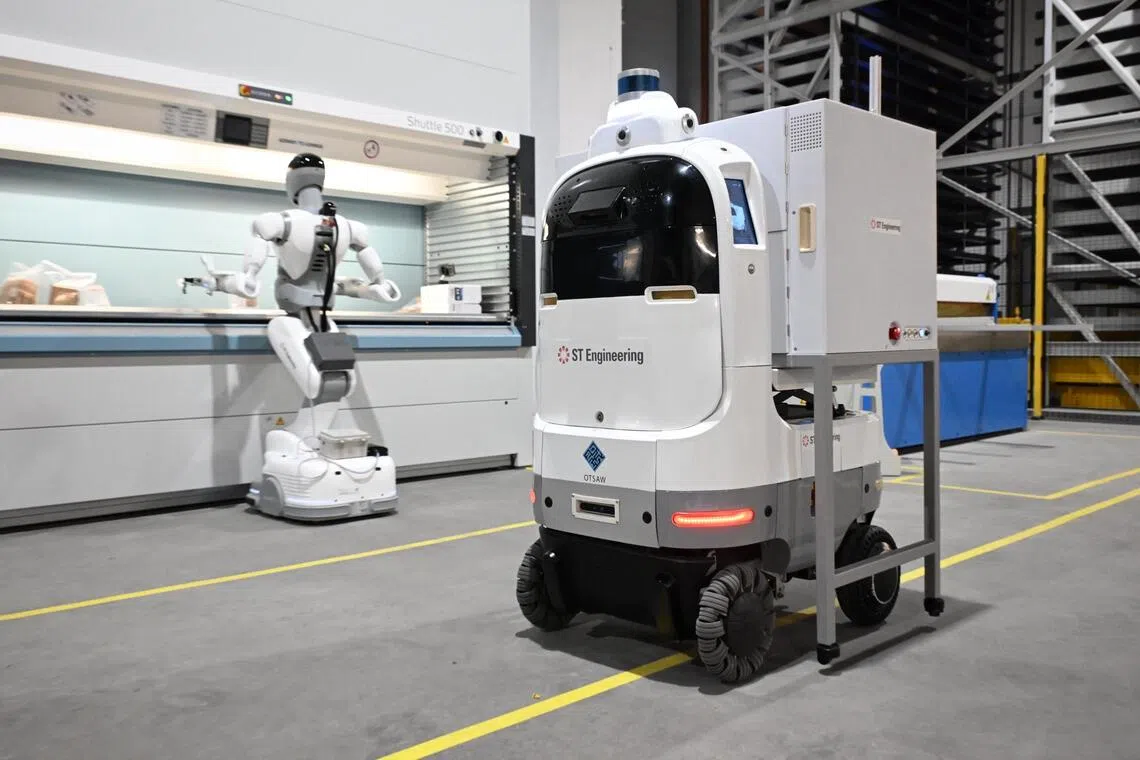
ST Engineering’s Changi Creek facility will tap innovative technology like humanoid robots, drones and 3D printing, which are expected to ease work processes and boost productivity.
ST PHOTO: CHONG JUN LIANG
The system also comprises a humanoid robot – still in the testing stages – which can retrieve, sort and transfer items from the storage system.
The humanoid robot can then put the items into a box for the autonomous mobile robots to transport to the hangars.
The technology, defence and engineering group said it plans to introduce this system at its other facilities in Singapore.
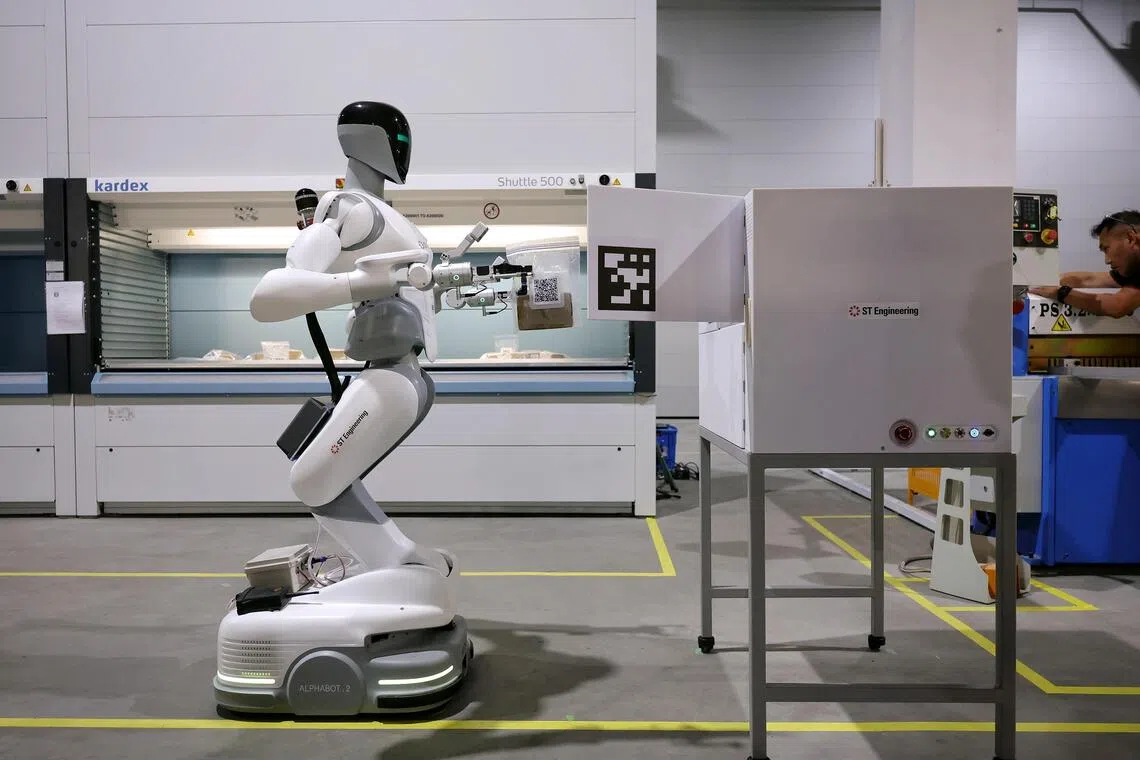
The robots are part of an automated system that transports aircraft parts, tools and materials from storage to the hangar floor.
ST PHOTO: KEVIN LIM
As a whole, the new technologies at the Changi Creek facility will “transform” airframe MRO from a traditionally labour-intensive industry reliant on manual tasks into one that is more efficient and data-driven, said ST Engineering.
Kevin Chow, president of commercial aerospace at ST Engineering, speaking to reporters, said the firm’s long-term goal is to improve productivity by 25% by tapping such technological innovations.
For example, drones will be deployed in aircraft inspections at this facility. This reduces the need for technicians to climb onto scaffolding or lifts to conduct manual visual inspections of the top of the aircraft.
And AI tools can help analyse the video footage to identify corrosion, pain defects and surface dents.
As a result, the time taken to inspect an aircraft is cut to half a day, with only two engineers needed to review the footage. This is down from 1½ days for manual checks conducted by up to three technicians.
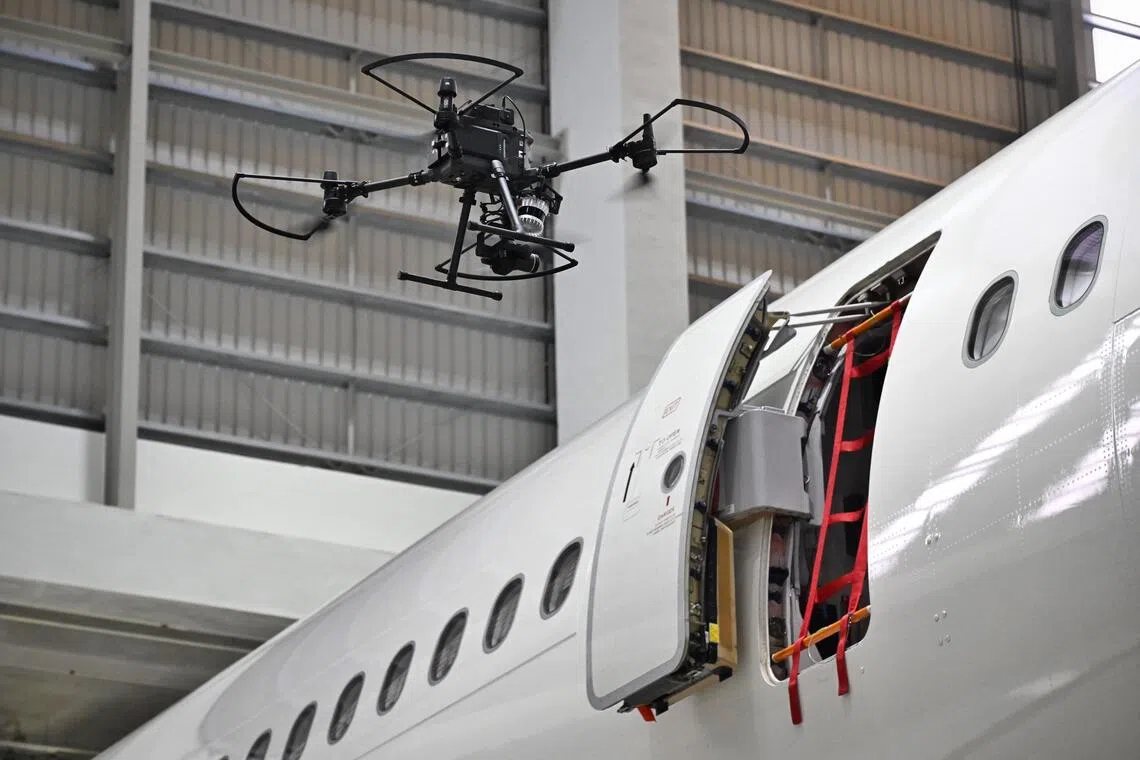
Deploying drones at the facility reduces the need for technicians to climb onto scaffolding or lifts to conduct manual visual inspections of the top of the aircraft.
ST PHOTO: CHONG JUN LIANG
Also key to such aircraft inspections is the use of a camera mounted on a robotic arm, which incorporates AI models to help point out defects and missing components.
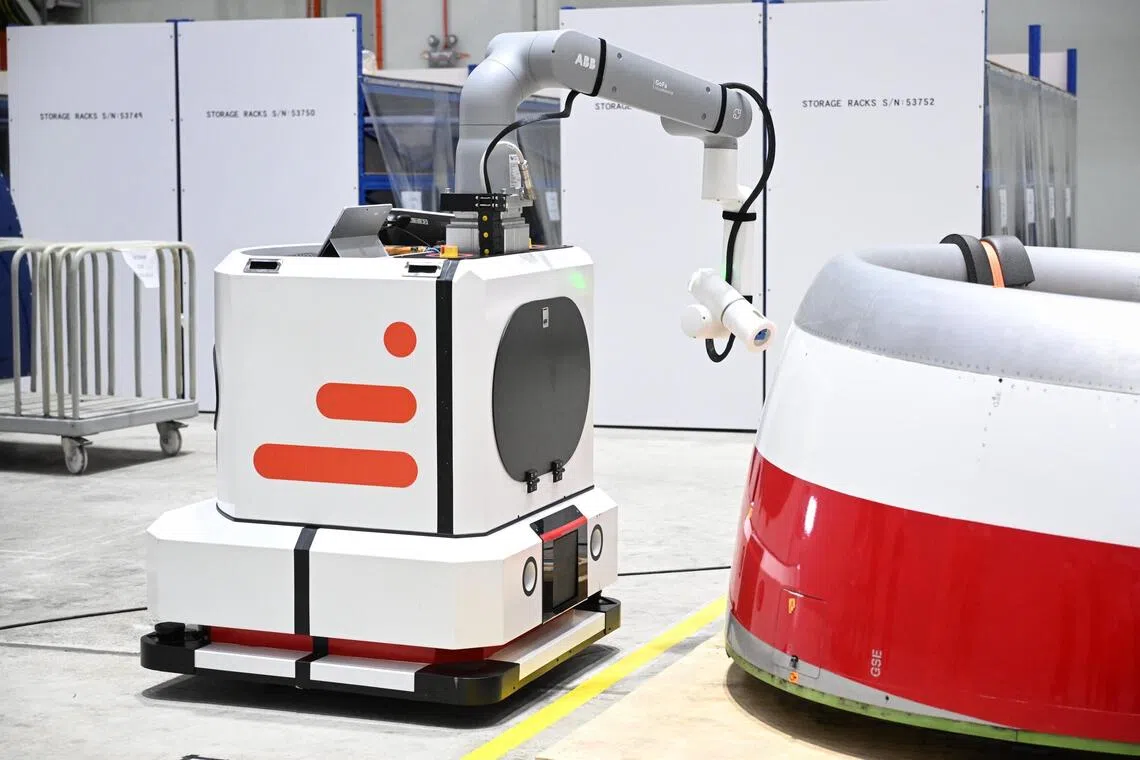
Also key to aircraft inspections is the use of a camera mounted on a robotic arm, which incorporates AI models to help point out defects and missing components.
ST PHOTO: CHONG JUN LIANG
The tool is still being prepared to carry out inspection on landing gears and airframes, but it has been rolled out to help with checks on engine parts.
It will mainly be used to inspect an aircraft’s underside, as drones are unable to capture footage at that angle due to the position of their cameras.
This will cut the time required to inspect a gear or component from about from four hours in the past to 30 minutes now.
Also, an AI-powered monitoring system has been put in place across all four ST Engineering sites in Singapore, giving teams a real-time view of task completion, aircraft status and hangar availability.
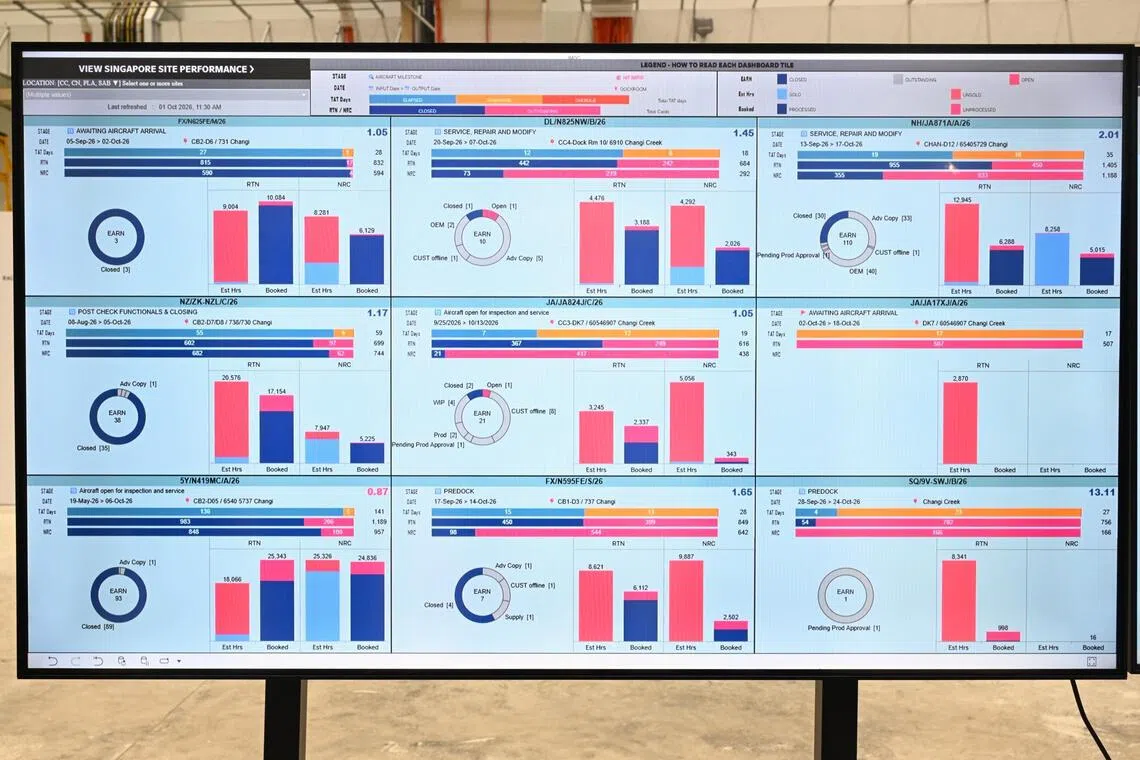
An AI-powered monitoring system has been put in place across all four ST Engineering sites in Singapore, giving teams a real-time view of task completion, aircraft status and hangar availability.
ST PHOTO: CHONG JUN LIANG
Usually, technicians and engineers needed to sign off on a lot of paperwork, and projects were tracked manually using paper records.
The new system will facilitate the digitalisation of data and provide live visibility of maintenance progress, allowing engineers to make faster and better-informed decisions.
To improve maintenance turnaround time, the facility is also equipped with 3D-printing facilities capable of repairing damaged parts and reproducing components on demand.
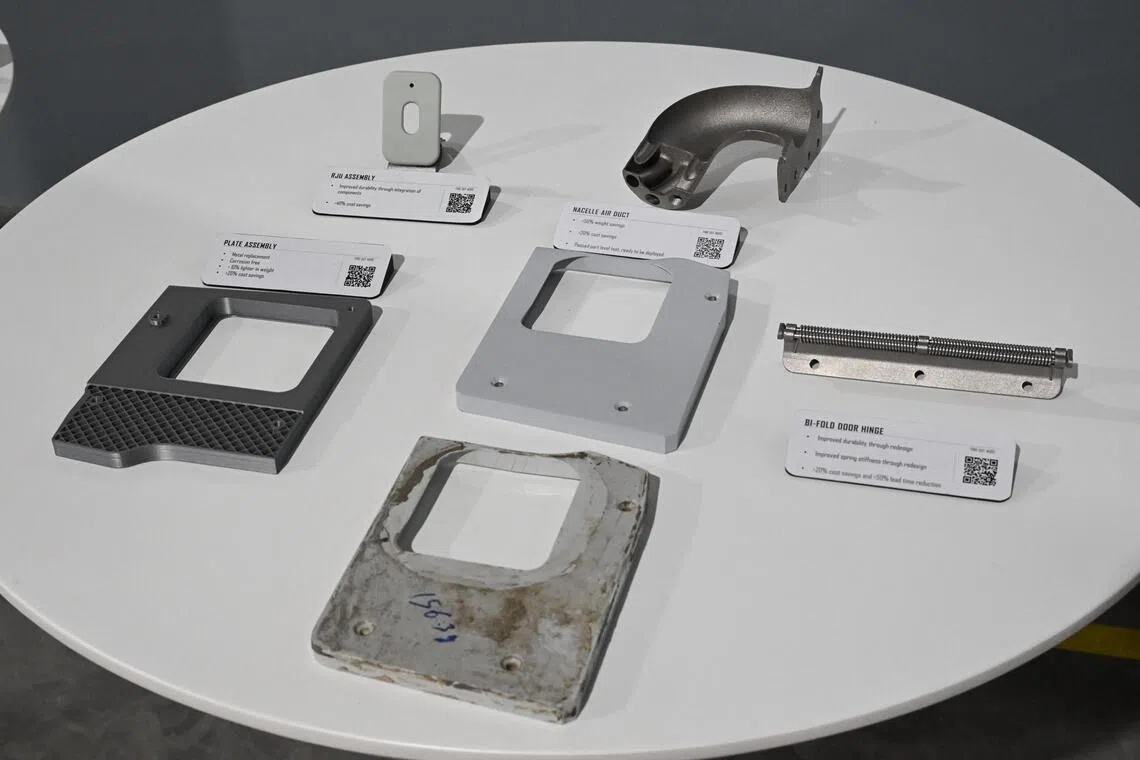
To improve maintenance turnaround time, the facility is equipped with 3D-printing facilities capable of repairing damaged parts and reproducing components on demand.
ST PHOTO: CHONG JUN LIANG
Self-driving vehicles will also ply the hangar floor to transport aircraft parts between facilities, replacing manually operated forklifts.
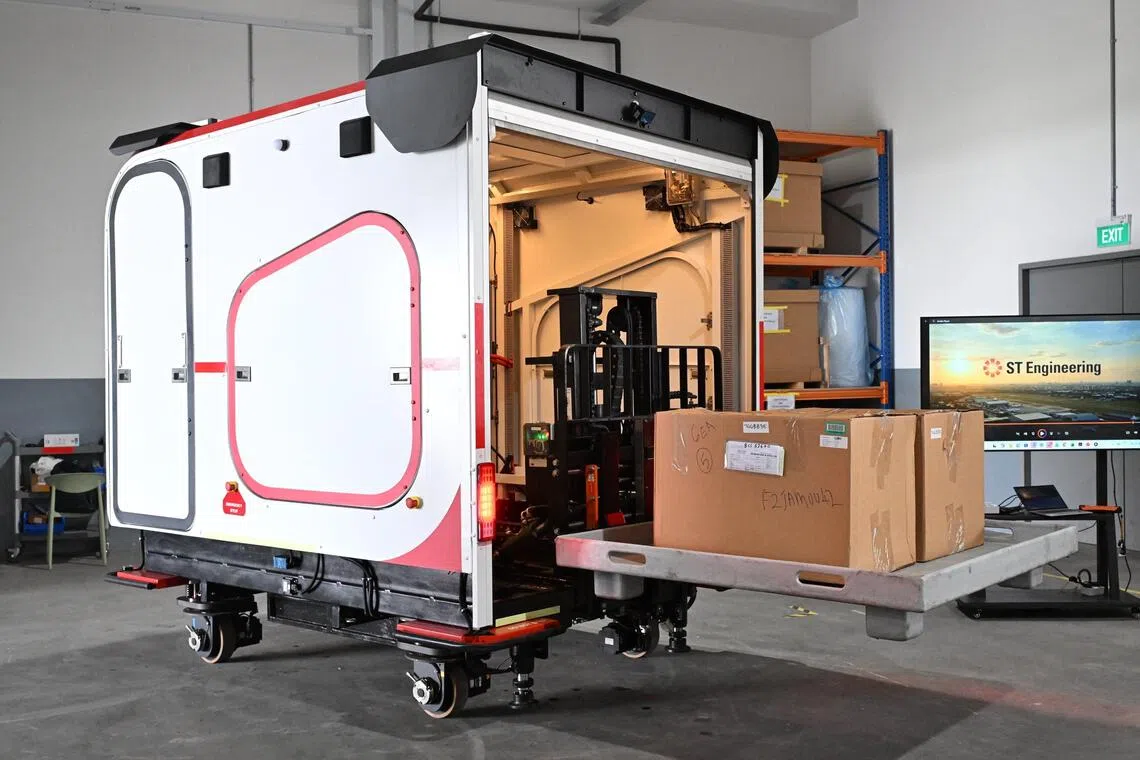
Self-driving vehicles will ply the hangar floor to transport aircraft parts between facilities, replacing manually operated forklifts.
ST PHOTO: CHONG JUN LIANG
Able to carry 500kg of materials, the vehicle uses AI to recognise where items are and how to pick them up.
Two to three such vehicles will be deployed at each of the four ST Engineering airframe MRO sites in Singapore from 2027.
Among the new ST Engineering hires this year is 26-year-old Georgia Lee, a senior project engineer who has been involved in the deployment of drones for aircraft inspections.
As she was always interested in aerospace engineering, Lee said being involved in the project allowed her to get an unmanned aircraft pilot licence to operate drones.
KioskNews shows a cleaned-up reading view extracted from the publisher’s page — the original always lives on their site, not ours.