The haze is back: Do you need an N95 mask? What about a surgical mask?
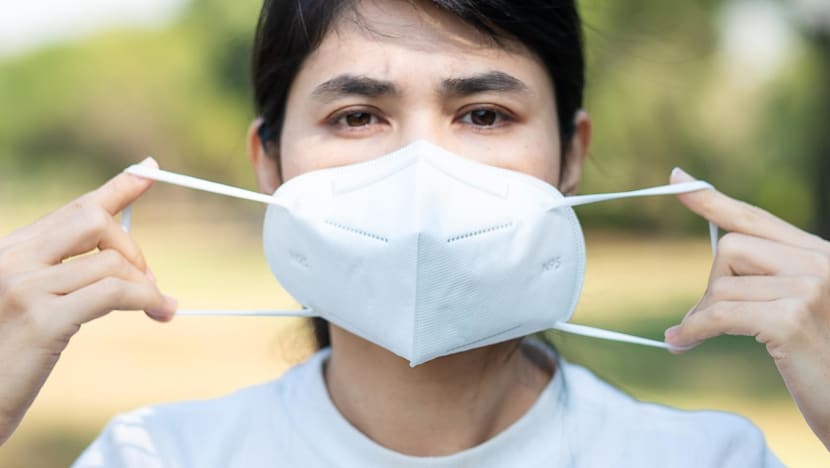
Well, the haze is back. And in full force. But does that mean you need to reach for an N95 mask whenever you head outdoors? And will the surgical or fabric masks you used during the COVID-19 pandemic offer enough protection? Here's what you need to know.
WHAT EXACTLY ARE WE TRYING TO FILTER OUT?
During the haze, the particles in the air tend to consist of a high concentration of coarse and fine particles from large-scale forest and land fires, said Adjunct Associate Professor Adrian Kee, the head and a senior consultant at National University Hospital’s Division of Respiratory & Critical Care Medicine.
“Coarse particles usually flush out of the atmosphere within a day, while fine particles are able to stay in the atmosphere and travel extensive distances of hundreds to thousands of kilometres,” he said. “The haze we experience contains particulate matter less than 10 micrometres in size, including fine particles of less than 2.5 micrometres.”
And these fine particles are what’s causing respiratory issues such as coughing and difficulty in breathing as well as worsening existing respiratory conditions such as asthma. “Haze particles can also cause irritation to the eyes, throat and nose, among other negative health effects,” said Adj Assoc Prof Kee.
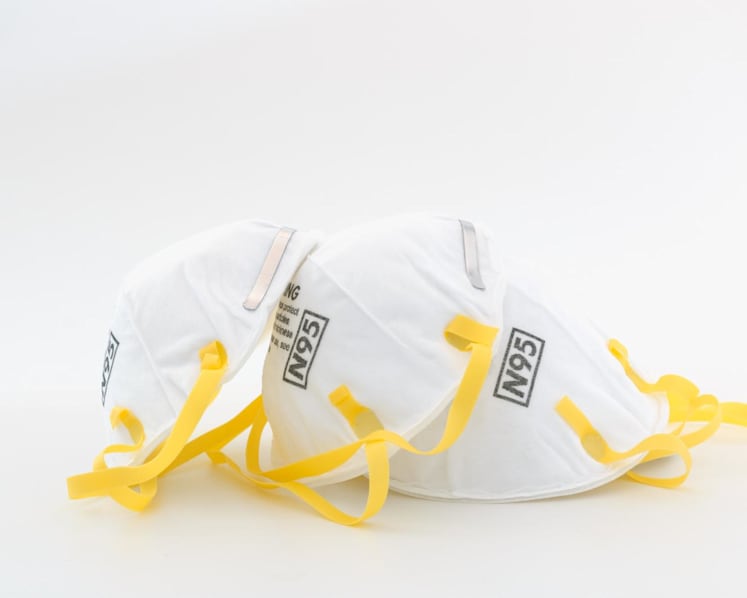
An N95 mask can filter out fine particles that are about 0.1 micrometres to 0.3 micrometres in size, he said. “Studies show that they are at least 95 per cent effective with proper fit and usage.”
However, the key words here are “proper fit”. “An N95 mask is only effective if the mask is properly sized and fitted for the individual. It should also not be soiled, distorted or damaged,” said Dr Esther Pang Pee Hwee, a senior consultant with Tan Tock Seng Hospital’s Department of Respiratory and Critical Care Medicine.
IF I’M HEALTHY, DO I STILL NEED AN N95 MASK WHEN I'M OUTSIDE?
N95 masks aren’t needed if you’re commuting from home to school or work, said Adj Assoc Prof Kee. But when the air quality is unhealthy (PSI 101 to 200), those with chronic lung or heart disease should avoid prolonged or strenuous outdoor physical exertion, he said. The same applies to older adults, pregnant women as well as children.
If you have to be outside when the 24-hour PSI is in the hazardous range, that is, higher than 300, consider wearing an N95 mask, said Dr Pang. “Short-term exposure to such high levels of air pollutants may cause irritation of the eyes, nose and throat in healthy individuals.”
WHAT ABOUT PEOPLE WHO ARE MORE VULNERABLE TO THE HAZE?
If the air quality reaches PSI 201 to 300 (very unhealthy), those with chronic lung or heart disease should avoid outdoor activities, while older adults, pregnant women and children should minimise outdoor activities, said Adj Assoc Prof Kee.
There is “currently no approved certification standard for masks” for children, said Dr Pang, so “the best form of protection for them is to stay indoors” when the 24-hour PSI reaches hazardous levels or the 1-hour PM2.5 reading reaches high levels.
CAN I USE THE SURGICAL AND FABRIC MASKS I WORE DURING THE PANDEMIC?
Surgical and fabric masks don't offer the same protection from fine haze particles as an N95. You can breathe better in a regular mask but you’re only filtering out larger irritant particles in the air, according to Adj Assoc Prof Kee. “They are not effective in filtering fine particles that are 2.5 micrometres or less in size present in haze.”
Moreover, the regular masks “typically have a looser fit and can allow fine particles to enter around the edges”, he said.
HOW DO I KNOW IF MY STOCKPILE OF N95 MASKS IS STILL USABLE?
“Check the expiration date indicated on the packaging,” said Dr Pang. “You should not use masks past their expiration date. The effectiveness of the masks may degrade with time.”
Also, look for visible defects such as shape deformities or tears. “The elastic bands should have good elasticity without snapping easily. The metal nose bridge should be in good condition. These are important for achieving a good mask seal,” said Dr Pang.
Next, do a fit check by placing the N95 mask on your face. “Feel for air leakage from the edges of the mask while breathing in and out,” she said.
“If you are still unsure of your N95 mask’s condition, consider consulting with your doctor or nurse. They can assess the masks and advise on their usability.”
WHAT IF I HAVE RESPIRATORY ISSUES AND FIND IT HARD TO BREATHE WITH THE N95 MASK?
Check with your doctor for personalised advice on whether you should wear an N95 mask if you have difficulty breathing at rest or on exertion, said Adj Assoc Prof Kee. The same thing applies if you’re an older adult, pregnant or suffer from severe lung or heart problems.
Other than that, your best alternative is to stay indoors during periods of very unhealthy or hazardous air quality, said Dr Pang.
“If you need to be outdoors, avoid strenuous activities or minimise the duration of the outdoor activity,” she said. “Continue with the treatment prescribed for your respiratory condition. If you still feel unwell or develop respiratory symptoms, you should seek medical attention promptly.”
But rather than risk it, it’s best to stay indoors and limit outdoor activities until the haze situation improves, said Adj Assoc Prof Kee.
KioskNews shows a cleaned-up reading view extracted from the publisher’s page — the original always lives on their site, not ours.