OBITUARY: Sheila Barsel, the dart-throwing strugglista who refused to be silenced
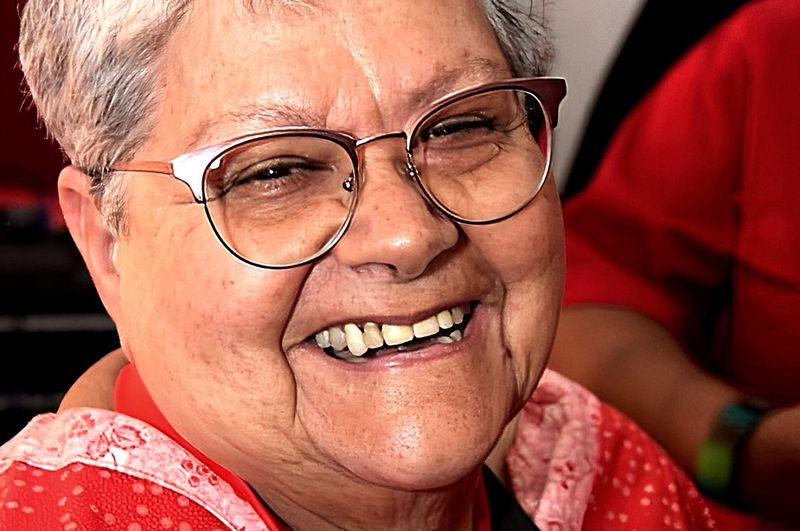
For a banned person, even a glass of wine could become evidence. One evening in Cape Town, Sheila Barsel was at home with two friends, Michael Smith and the poet Steven Watson, remembering a friend who had been killed. The security police were keeping an eye on her, as they did on other opponents of apartheid, and she knew that an unexpected visitor could turn an ordinary evening into an interrogation. There was a small precaution to observe: if someone knocked, the person answering the door should hold a glass, making it appear that no more than two people were gathered inside.
The policeman who arrived was Sergeant Spyker van Wyk, whom Barsel described as a notorious torturer. Michael Smith, apparently forgetting the arrangement, answered the door without a glass. Van Wyk saw three glasses. He demanded to know what was happening. Barsel told him plainly: “A memorial service for a friend who’s been killed, murdered by the state.”
When he accused her of being on UCT’s property, she sent him away with a retort: “You go back and do your homework and check whether it’s university property.” It wasn’t, so petty were the laws and those who enforced them.
It was a small act of defiance, but it contained much of what made Barsel such a daunting presence: an impatience with authority, a sharp tongue and a refusal to behave as though the state had the right to dictate the terms of her life. Even under restrictions that curtailed her movements, work and friendships, she carried on organising, gathering people and speaking her mind.
Barsel, who died in Cape Town on 31 October 2026 at the age of 82, was one of the people who made the anti-apartheid movement function. She was not among its most celebrated public figures. Her contribution was often practical and behind the scenes: the scholarships arranged, the prisoners helped to study, the meetings organised, the information transmitted and the networks maintained. Her political life would eventually extend well beyond the anti-apartheid struggle, into feminism, lesbian and gay organising, public health, trade unionism and the South African Communist Party.
Family and political courage
She was born Sheila Lapinsky in Johannesburg on 3 July 1944, into a conventional, lower-middle-class Orthodox Jewish family. Her mother had come to South Africa from Poland as an orphan, after the death of her own mother. Her father was born in Safed, then in British Mandatory Palestine. He was deeply religious, and his observance shaped the household in which she grew up.
Observatory to the constitutional fight for gay and lesbian equality, Sheila Barsel’s life was one long, practical act of defiance. (Photo: South African Communist Party / Facebook)
The family was not politically radical. Her parents were wary of the consequences of associating too closely with relatives who were communists and active in the liberation movement. Yet those relatives would become central to Sheila’s understanding of political courage.
Her uncle Hymie and his wife, Esther Barsel, were committed left-wing activists. Esther had joined the Young Communist League at 14. In 1964, she was arrested and tried with 13 others in the Bram Fischer Treason Trial. She was sentenced to three years’ imprisonment with hard labour at Barberton prison and, after her release, remained under a banning order for 20 years. Her husband was also banned, and their daughters were sent to live with relatives.
The ability to challenge authority developed through experience, disappointment and a growing awareness of the structures of power within organisations that were themselves fighting oppression.
In 1990, Esther became a secretary to Chris Hani and worked closely with him until his assassination in 1993. Sheila later changed her surname from Lapinsky to Barsel in her aunt’s memory.
There was an almost farcical dimension to the security police’s surveillance of the family. They repeatedly confused Sheila with one of her cousins, recording her as the fourth daughter of Hymie and Esther. When Sheila herself was banned, she received official permission to communicate with her “mother”, addressed as Esther Barsel. The authorities had mistaken her aunt for her mother.
Her childhood was complicated by an experience she would disclose many years later. In an email to her friend Mary Armour, Sheila wrote about the long shadow of incest.
“Early sexual abuse by my maternal grandfather took place over a period of seven years, starting when I was just four years old. So all the positives of living in a secure close-knit family was secretly undone by this violation of trust.
“Incest destroys a child’s sense of home as being a safe place or sanctuary. There is literally nowhere to hide and I knew it was impossible to confide in my mother. My early childhood development was marred by abuse and a growing sense of shame and abhorrence, fear and deep hurt: my family interactions were also tinged with pent-up anger which came out ‘sideways’ so that I was perceived as being a difficult child.
“I could not speak or ask for protection from those who loved me. My difficult relationship with my orphaned mother, herself unmothered, meant a mother-daughter bond did not naturally develop between us.”
Her father, meanwhile, left a different kind of inheritance. Despite his religious conservatism and fear of political repercussions, Sheila remembered his capacity for loving and connecting with people. She believed his insistence that people should not be treated differently also helped shape her own sense of justice.
She attended Parktown Girls’ High School, matriculating in 1961. Barsel wasn’t fond of school. She found much of it boring, although she remembered an excellent physical science teacher and a good Latin teacher. She also experienced anti-Semitism. Her father’s religious observance meant she took longer religious holidays than some of her Jewish classmates, which attracted unpleasant attention.
She recalled looking up to see the men entering her office and being told that she had to leave immediately.
She enrolled at the University of the Witwatersrand and initially studied science, but preferred student politics, serving as chair of the local committee of the National Union of South African Students (Nusas) and later as its regional secretary in the then Transvaal.
She began working full-time for Nusas in Cape Town. She would remain there until her banning in March 1973, eventually becoming its secretary-general. Much of her work involved the machinery that allowed Nusas to operate: administering scholarships and loans, organising congresses, preparing reports, taking minutes, handling correspondence and ensuring that commitments made by the organisation were carried through.
She helped political prisoners pursue their education. The work involved corresponding with prisoners, supplying books and study materials, arranging university registration and finding money to pay fees. It was a painstaking undertaking, requiring persistence and a great deal of paperwork. The point was to ensure that imprisonment did not deprive people of the opportunity to study.
Some of her recollections of Nusas were not celebratory. In later years she spoke candidly about the organisation’s patriarchal culture and her own exclusion from political decision-making. Although she was responsible for much of the work that kept it running, she did not always feel included in the discussions that shaped its political direction. The men who occupied the public leadership positions tended to receive the recognition.
Looking back, she wished she had found her voice earlier. It was an admission that complicates the portrait of an outspoken activist who would later become known for her forthrightness. The ability to challenge authority developed through experience, disappointment and a growing awareness of the structures of power within organisations that were themselves fighting oppression.
Banning and house arrest
In 1973, the apartheid government banned her, along with seven other Nusas leaders, following the Schlebusch Commission of Inquiry. Security police arrived at the organisation’s Cape Town office on Jamieson Street and handed her the order. She recalled looking up to see the men entering her office and being told that she had to leave immediately. She asked to telephone her lawyer but was not permitted to do so. She then drove home to Hout Bay.
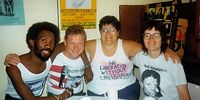
The order confined her to three magisterial districts and prohibited her from attending gatherings. She was barred from schools, universities and other educational institutions, as well as factories and printing presses. She could not continue working for Nusas. The restrictions were designed to isolate her, remove her from political activity and make ordinary social contact difficult.
She was the only one of the eight banned Nusas leaders to serve the full five-year order, which expired in 1978. The timing made the experience more punishing. About 18 months before her banning, her husband, Alf, had died, at the age of 40, in Pinelands. They had known each other for only five years. In a 2022 email to Armour, she recalled the financial strain and isolation that followed.
“Living under house arrest was even lonelier with all the grief I could not work through for a long time,” she wrote.
The killing of fellow activist Rick Turner deepened her fear. Turner was shot dead after answering his front door, in an assassination widely attributed to government agents. Barsel later recalled that, for years, the sound of someone at her own front door left her shaken. The possibility that the security police might arrive was not an abstract concern. It was part of the daily atmosphere in which she had to live.
She needed to earn a living. Paul Pretorius, another banned activist, opened a record shop, and Barsel began crocheting shawls and sewing skirts and dresses from German-print fabric, which were sold from the back of the shop. She also found employment at Woolworths, where she worked for about nine years booking flights. She described the job as menial and said she had plenty of time to read.
She later speculated that the company’s willingness to employ several banned activists might have had something to do with connections between its then chairperson, David Suzman, and left-wing figures such as Joe Slovo and Harold Wolpe.
Certain friendships she had developed among younger Nusas activists became a lifeline during her banning. They devised ways of seeing her without making their visits look like prohibited social gatherings. One telephone message became a code for a bridge game: “I would like you to show me how to read a knitting pattern. I’ve got the knitting needles, the wool and the pattern. Can I come to you?”
Her politics increasingly brought together struggles that were often treated as separate.
The knitting pattern meant that a group was gathering to play bridge. They also arranged to sit together in groups at the cinema, presenting their meeting as a chance encounter. At parties, people sometimes had to escape through windows and down side-passages when the police arrived.
These small evasions were not grand acts of resistance, but they allowed a banned woman to retain the ordinary things the state was trying to take from her: friendship, conversation, company and a place in the lives of other people.
Barsel was careful, in the interview recorded for the Banned Persons Memory Project, not to equate her experience with the far harsher conditions faced by people in townships and other parts of the country. Her restrictions were difficult and isolating, she said, but she recognised that others endured much worse.
Return to political life
During the years of her banning, she also began to reconsider the politics of gender. She read feminist writing and attended women’s workshops. She joined Rape Crisis for two years.
When the banning order expired, she was able to return more openly to political and working life. She moved into the textile industry, eventually becoming a production planner at Romatex Home Textiles in Elsies River, where she worked from about 1982 until 1994. She enjoyed the contact with workers and spent time with shop stewards, although she deliberately avoided formally joining the union.
Her political interests were widening. She joined the emerging gay and lesbian movement, where she found herself confronting the same attitudes once again. In 1983, she became chair of the Cape Town branch of the Gay Association of South Africa. She left after 13 months, frustrated by the organisation’s male-dominated culture.

She was among the founding members of Lesbians and Gays Against Oppression (Lago), which later became the Organisation for Lesbian and Gay Activists. The organisations sought to place sexual equality within the wider struggle against apartheid, challenging the idea that gay and lesbian rights could be postponed until after liberation.
Her home in Observatory became a meeting place for feminist reading groups. One of those who attended was Jenny Schreiner, who was secretly involved in uMkhonto weSizwe. Barsel did not know this at the time. Years later, Schreiner told her that the house had been regarded as a reasonably safe place to meet.
Barsel helped organise the Towards the People festival, which was intended to include a performance about the oppression experienced by gay and lesbian people. The government banned the festival before it could take place.
She was active in the End Conscription Campaign and in structures associated with the United Democratic Front. Her politics increasingly brought together struggles that were often treated as separate: opposition to apartheid, feminism, workers’ rights and the demand for recognition and equality for gay and lesbian people.
In the 1990s, Barsel and other activists worked to persuade the African National Congress to include gay rights in its political programme. She later served on the executive of the National Coalition for Gay and Lesbian Equality. The coalition’s campaign helped secure the inclusion of protection against discrimination on the grounds of sexual orientation in the 1996 Constitution.
“I think what I would have done differently was to find my voice.”
This work was part of a wider argument about what liberation should mean. For Barsel and her fellow activists, political freedom could not be confined to the end of racial discrimination while other forms of exclusion remained untouched. The struggle for equality had to include people whose identities and relationships had long been marginalised or criminalised.
After the 1994 election she entered public service. Ebrahim Rasool, then the Western Cape MEC for health and social welfare, invited her to join his Strategic Management Committee. Her ties to the South African Communist Party lasted many decades. She was associated with Amandla! magazine and remained active in Palestine’s solidarity work.
In another message to Armour, she wrote: “My deep allegiance to the Palestinian struggle comes from my father’s birthplace (Safed) which originally had many Palestinians living in that city.
“Jewish and Palestinian people lived together, not always easily but understanding that coexistence was what mattered. Safed, now Tzfat, has since been taken over by religious Hasidic Jews and become a major centre especially for immigrants (largely from the US) who have co-opted that town.
“On visiting there, I heard everywhere foreign American accents, a new settler culture that dominates the town. This has been one of the major motivations for the depth of my involvement in the Palestinian struggle.”
It was a position rooted in her understanding of Jewish history and her opposition to injustice, rather than a rejection of her own Jewish identity. One of the most telling stories concerns her departure from organised religion, as told to Anne Mager and Paula Ensor (for the Banned Persons Memory Project).
She was still a deeply religious young woman when she overheard men at the synagogue discussing the stock exchange while they were supposed to be engaged in religious observance. She decided that she had had enough, walked out of the synagogue and never returned.
Barsel’s political life was not without contradictions. She could be difficult, uncompromising and forceful in her opinions. Her commitment to causes did not necessarily make her easy company, and she could be impatient with those who disagreed with her. But the people who worked alongside her also remembered her organisational ability and her determination to make room for people who were excluded elsewhere.
Asked in the project interview what message she would give young people, her first response was immediate: “The first thought that came into my mind was fight.”
She went on to explain that she did not mean physical violence. She wanted young people to fight for their space, to resist being shaped by what adults expected of them and to refuse to be absorbed into the mainstream simply because it offered security.
Asked what she might have done differently, she returned to a more personal regret: “I think what I would have done differently was to find my voice.” It was a revealing answer from someone who had spent so much of her life helping others find theirs.
Topless darts and later years
I met Sheila Barsel, then known by the surname Lapinsky, in the mid-1980s through Lago, the South African LGBTQIA+ and anti-apartheid organisation she helped found. There was a meeting held in someone’s tiny flat on Kloof Street, one mattress on a floor.
I was introduced to her by the late Dr Ivan Toms, who was part of her inner circle. Thereafter our paths often crossed at meetings, protests and house parties. She was sometimes like a bully, nevertheless, fiercely committed to the people and causes she championed. On one occasion, during a production of the musical My Fair Lady performed in the old Nico Malan Theatre, she wrote a scathing letter to the press complaining that the storyline was misogynistic.
One acquaintance of hers told me that, in the 1980s, she sometimes went to Barsel’s house, where Barsel would open the door naked. Inside, a posse of women would walk around topless, playing darts.

It brings to mind the lesbian demimonde of Weimar Germany, which was a relatively visible and unusually vibrant avant-garde scene for its time. It existed in smoky bars and private houses, among a community that seemed to have thrown off social restraints: a world of women who loved women, dressed as they pleased, formed romantic partnerships and cultivated an identity distinctly their own.
I also met her partner, the librarian Julia Nicol. She, too, was a political campaigner, but chronic ear problems, a form of misophonia and, later, hearing loss increasingly confined her to their home. In a message she wrote to me, she said: “The problem is similar to chronic fatigue syndrome and includes oversensitivity to light and noise.”
She became something of a recluse. Over the years, I lost contact with Barsel but remained in touch with Nicol through social media and our shared interest in books. Life at their home took a dark turn at one stage when Nicol began posting pleas for help on Facebook, saying she was being abused.
In another missive to me, she wrote: “Sheila is well; she has a very demanding job at the National Education, Health and Allied Workers’ Union (Nehawu), has to get on the plane for meetings in Gauteng about once a week. She is also a dedicated Communist and regularly accuses me of being racist.”
Nicol’s cries for help became more frequent. When I reminded a mutual friend of this, she replied: “She and Sheila went through some rough patches for a long time and I recall you and I were both getting distressed emails from Julia who felt it was an abusive relationship.
“In the last few years Sheila had health problems after a botched hernia op as she described it to me, she was very remorseful over Julia’s unhappiness. I wish I’d lived closer because I only had phone calls and Sheila didn’t email much.”
Nicol’s death was announced unexpectedly on social media on 3 April 2019, at the age of 63. Some months later, in the interviews conducted by Anne Mager and Paula Ensor on 12 September 2019, Barsel made no mention of Nicol, who had died a few months earlier. DM
KioskNews shows a cleaned-up reading view extracted from the publisher’s page — the original always lives on their site, not ours.