Residents were left helpless as departments ‘passed the ball’ on safety complaints

No government department took effective ownership of fire safety risks ahead of the deadly Tai Po fire, leaving complaints made by residents to fall into a vacuum, an independent committee found, singling out four departments as partly responsible for the disaster.
At the release of the 1,154-page full report on Thursday, Chief Secretary for Administration Eric Chan Kwok-ki said he would lead a steering committee to review and implement the more than 100 recommendations of the independent committee.
The recommendations included the criminalisation of bid-rigging, strengthening the supervision of building repairs and maintenance works, and stepping up fire safety.
The fire, which broke out at Tai Po’s Wang Fuk Court on November 26 last year, claimed 168 lives and displaced almost 2,000 households.
Although the committee said the main culprits were unscrupulous contractors, consultants and professionals from the private sector, it said four departments – the Fire Services Department, independent checking unit of the Housing Bureau, the Labour Department and the Buildings Department – “also bear part of the responsibility”.
The committee added that it received evidence of a large volume of complaints about fire risks by Wang Fuk Court residents against various departments, but these were not adequately investigated.
“Complaints were passed from one government department to another, and ultimately left without satisfactory resolution. The result was that no [department] took effective ownership of various fire safety issues, and complaints about fire hazards fell into a vacuum.”
The committee acknowledged that different regulatory regimes created uncertainty about which department was responsible for handling a particular complaint.
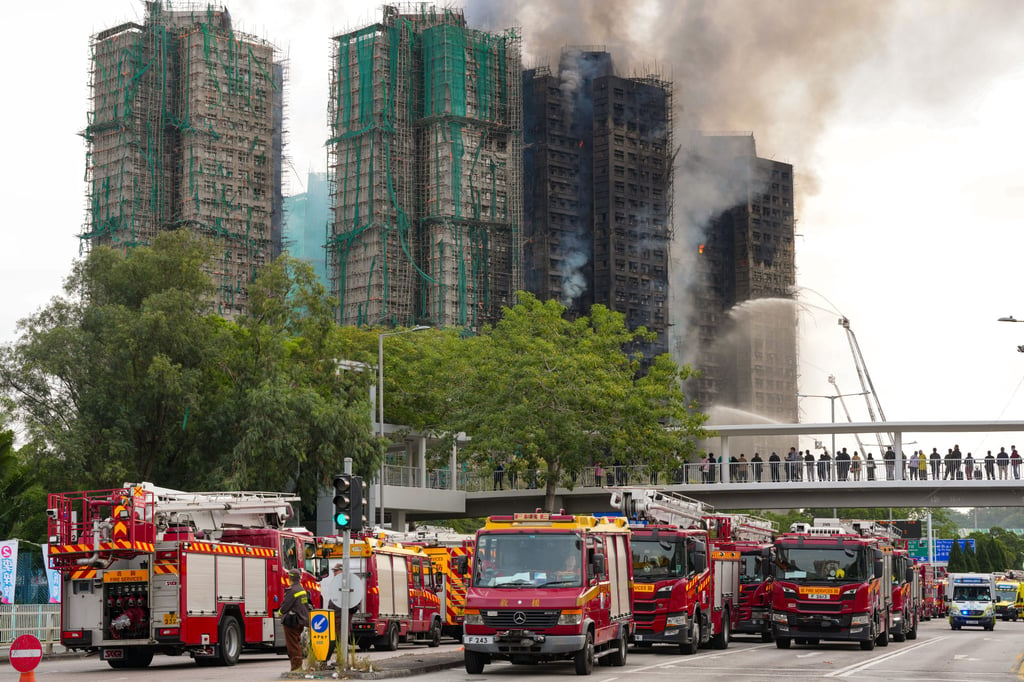
However, it also slammed civil servants, saying they had just “passed the ball” to others, ignoring the real and legitimate safety concerns of residents and leaving them “in a helpless and desperate situation”.
“Had the various [departments] involved had a sense of crisis about the risks and possible consequences of building facade fires, plugged the loopholes in the regulatory regimes … There was a real possibility that the misconduct of the private sector and the fire hazards in Wang Fuk Court could have been rectified or removed before the fire,” the committee added.
The handling of complaints about smoking on construction sites was a glaring example of this buck-passing, with the complaints deflected among the Fire Services Department, Labour Department, Department of Health and other bodies, none of which took ownership due to jurisdictional claims and passive enforcement.
At the same time, with each regulator operating in its own lane and not sharing its professional registers, prosecution logs, records of corrupt behaviour or of triad involvement, a contractor could be repeatedly disciplined for regulatory offences by one regulator while another authority continued to renew the contractor’s license, the committee noted.
“The [fire] exposed a systemic failure of coordination among the government bodies responsible for building safety, temporary works and building materials regulation, occupational safety and health enforcement, fire safety,” it said.
“No single department had full situational awareness of the risks accumulating on the facade. Each department acted within its own silo, and no system existed for sharing and cross‑checking information, escalating concerns, or intervening jointly.”
In the Thursday press conference on Thursday, Chan said the recommendations raised by the committee were “closely interlinked and involve the work of different policy bureaus and departments”.
“What we need to do is not just implement the Independent Committee’s recommendations item by item, but more importantly, tackle cross-departmental and cross-cutting issues,” he added.
“I will require all policy bureaus and departments to implement the recommendations swiftly, accurately and effectively … continuously examining whether there is room for further optimisation to go the extra mile to ensure no stone is left unturned.”
Chan said a central data system will be established to enable different departments to break information silos, sharing records on inspections, violations and convictions to prevent non-compliant contractors from covertly securing licences or contracts.
He said complaints related to building renovations would also be uploaded to the system, with artificial intelligence used to track the progress of complaint handling and identify repeated complaints to enable early detection of risks.
“We will implement the recommendations one by one to prevent similar tragedies from happening again.”
KioskNews shows a cleaned-up reading view extracted from the publisher’s page — the original always lives on their site, not ours.