Can Japan beat the data center backlash?
While countries such as the US, Australia, the UK and even rural China have been strongly opposed to data center, there might still be an opportunity in Japan
By Catherine Thorbecke / Bloomberg Opinion


Among the nearly 100 pages of risk factors outlined in Anthropic PBC’s landmark initial public offering are the catastrophic threats to humanity that have grabbed headlines. However, it also flagged a more immediate concern that could derail business: mounting backlash against data centers.
Public controversy and regulatory scrutiny over the environmental impact, land and water use as well as consumption of limited power resources threaten to delay or prevent data-center development, Anthropic said in the prospectus. That would raise costs and limit its ability to scale, develop and deploy artificial intelligence (AI) models, it says.
The company is right to worry. Hatred toward data centers has united people across the political spectrum and around the globe. Warning that the technology could create existential risks probably does not inspire anyone to want to give the AI boom a physical address in their backyards.
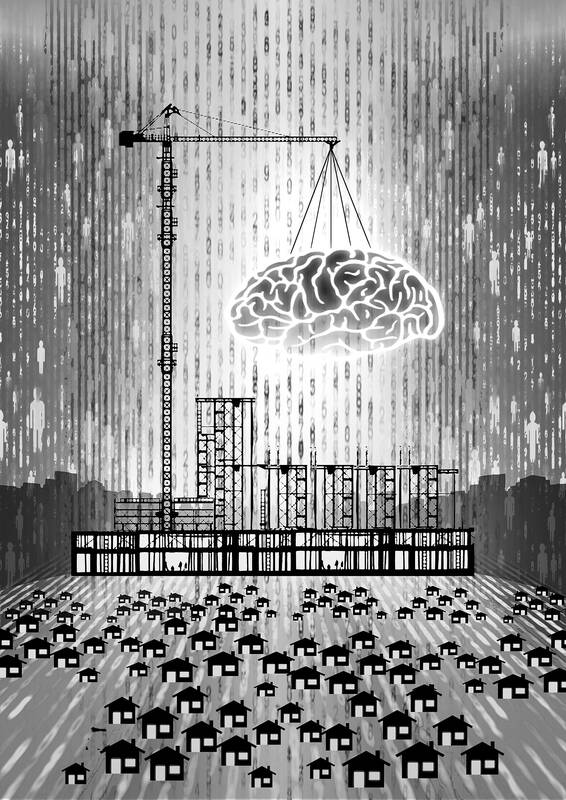
Illustration: Yusha
Opposition to the build-out has surfaced in Australia, the UK and even rural China. Now, it is starting to fester in pockets of Japan, just as Japanese Prime Minister Sanae Takaichi is pushing massive investment. Meanwhile, Anthropic is reportedly in final talks with NTT Data Group to build one of the country’s biggest data centers near Osaka.
Yet while anxiety around the technology runs high globally, the Japanese are unusually sanguine about it — robots are seen here more as friendly helpers such as Doraemon than The Terminator. For a smaller, relatively insular economy facing acute labor shortages and demographic pressures, the upsides could be enormous.
Many of AI’s strengths neatly address Japan’s acute gaps: translation in a country that has been flooded with foreign tourists, software engineering in a tech industry historically stronger in hardware than coding, boosting efficiency for small and medium-size manufacturers, and easing administrative burdens for the growing cohort of elder caregivers. The list goes on.
For now, Japan’s opposition is scattered and local, hardly close to the organized political movement we are seeing in the US. However, there was little excuse anywhere to be so caught off guard. I have been tracking the AI backlash for a while, and the industry’s implicit threat that this might kill us all or take your job has never been an effective way to greet new neighbors. Outside of the Silicon Valley bubble, data centers as the physical manifestation of an abstract tech revolution have become easy targets. It is more than noise, eyesore or water use. It is about having a say.
This is partly why the US revolt goes far beyond NIMBYism. Nearly three-quarters of Americans oppose having a data center in their community, while two-thirds are against new ones anywhere. It is already having a material impact: In the first half of this year alone, at least 106 projects, representing about US$198 billion in investment, were blocked or delayed, the Data Center Watch said. It offers lessons for Tokyo to not assume these are just isolated groups of Luddites.
Japan has the most favorable environment for data center development among the OECD markets in the Asia-Pacific region, given its established digital infrastructure sector, BloombergNEF assessed. It already has some 2 gigawatts of operating IT capacity, second in the region only to China. Local opposition is a lurking threat, but the more immediate constraint is power.
These facilities guzzle enormous amounts of energy to run servers and cooling, and Japan has never been energy rich. Power demand from new data centers and chip fabs is expected to rise from less than 1 percent of the country’s electricity consumption this year to nearly 7 percent by 2035, SMBC Nikko analysts have said. Addressing this challenge could help catalyze a broader shift toward clean energy.
The government, for its part, seems aware of the problem. Takaichi has pledged a “sufficient and stable supply of electricity” to meet the growing demands from data centers, doubling down on an earlier promise to “take all possible measures” to do so. The policy direction is right, if ambitious, but increasing investments in green energy would help Japan build resilience in the future, not just power these facilities.
Currently, most data center capacity is concentrated in the Greater Tokyo region and Osaka. Mindful of risks in the event of earthquakes or other unexpected shocks, officials have identified potential future sites in Hokkaido, Kyushu and elsewhere. Spreading infrastructure beyond crowded urban areas would also reduce some of the nuisance complaints that have fueled opposition elsewhere.
Japan was initially slow to adopt AI, but usage has finally surged. That delay could become a second-mover advantage that the country cannot afford to squander as investors start questioning the payoff from the expensive, hype-fueled AI infrastructure spree.
The country has long excelled at developing infrastructure that works for people, from trains that run on time to urban design that fosters community. That could be a major advantage. If Tokyo can construct data centers without neighbors bringing out the pitchforks, it could define what comes next.
Catherine Thorbecke is a Bloomberg Opinion columnist covering Asia tech. Previously she was a tech reporter at CNN and ABC News. This column reflects the personal views of the author and does not necessarily reflect the opinion of the editorial board or Bloomberg LP and its owners.
KioskNews shows a cleaned-up reading view extracted from the publisher’s page — the original always lives on their site, not ours.