Lawmaker questions whether proposed HK$100,000 fines for private hospitals will deter hidden fees

A Hong Kong lawmaker has questioned whether fines under a government proposal to increase price transparency among the city’s private healthcare providers are too low to serve as an effective deterrent.

Under the proposed bill introduced to the Legislative Council by health minister Lo Chung-mau on Friday, private healthcare providers will be required to provide a bilingual price list at reception desks and cashier counters. They must also give patients budget estimates before specific treatments and procedures and provide an explanation if patients’ bills are 20 per cent or more than the original estimate.
The new rules will apply to all private clinics, hospitals, and health centres.
Private hospitals that do not comply will see a maximum fine of HK$100,000 for each violation. For day procedure centres and clinics, this penalty falls to a maximum fine of HK$25,000.
Adrian Ho, a lawmaker with the pro-establishment New People’s Party, told the minister in LegCo that the proposed fines might be too low to have a deterrent effect on private hospitals.
Ho said some private hospitals, such as “one in Happy Valley” – likely a reference to the Hong Kong Sanatorium & Hospital – earn “massive profits” and HK$100,000 is a small sum for them.
“Even if they are fined 10 times, that’s just HK$1 million, which is just loose change for them,” Ho said in Cantonese.
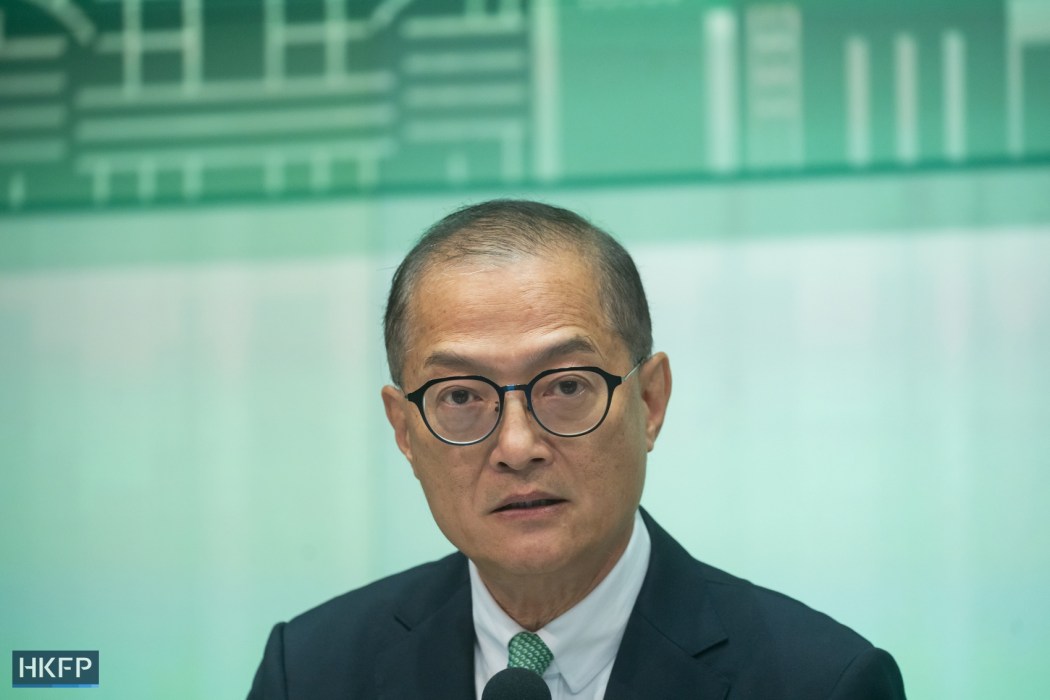
In response, the health chief said penalty tickets would be issued on a per-case basis. “If a major hospital sees a high volume of patients and is fined repeatedly, the cumulative fines can add up to a substantial sum,” Lo said in Cantonese.
No price cap
Apart from providing price information and budget estimates to patients, the proposed bill will also require private hospitals to submit statistics on billing and figures related to specific treatments and procedures to the Department of Health.
Licensed private hospitals will also have to publish historical billing statistics including discharges, median lengths of stay, hospital fees, and medical practitioners’ fees.
Lo told legislators that the government is not considering capping the prices charged by private healthcare facilities, since patients can simply go elsewhere if prices are too high.

The government said in its proposal that the new rules will also take into account the nature of healthcare services – unforeseeable clinical factors may arise during treatment and necessitate medical charges that are difficult to predict in advance.
In cases where a facility finds it impractical to provide budget estimates – for example, during sudden medical emergencies that require immediate care – it should provide a fixed price for the service to the patient or their representative within 48 hours of treatment.
Safeguard press freedom; keep HKFP free for all readers by supporting our team
Support HKFP | Policies & Ethics | Error/typo? | Contact | Newsletter | Transparency & Annual Report | Apps
Make a one-off donation.



Irene Chan is a reporter at Hong Kong Free Press and has an interest in covering political and social change. She previously worked at Initium Media as chief editor for Hong Kong news and was a community organiser at the Society for Community Organisation serving the underprivileged. She has a bachelor’s degree in Journalism from Fudan University and a master’s degree in social work from the Chinese University of Hong Kong.
Irene is the recipient of two Society of Publishers in Asia (SOPA) awards and three honourable mentions for her investigative, feature and video reporting. She also received a Human Rights Press Award for multimedia reporting and an honourable mention for feature writing.
KioskNews shows a cleaned-up reading view extracted from the publisher’s page — the original always lives on their site, not ours.