Bull sharks are hanging around for longer and more nippers are swimming at NSW beaches. What will summer look like?
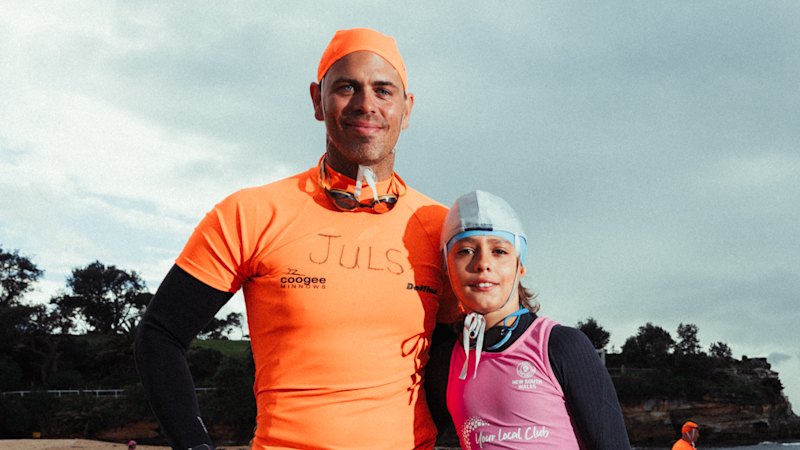
Every Sunday in summer, eleven-year-old nipper Oliver van den Berg dons a blue cap, goggles and a pink rash vest. Since last season, when three people died in a horror run of shark attacks that included four incidents within 48 hours at NSW beaches, van den Berg’s outfit has included a magnetic shark deterrent band wrapped around his ankle.
“As a family, we became much more conscious of the environmental factors, storms, rainfall intensity and things that make [attacks] potentially more likely,” says Julian van den Berg, Oliver’s father and an age manager at Coogee Minnows, the Junior Surf Life Saving Club at the same Sydney beach where a great white took part of Leah Stewart’s left arm in June.
While Julian considers last summer “particularly traumatic” in terms of shark incidents, and finds it “genuinely concerning” that Stewart was attacked so close to the beach on a bluebird day, he’s confident the risks can be mitigated through safety programs including shark surveillance drones and individual judgement calls.
He’s not alone.
A record 31,000 children participated in nippers programs across the state in 2025. Surf Life Saving NSW says 2026’s enrolments are on track to meet or slightly exceed last year’s numbers by the time late-starting clubs close registrations towards December.
Surf Life Saving NSW chief operating officer Phil Ayres partially attributes this to aerial surveillance at 97 beaches across the state, the vast majority of which are nippers beaches.
In addition to the 73 drones operating as part of the state government’s $120 million Shark Management Program – which Primary Industries Minister Tara Moriarty calls one of the most comprehensive in the world – about 54 Surf Life Saving Clubs across NSW have their own voluntary drone capabilities, specifically focusing on kids in the water during nippers events.
“As we do anyway for all sorts of other risks that you encounter out in the beach, we do risk assessments before, during nippers activities on the weekends and training mid-week, in terms of surf conditions, water visibility and so forth,” says Ayres.
“There are power craft on location as well. So there are certainly plenty of mitigations as we have always had for our nippers programs.”
That nippers teaches children beach safety – reading surf conditions, understanding what rips do and how to identify them – is a key reason Sydney parents cited for their return, even as they told this masthead they’d heard of some families opting out.
It’s this educational element to the competitive sport that Emeritus Professor Rob Harcourt, of Macquarie University School of Natural Sciences, says is crucial to keeping Australians safe in the water.
Surf Life Saving Australia’s 2025-2026 Summer Coastal Drowning Report, published in March, found 48 per cent of the 50 NSW coastal drowning deaths during the season happened on beaches, compared to the three fatalities from shark attacks during that same time period. However, Harcourt says we “don’t have the same visceral fear of drowning that we do with sharks”.
“Even with the number of shark bites that have caused a lot of concern for everyone, the risk for an individual who goes to the beach occasionally is very, very, very low,” he says.
While NSW drone operators detected 1225 sharks in July and August, Harcourt says it’s a case of increased visibility, rather than heightened prevalence.
“That doesn’t mean we should be complacent. There is always the risk of having someone being bitten by a shark.”
This El Niño is shaping up to be Australia’s wettest on record. Harcourt emphasises that murky or polluted water is a “very good gauge” for not swimming.
Back at Coogee Beach on Sunday, 12-year-old Gisele Ashcroft has returned for her eighth nippers season.
Unlike Oliver van den Berg, she doesn’t wear a shark deterrent band. But, like her clubmate, Gisele won’t go into the water if it’s murky.
“The images coming out of the drone are absolutely stunning. Great clarity, you can see everything in the water, unless it’s a bit murky,” says Emily Ashcroft, Gisele’s mother.
Tips to keep shark safe this summer
- Swim between the flags
- Avoid swimming after heavy rain
- Look at Beachwatch. If it says the water is likely to be polluted or murky, that’s a sign not to swim
- Download the SharkSmart app, for real-time shark management alerts
- Know where the shark trauma kit is at your local beach
- Parents who have children swimming in the water regularly may benefit from undergoing a first aid course, so they know what to do in the case of an attack
As a parent, Emily says, the shark incidents last season were a concern. But as a Minnows executive committee member and branch delegate, she knows the protocols in place.
“Our marine friends are always present, ” says Emily.
“But we all know what to do, and the kids know what to do if that happens, so I think we’re really well-prepared and the kids are really well-prepared as well.”
The Morning Edition newsletter is our guide to the day’s most important and interesting stories, analysis and insights. Sign up here.


KioskNews shows a cleaned-up reading view extracted from the publisher’s page — the original always lives on their site, not ours.