Telangana Farmers Turn To Water Tankers As Dry Spell Threatens Crops
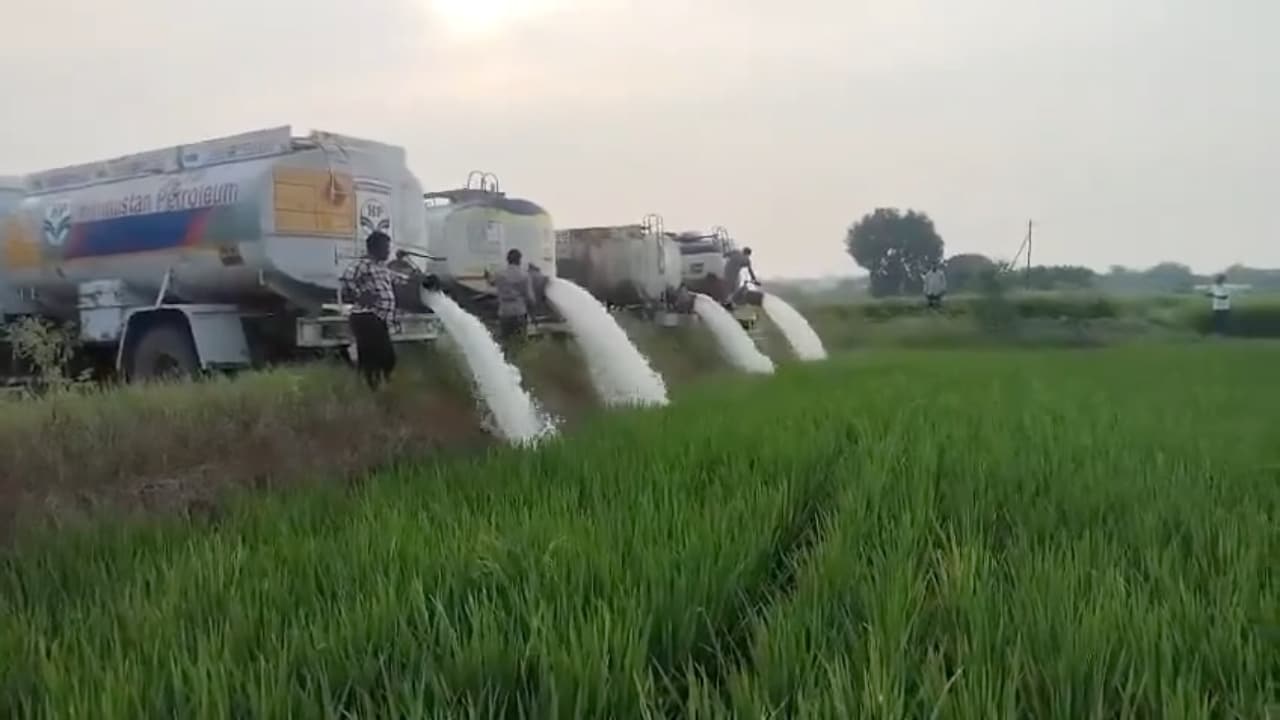
Farmers across Telangana are struggling to protect standing crops amid a prolonged dry spell, declining reservoir storage, and concerns over irrigation water and electricity availability.
As crops approach critical growth stages, some farmers have resorted to hiring water tankers to save their paddy fields, adding significantly to cultivation costs.
Farmers in several parts of Telangana are using water tankers to prevent their standing paddy crops from drying up amid inadequate rainfall, water scarcity, and power supply disruptions.
In Ananthasagar village of Hasanparthy mandal in Hanamkonda district, farmer Shyam Sundar Reddy, who cultivated paddy on eight acres, has brought in four water tankers to irrigate his fields and protect his investment.
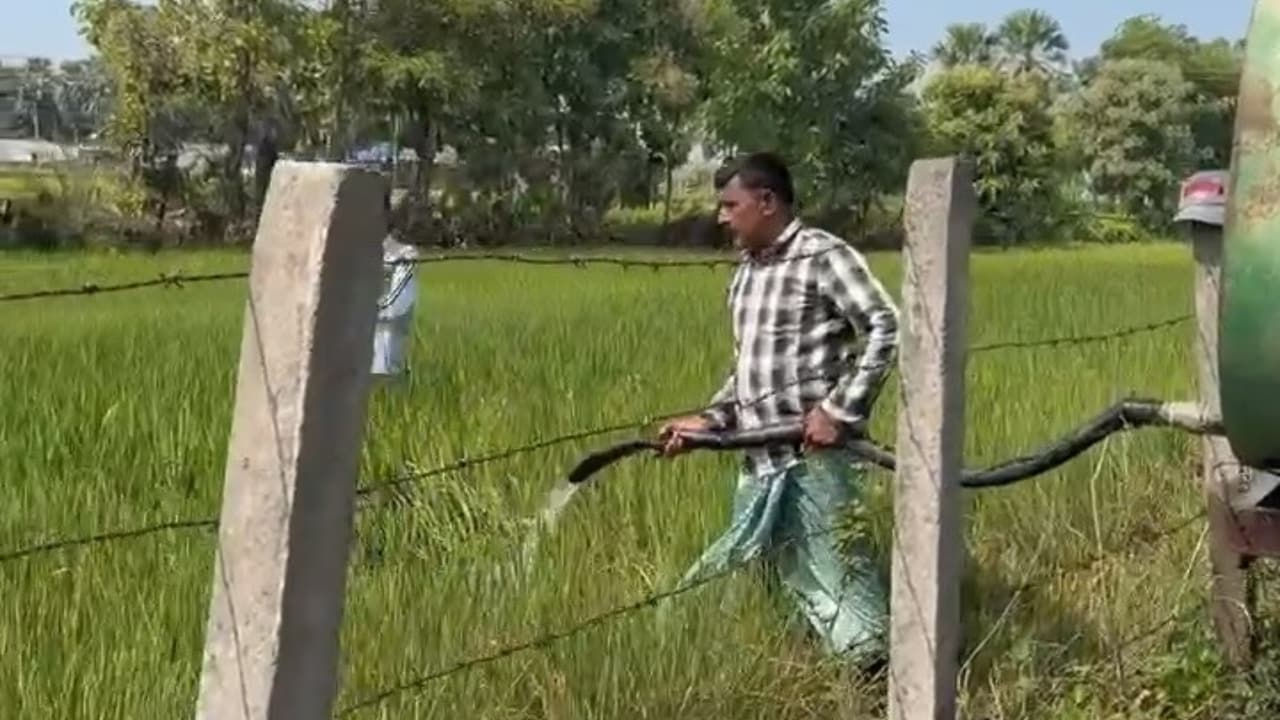
Similarly, in Bopparam village of Nennel mandal in Mancherial district, farmer Palle Narsaiah has been forced to hire a water tanker to provide a crucial final round of irrigation in the absence of adequate rainfall.
Explaining why he turned to a tanker despite uncertain returns, Narsaiah said, "Whether we get profit or not, how can we lose the crop that has come to this stage? So we brought a tanker and connected the water pipes."
He also appealed for greater government attention to farmers' needs, arguing that reliable electricity and adequate water storage are essential for sustaining agriculture.
Responding to the Revanth Reddy government's appeal for a farm holiday, he said, "Only if a farmer does agriculture do they survive; if the farmer takes a holiday, these 99 living beings will be in chaos." He highlighted the wider dependence of rural Telangana's livelihoods and ecosystems on agriculture.
Severe Rainfall Deficit, Falling Reservoir Levels
According to India Meteorological Department data, Telangana recorded just 3.5 mm of rainfall against the normal 75.6 mm between October 1 and 21, marking a 95% deficit. Twelve districts received no rainfall during the period. The southwest monsoon had already ended with a 17% seasonal deficit, with the state receiving 615.5 mm of rainfall against the normal 740.6 mm.
Water availability has also deteriorated. According to irrigation department data, the combined storage in major and medium reservoirs across the Krishna and Godavari basins stood at 503.43 TMC on September 30, compared with 834.92 TMC on the corresponding date last year, a decline of nearly 40%.
The state has identified preliminary drought conditions in 315 mandals, including 101 classified as severely affected and 214 as moderately affected.
To address the situation, the government has proposed an assistance package of Rs 1,986.89 crore for farmers affected by deficient rainfall and crop losses.
Power Demand Adds Pressure
Electricity demand has also added pressure on the power system. Telangana recorded a peak demand of 19,543 MW on September 9, 23% higher than the 15,906 MW recorded on the corresponding day last year.
Officials said the state has continued to meet rising demand, while farmers have reported local irrigation-related difficulties.
Political Row Over Water Management
The crisis has also triggered a political row. BRS working president KT Rama Rao (KTR) accused the Congress government of failing to utilise available river water and operate key lift-irrigation projects despite warnings about El Nino.
"This is not a drought brought by fate, but one created by Congress," KTR said, alleging that more than 750 TMC of Godavari water and 250 TMC of Krishna water had flowed downstream since June 1.
He also questioned the non-operation of the Palamuru-Rangareddy and Kalwakurthy lift-irrigation schemes. These figures and allegations have not been independently established in the cited reports.
Concerns Over Continued Rainfall Uncertainty
El Nino-related concerns have intensified fears of continued rainfall uncertainty. Experts have stressed the importance of reservoir management, rainwater harvesting, groundwater recharge, and efficient irrigation practices.
With crops remaining vulnerable and farmers facing mounting expenses, reliable farm power, timely drought relief, and effective water management remain urgent priorities.
KioskNews shows a cleaned-up reading view extracted from the publisher’s page — the original always lives on their site, not ours.