Diana’s brother is right to be furious with Charles over Harry and William
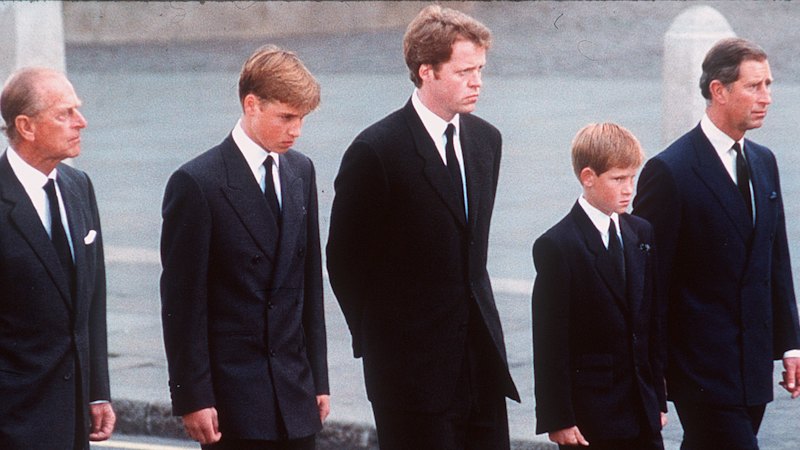
Next year will mark the 30th anniversary of the death of Princess Diana but still it makes headlines. The latest furore is about her brother Charles Spencer – he of the Westminster Abbey eulogy – who has written a new book called Swan Song: Diana, My Sister. It has inevitably been leaked and the big reveal is a heated conversation (actually it sounds more like a full-blown row) between Spencer and the then-Prince Charles over whether or not the young princes, William and Harry, should walk behind their mother’s funeral cortege.
The book says that, during the row, Spencer said the idea was “barbaric” while the King said he had walked behind the gun carriage at Lord Mountbatten’s funeral and that it was tradition. Spencer apparently riposted that Charles had been 30 when Mountbatten died (in 1979) and it wasn’t the same. And the King “went nuts”. Touché.
I have to say I agree with Spencer. Whatever you think of Princess Diana’s brother (and he’s certainly a colourful piece of work with many alleging he has written this book to raise cash for his latest divorce) he was right about the boys. What empathy-free monsters ever thought it was appropriate for children of 15 and 12 to have to walk so publicly, so far, in the glare of the entire global media, when their beloved mother had just died unexpectedly in a car accident?
The death of a parent in early adolescence is traumatic enough anyway, without that deep personal grief having to be performed (and contained) in front of hundreds of millions of people. Prince Harry says in his memoir Spare how traumatic it was. He told Newsweek in 2017: “I don’t think any child should be asked to do that, under any circumstances. I don’t think that would happen today”.
Prince William is much more stiff upper lip, but he has said that he felt completely numb and disorientated and described Diana’s death as “an earthquake which split my mind and life”. Of the walk behind the coffin specifically, he said: “It wasn’t an easy decision” – an oblique reference to the rows that surrounded it, perhaps – “and it was sort of a collective family decision to do that. It was one of the hardest things I have ever done, but there was this element of duty and responsibility that you have to do things you don’t want to do”.
Ouch. Both boys have also talked of the overwhelming pressure they felt not to cry in public. Spencer was right to call it “barbaric”.
We shouldn’t be surprised that those tumultuous events continue to reverberate down the decades; I expect that they will echo down the centuries. The tragedy of Diana’s hounding by the paparazzi, our collective insatiable curiosity about her life and the tawdriness of her death at 36 in a Mercedes driven by a drunk chauffeur in the employ of a sex-criminal (Mohamed Fayed), is a saga for the ages.
But even if it hadn’t been so public, losing a parent so young is the kind of blow that defines your life, whether you are prince or pauper. William has spoken about the pain of not having his mother around to see his own children grow up. (How he must have felt when his wife, Catherine, had cancer and his children faced losing their own mother at a young age doesn’t bear thinking about... Poor William.) And it is clear to all of us that Prince Harry is still acting out the trauma of losing his mum so young. It is there in his terror of something awful happening to his own wife or children, expressed in his ongoing rows with the authorities over security and press coverage.
Of course, funerals and the arrangements around them are a notorious flashpoint. Decisions have to be made while emotions are running high. Grief makes people irrational – their normal boundaries have been breached; we are oversensitive and not as tolerant of the foibles or perspectives of others as we might usually be. It is incredibly easy, in such a situation, to say something we later regret. And all families have their undercurrents and unspoken tensions, particularly between siblings and in-laws.
Funerals bring out the best, but also the worst in us. I don’t know a single family who hasn’t experienced some kind of row or tension around a funeral – whether it’s over who should speak, how it should go, who should do what, who pays, and whether it’s what the departed would have wanted (too many of us haven’t had that conversation while we could…)
Cruse, a bereavement support service, says such rifts and troubles around a death are all too common. Sometimes how we feel about the deceased is uncomplicated: we totally loved them, we totally didn’t. But often we are ambivalent (like Prince Charles, who, according to Spencer, was furious that Diana had eclipsed him). In death, ambivalence hits you in the face like stepping on a rake – wham! When someone dies there is no longer any time to work out your difficulties; those tricky emotions have nowhere to go. We’re sad, we’re angry about things that have happened and we have nowhere to put those feelings. So they get projected on to other family members.
This is particularly true in our Western, uptight culture where we don’t have a tradition of howling our collective grief together, or banging our chests in outlandish communal displays of emotion. The funeral arrangements, or arguments over money, become the outlet instead.
Given the immensity of what happened with Princess Diana it is not surprising emotions still run hot. My heart goes out to all of them. So much grief, such a huge tragedy, reverberating down the years, down the centuries. They may be royal, but in grief we are all too human.
Eleanor Mills is a former editorial director of The Sunday Times and editor of its magazine. She is now a columist for the UK Telegraph.
More:
KioskNews shows a cleaned-up reading view extracted from the publisher’s page — the original always lives on their site, not ours.