Xi-Putin-Trump meeting in Shenzhen is no Yalta 2.0
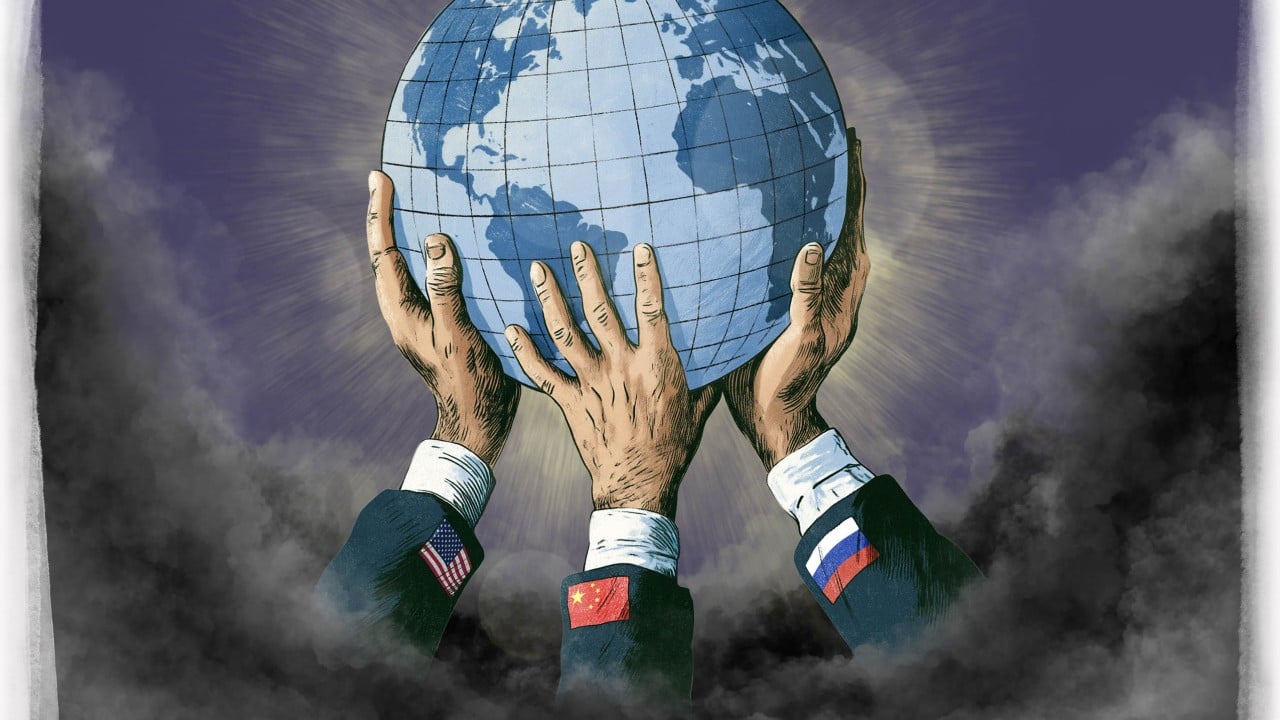
As leaders from across the Asia-Pacific converge on Shenzhen this week for the annual Apec Economic Leaders’ Meeting, global attention has zeroed in on a planned, unprecedented sideline gathering: a trilateral summit bringing together President Xi Jinping, Russian President Vladimir Putin and US President Donald Trump.
At a moment when the international order is strained by protracted regional wars, supply chain fragmentation and eroding strategic trust, any direct engagement among Beijing, Moscow and Washington carries enormous weight. Even so, some Western commentary has continued to view the meeting through a distorted Cold War lens.
Some international media reports have invoked World War II-era imagery and dubbed the Shenzhen summit “Yalta 2.0”. That analogy is both analytically flawed and historically tone-deaf. Convened in February 1945 in Crimea, the original Yalta Conference saw Franklin D. Roosevelt, Joseph Stalin and Winston Churchill – the leaders of the United States, the Soviet Union and the United Kingdom – coordinate the final defeat of fascism and sketch the architecture of the post-war order.
Over the decades, declassified archives have exposed Yalta’s darker legacy: an exercise in raw power politics defined by secret agreements and the unilateral carving up of spheres of influence. Worse still, the allies traded away the sovereign interests of nations absent from the table, including China, which was pushed into accepting territorial and strategic concessions without representation.
Equating a 21st century meeting in Shenzhen with Yalta misreads both the realities of modern diplomacy and China’s strategic posture. Beijing has been resistant to formal bloc politics and exclusionary geopolitical arrangements, offering only a tepid response to Trump advancing a “G2” concept which would have divided global management between two powers. Unlike the closed-door horse-trading of 1945, the Asia-Pacific Economic Cooperation (Apec) forum gathering in Shenzhen is anchored in open regionalism and multilateral economic integration.
If Washington, Beijing and Moscow are not dividing the world between them, then what is driving them to sit down together now? The answer lies in distinct, pragmatic calculations.
For Russia, facing prolonged sanctions and diplomatic isolation over the war in Ukraine, sitting alongside Washington and Beijing in a high-profile trilateral format is an unmistakable demonstration that it remains an indispensable global player. It signals to the international community that Moscow cannot be sidelined from major Eurasian and global security arrangements.
For the US, domestic political headwinds are forcing a recalibration abroad. Following setbacks in this month’s midterm elections, Trump’s White House faces mounting pressure at home to curb inflation, avoid costly foreign entanglements and deliver tangible diplomatic results. Engaging directly with two primary strategic competitors offers Washington a practical avenue to manage crises and contain external volatility while tending to domestic priorities.
For China, hosting such a consequential dialogue reinforces its role as a diplomatic stabiliser and pragmatic convenor. The setting itself carries weight. In four decades, Shenzhen has transformed from a coastal border town into a global hub of technological innovation. Hosting direct talks among major powers here sends a clear message: Beijing favours economic connectivity over decoupling and diplomacy over confrontation.
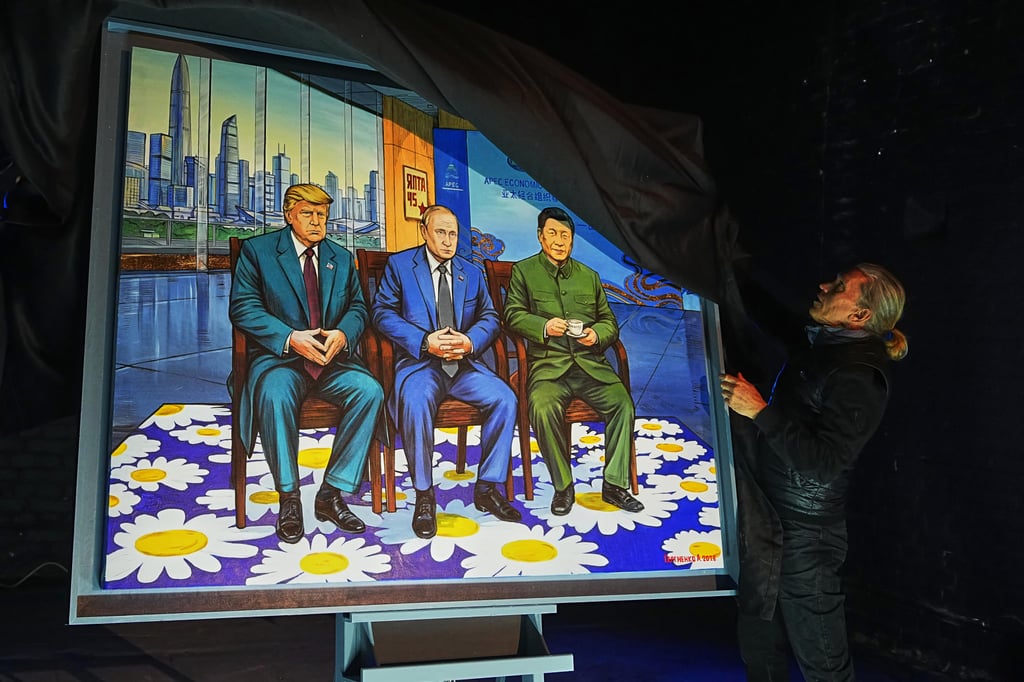
Beyond the immediate political calculus of each capital, a China-Russia-US trilateral meeting carries structural significance for the international system for three critical reasons.
First, it provides an essential guard rail against great power miscalculation. In the past decade, a steady erosion of strategic trust has prompted some observers to draw grim parallels between today’s geopolitical friction and the volatile European landscape leading up to 1914.
SCMP Plus is a new premium news platform that gives you an
all-inclusive edge to stay ahead on China news.
To access our exclusive content you’ll need to subscribe.
Already a subscriber?
LOG IN
However, 2026 is not 1914. Unlike the rigid alliance systems that sleepwalked into World War I, direct communication among three permanent members of the UN Security Council creates a vital circuit-breaker. Candid dialogue at the highest level helps de-escalate flashpoints, reinforces the UN-centred international framework and prevents regional conflicts from spiralling into wider systemic confrontation.
Second, it is vital for stabilising global energy security and supply chains. Geopolitical ruptures have upended energy markets, disrupted maritime trade routes and fuelled global inflation, disproportionately hurting developing economies.
Together, Russia as a leading energy exporter, the US as a top producer and financial hub, and China as the world’s manufacturing powerhouse and largest energy consumer hold the keys to commodity stability. Even a tacit trilateral understanding to avoid further escalation in energy sanctions or maritime chokepoint disruptions would inject much-needed predictability into global markets and support a more orderly energy transition.
Trump open to nuclear talks with Xi and Putin
Third, it creates a more constructive format for major-power interaction. For decades, relations among Washington, Moscow and Beijing were shaped by zero-sum triangular games, with two powers leveraging each other against the third. Bringing all three leaders to the same table breaks that cycle. It proves that nations with divergent political systems and competing interests do not have to lock themselves into rigid ideological camps.
By opening a direct channel to tackle shared transnational threats, from artificial intelligence governance to climate change, this format sets a practical precedent. Rival powers can still compete fiercely while coexisting and shouldering collective global responsibilities.
In a world pulled between economic integration and geopolitical fragmentation, the scepticism surrounding the Shenzhen trilateral meeting stems from an inability to imagine international politics beyond zero-sum rivalry. Yet as leaders gather in southern China, the real significance of this dialogue lies in its rejection of fatalism.
By choosing engagement over estrangement, the world’s most consequential powers have an opportunity to prove that global politics need not be dictated by the ghosts of Yalta or 1914 but by pragmatic crisis management and calibrated cooperation.
KioskNews shows a cleaned-up reading view extracted from the publisher’s page — the original always lives on their site, not ours.