Genetically Enhanced War Dogs Are Coming With First Puppies Expected In 2027 (Exclusive)

Rob Keyes manages content planning and processes, business development, social media, strategic partnerships, branding and PR for Screen Rant and consults for CBR, Collider, and MovieWeb. You may know also him from various television and radio appearances covering the superhero beat, co-hosting the Screen Rant Underground and Total Geekall podcasts - and currently, PODCAST X - or founding and building Game Rant.
In addition to expanding and launching new verticals on ScreenRant, Rob Keyes also works with and on passion projects involving National Geographic, Colossal Biosciences, theme parks, and travel/expedition companies around the globe.
Find Rob on Twitter @rob_keyes or @failcube and if you need to reach either site, he's your guy rob [at] screenrant [dot] com.
EXCLUSIVE: The company behind the effort to bring back extinct dire wolves has opened the doors for the introduction of genetically and cybernetically enhanced dogs, and the first version of this will have puppies expected in early 2027, Colossal Biosciences CEO Ben Lamm reveals to ScreenRant.
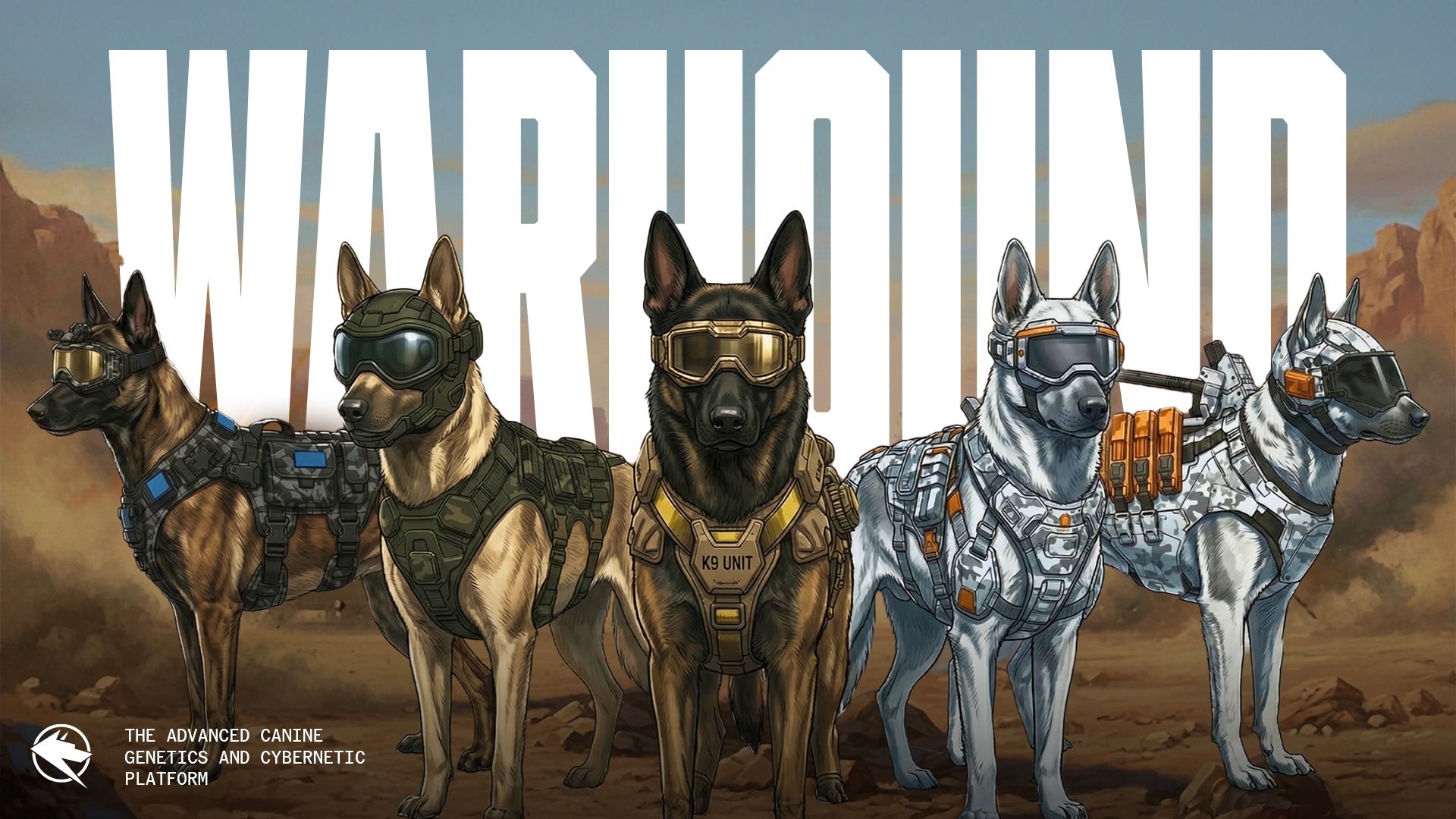
The just-announced $200 million venture, called Warhound, is bringing together technology from Colossal and Palmer Luckey's AI-powered defense company Anduril. The startup aims to develop healthier, more capable working dogs for potential military, law enforcement, and emergency response customers, and eventually, help improve the health of household pets, but the seemingly far-fetched announcement came earlier than planned.
"We weren't even going to announce today," Lamm told me in an exclusive, last-minute interview for ScreenRant, after details of Warhound leaked long before any intended unveiling. The Texas-based company was conceived by Lamm, Luckey, and geneticist George Church (co-founder of Colossal), and is led by CEO David Spirk, a former U.S. Special Operations Command chief data officer. But it's just starting out.
Lamm jokingly described the project's origins as a "Captain America dog program with Iron Man." I spoke with him to understand what Warhound is actually developing, what the business model is for investors, how far along the science really is, and what in the world they're talking about regarding cybernetic enhancements...
How Colossal's De-Extinction Technology Led To Warhound

First, some background: Lamm co-founded Colossal with geneticist George Church to pursue de-extinction technology, beginning with the woolly mammoth. This core project is still planning to see its first mammoth calf in 2028 I'm told. Its slate of projects has expanded exponentially in the last few years to include the dodo, thylacine, dire wolf, bluebuck antelope, and New Zealand's giant moa, the latter of which is directly supported by The Lord of the Rings filmmaker Peter Jackson.
I've covered Colossal's work extensively for ScreenRant, including its dire wolf project which already produced three genetically edited gray wolves with traits associated with the extinct species, and they look ripped straight from the world of HBO's Game of Thrones. The more practical applications of their work is in the technologies developed through research being applied to conservation efforts, including cloning endangered red wolves and developing vaccines to address EEHV in elephants, etc. Colossal also acquired animal cloning company Viagen in 2025 which plays directly into what Warhound will be doing.
Warhound originated from conversations between Lamm and Luckey approximately 18 months ago at a conference hosted by tech entrepreneur and XPRIZE founder Peter Diamandis. They initially sought $100 million in funding but attracted twice that amount from investors including Sequoia Capital, In-Q-Tel, and ARK Invest.
How Warhound Is Using Cloning And Genetic Editing

When I asked Lamm how far along Warhound is with developing its first enhanced dogs, he revealed that research is already underway:
"Warhound has already sampled dogs, some top performing dogs from the U.S. military, [...] biobanked it, grown cells, and they're already editing dogs right now for hip dysplasia and muscle atrophy and a couple of other targets to make them healthier. We will have our first puppies at Warhound in Q1."
The company's immediate research focuses on addressing common, inherited health conditions we see in many dogs now, including hip dysplasia, muscle atrophy, and potentially cancer. When I asked how far genetic engineering could eventually go on this front, Lamm discussed research into enhancing dogs' sense of smell. Beagles, Labradors, and bloodhounds were given as examples of dogs bred for hunting scents but Lamm describes these as the "best of the worst" with respect to what Warhound promises they can do in their cloned super dogs.
"If you go look at wolves and other animals, there are actually genes where they have significantly stronger olfactory smell genes," he explained. "We could put those in."
Why Warhound Wants To Change How America Gets Its Working Dogs
According to Warhound, more than 80% of U.S. military working dogs are acquired from Europe, and fewer than half of those purchased qualify for service. Lamm tells me that American agencies compete with international buyers for suitable animals, making procurement difficult even before the dogs begin training so this is just one element they can address.
"There's a unit in the U.S. military that just went over to buy 10 dogs. They told us the story a couple weeks ago. They came back with two."
Dogs that don't complete training must then be placed elsewhere, whether through adoption, kenneling, or other arrangements. Warhound hopes that cloning animals with proven performance characteristics, combined with genetic editing and improved training, can reduce the roughly 50% failure rate to as low as 5%.
What Anduril's Cybernetic Enhancements Actually Mean
The strangest and arguably scariest part of the Warhound announcement references "cybernetic augments," software, and battlefield situational-awareness technology supplied through its partnership with Anduril but this is in reference to replacing the current gear service dogs wear.
"We're not putting anything in the dog. We're not hurting the dog. These are all like stuff we put on."
When I asked whether the enhancements were entirely wearable, he confirmed: "Yeah, all wearables."
Warhound plans to build on protective equipment already used by working dogs, including vests and eye and ear protection, with Anduril technology intended to provide handlers with more data on the dogs and surroundings. The announcement specifically mentions Eagle Eye technology, although Lamm did not detail the equipment the first dogs will use.
Warhound Plans To Offer Working Dogs As A Service
Despite the announcement focusing on working dogs and referencing the potential of improving or replacing dogs used across emergency, police, security, and military services, Warhound is a privately funded startup that has yet to secure government customers. Lamm said the company hopes to work with organizations including the military, TSA, firefighters, and other emergency responders, but has no partnerships with those agencies yet since they're only at the seed stage.
"We're not looking at selling these dogs. We're looking at this as like a service platform."
Instead of cloning and selling animals at scale, Warhound plans to package everything as an ongoing service, and for the dog this means their entire lifecycle. Breeding, training, equipment, ongoing care, and retirement into a long-term service is all part of the service being pitched in the business model. The key here is that the company is partnering with the American Humane Society, which they're hoping will certify training programs and support adoption and the reunification of retired military working dogs with their former handlers, similar to the Pups4Patriots program they already run.
The announcement references American working dogs and American entrepreneurs but as a private business, Warhound can offer this service anywhere in theory. "We're still working all that out," says Lamm when I asked, joking that they'd not give enhanced dogs to "bad guys."
While Colossal has an equity stake in Warhound and Lamm serves on its board, neither Palmer Luckey nor Anduril has an ownership stake or board representation. Anduril is involved strictly through a technology partnership to provide gear and tech for the dogs in the service Warhound will offer.
Could Warhound's Technology Eventually Benefit Other Animals Or Humans?
Lamm believes research developed for Warhound could eventually contribute to treatments for ordinary household dogs, particularly in health and longevity, and this is where much of the investor interest could be. The company's announcement states that technologies and therapeutics developed through Warhound will ultimately be made available to all dogs.
I also asked whether the approach could extend to other working animals, including police horses and dolphins used by the U.S. Navy. Lamm confirmed that marine mammals have already come up in conceptual conversations, although the company is currently focused on dogs.
"Marine mammals have come up," he said, explaining that Warhound has been approached about the subject and Lamm has given some thought into horses, but the larger market and opportunity is in dogs.
There's a quote from Lamm which stands out in the announcement which reads "If we're going to ask man's best friend to protect America, we owe it to them to use every tool at our disposal to protect them, too," and so I had to ask the obvious:
If we owe it to the dogs to protect them, do they also owe it to human soldiers? Given the combination of genetic engineering and defense technology, would similar enhancements eventually be developed for human soldiers and first responders? Lamm said neither Warhound nor Colossal is focused on humans, although he believes some technologies developed through Colossal could have applications in human healthcare and longevity.
When I jokingly asked whether a company focused on genetically enhanced "war people" might be next, Lamm had a straightforward answer: "No, no war people."
KioskNews shows a cleaned-up reading view extracted from the publisher’s page — the original always lives on their site, not ours.