Courtroom clash, contempt, jail: What happens when lawyers cross line
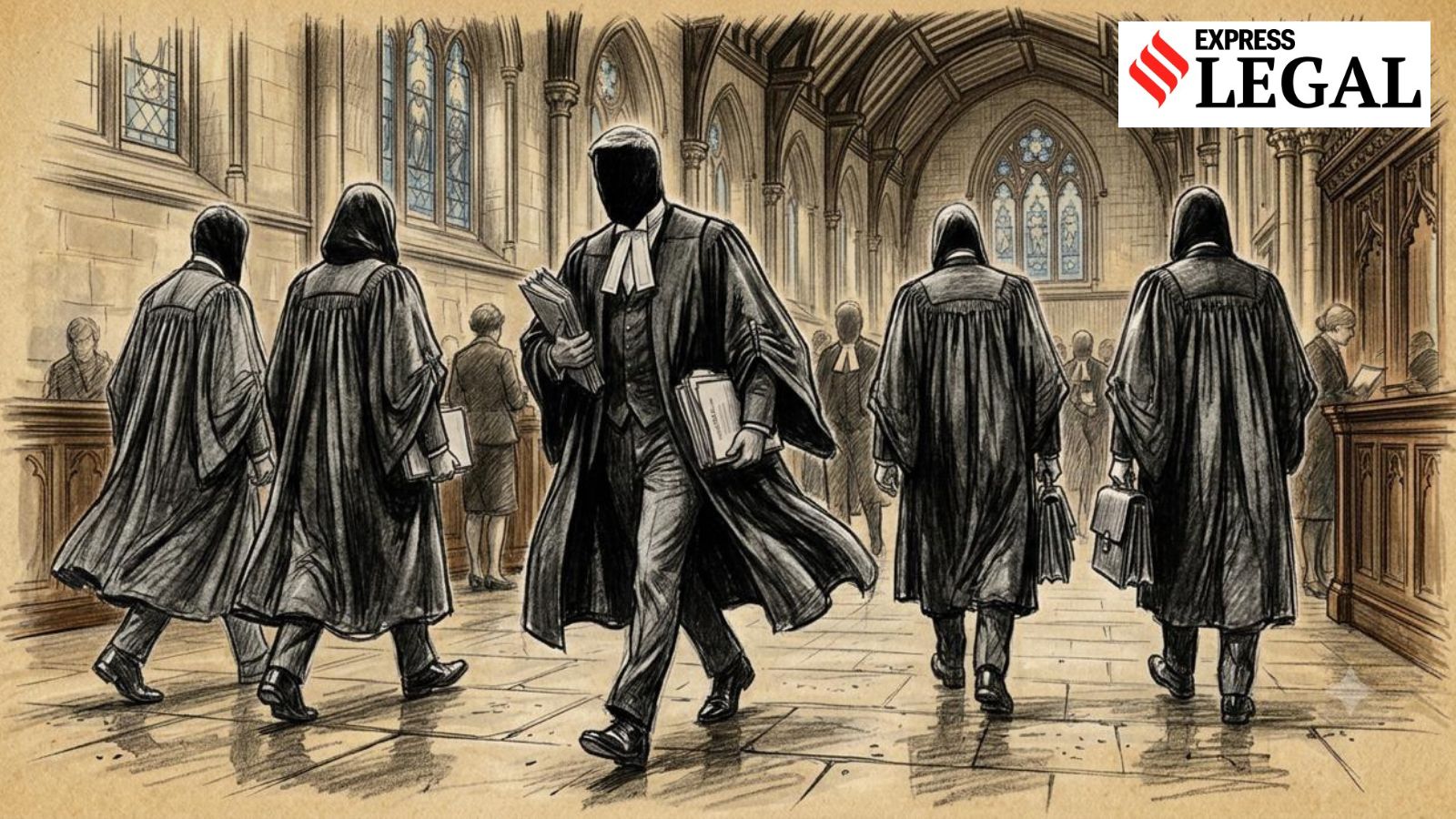
A lawyer can argue with a judge, challenge an order, and even criticise how a case is being heard. But there is a line between disagreeing with a court and bringing its functioning to a halt. Crossing that line can expose an advocate to contempt proceedings, a fine or imprisonment. It can also lead to separate criminal action and disciplinary proceedings that may affect the lawyer’s right to practise.
The issue came into focus after lawyers allegedly vandalised an Allahabad High Court courtroom, assaulted court staff and government advocates, and disrupted proceedings on October 28. A day later, a bench of Justices Ajay Bhanot and Divesh Chandra Samant recommended criminal contempt proceedings and asked the Chief Justice to consider registering FIRs. The incident raises questions about when a lawyer’s conduct amounts to contempt, whether an advocate can be jailed or lose their licence, and whether the same act can invite both contempt and criminal proceedings under the Contempt of Courts Act, 1971, and the Advocates Act, 1961.
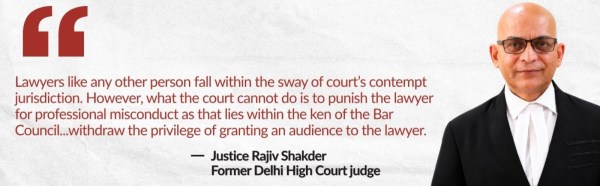
Former Delhi High Court judge Justice Rajiv Shakder, responding over the issue, told The Indian Express, “Lawyers like any other person fall within the sway of court’s contempt jurisdiction. However, what the court cannot do is to punish the lawyer for professional misconduct as that lies within the ken of the Bar Council. What the court can do is to withdraw the privilege of granting an audience to the lawyer. The lawyer placed in such situation can potentially carry on with chamber practice till the Bar council steps and either suspends or cancels the concerned lawyer’s license.”
What is contempt of court?
1971
Contempt of Courts Act
The law empowers courts to punish conduct that obstructs justice or undermines the authority of judicial proceedings.
A lawyer can argue with a judge and criticise an order. The line is crossed when the court's functioning is brought to a halt.
Punishment, Section 12
Simple imprisonment of up to 6 months, a fine of up to Rs 2,000, or both.
Not contempt, Section 5
Fair criticism of judicial acts is protected.
The test, Section 13
Punishable only if it substantially interferes, or tends to, with the course of justice.
How it begins, Section 15
The court can take up criminal contempt on its own.
Can a lawyer face a criminal case too?
A contempt case does not give an advocate immunity from ordinary criminal law. For instance, if an incident involves assault, criminal intimidation, rioting or destruction of property, the police can register a separate case under the relevant provisions of the Bharatiya Nyaya Sanhita, 2023.
“In the matters related to contempt, the honorable court has to see if there was any willful disobedience and if it is a civil or criminal contempt. The contemner is given opportunity to respond/rebutt. A lawyer if found guilty of contempt can be punished under the Contempt of Court Act,” said advocate Tarun Rana, secretary, New Delhi Bar Association, Patiala House Courts.
Advocate Rana added that a lawyer is not exempt from punishment. “Section 12 of the Contempt of Courts Act provides for simple imprisonment of up to six months, a fine of up to Rs 2,000, or both, for contempt of court. The punishment depends on the nature and seriousness of the conduct and the court’s assessment of the case,” he said.
In 1994, senior advocate Vinay Chandra Mishra was accused of threatening and insulting a judge during proceedings at the Allahabad High Court. The Supreme Court took up the matter and, in 1995, held him guilty of criminal contempt. It sentenced him to six weeks in jail and suspended his right to practise law for three years. The case later became important in defining the limits of a court’s power to punish an advocate for contempt, particularly its power to suspend an advocate’s licence.
Story continues below this ad
The restrictions on lawyers’ strikes and court boycotts also form part of this discussion. In its 2002 landmark judgment in Ex-Captain Harish Uppal vs Union of India, the Supreme Court held that lawyers have no right to go on strike or call for a boycott of court proceedings, even for a day or through a token strike. The court had said that litigants should not suffer because lawyers have differences with the judiciary.
An apology can make a difference, but it is not an automatic escape from punishment. If the court is satisfied that the apology is genuine, it can discharge the accused or remit the punishment. The law also makes clear that an apology should not be rejected because it is qualified or conditional.
A lawyer convicted of contempt also has the right to challenge the decision. Section 19 provides for an appeal. When the order is passed by a single judge of a high court, the appeal lies before a bench of at least two judges. An order passed by a bench of the high court can be appealed before the Supreme Court. The limitation period is 30 days for an appeal against a single judge’s order and 60 days for an appeal to the Supreme Court. The appellate court can also suspend the punishment and grant bail while the appeal is being heard.
Does contempt mean losing the licence to practise?
A contempt conviction does not automatically cancel an advocate’s licence. The Supreme Court settled an important issue of this question in its 1998 judgment in Supreme Court Bar Association versus Union of India. It held that its contempt jurisdiction could not be used to suspend an advocate’s licence as an additional punishment.
Story continues below this ad
The power to take disciplinary action against an advocate for professional misconduct belongs to the Bar Councils under the Advocates Act 1961. Under Section 35 of the Advocates Act, a State Bar Council can initiate disciplinary proceedings when it has reason to believe that an advocate on its roll has been guilty of professional or other misconduct.
After allowing the advocate to be heard, the disciplinary committee can reprimand them, suspend their right to practise for a specified period or remove their name from the State roll. Removing an advocate’s name means they can no longer practise as an enrolled advocate.
However, there is a distinction between suspending a licence and preventing a lawyer from appearing before a particular court. The Supreme Court has recognised that a court can, in an appropriate case, debar an advocate found guilty of contempt from appearing before it until the contempt is purged. This does not amount to cancelling the advocate’s licence or imposing a nationwide ban on practice.
The consequences were examined in the 2016 Supreme Court judgment in Mahipal Singh Rana vs State of Uttar Pradesh. The advocate in that case had threatened and intimidated a civil judge inside the courtroom. The Allahabad High Court had convicted him of criminal contempt and sentenced him to two months in prison, along with a fine of Rs 2,000. The Supreme Court upheld the contempt finding but set aside the prison sentence, taking into account his advanced age.
Story continues below this ad
There are safeguards against the law being used to silence legitimate criticism. Section 5 protects fair criticism of judicial acts. Section 13 says contempt should not be punished unless it substantially interferes, or tends substantially to interfere, with the due course of justice. An advocate can question a judicial decision, but cannot use that freedom to disrupt proceedings or obstruct the administration of justice.
How does a contempt case begin?
A high court or the Supreme Court does not always need someone to file a complaint before it can act against contempt. Under Section 15 of the Act, a court can take suo motu cognisance of criminal contempt. It means that the court can initiate proceedings on its own after taking note of an incident. A case can also be brought through a motion by an Advocate General or another person with the Advocate General’s written consent, as required by law.
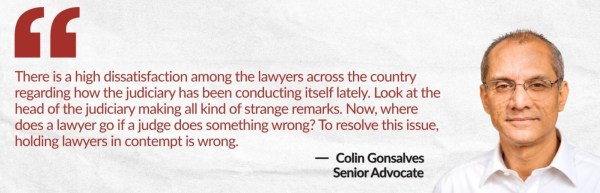
Senior Advocate Colin Gonsalves, disagreeing from the Allahabad High Court’s decision to initiate contempt against the laywers said, “Holding lawyers in contempt for this particular incident is a wrong way to go about it. There is a high dissatisfaction among the lawyers across the country regarding how the judiciary has been conducting itself lately. Look at the head of the judiciary making all kind of strange remarks. Now, where does a lawyer go if a judge does something wrong? To resolve this issue, holding lawyers in contempt is wrong. Instead both sides must out their egos aside and heal the relationship between the Bar and the Bench.”
Once proceedings are initiated, the person accused must be told what the allegations are and given a reasonable opportunity to defend themselves. They can contest the evidence, explain their conduct and engage a lawyer. Criminal contempt cases initiated under Section 15 must be heard by a bench of at least two judges, as required under Section 18.
Story continues below this ad
For high courts and the Supreme Court, the procedure is different. Section 14 of the Act gives the court powers to deal with such cases. It can order the person to be detained in custody, but the charge must be communicated in writing, and the accused must be given an opportunity to defend themselves before the matter is decided. The person can also ask for the charge to be heard by another judge. The court may consider release on bail while the proceedings are pending.
However, this does not mean that every disturbance inside a courtroom will immediately result in an arrest. The court has to follow the prescribed procedure and consider the circumstances of the alleged contempt. There is another distinction- if the conduct also amounts to an independent criminal offence, the police can investigate it separately. Contempt proceedings do not replace a criminal case.
KioskNews shows a cleaned-up reading view extracted from the publisher’s page — the original always lives on their site, not ours.