NSW premier Chris Minns surrendered in the war on underquoting. Did Victoria’s ban work?

Linda Assaf thought she was about to buy a home after six months of searching Sydney’s inner west. When she turned up to the auction, it sold for $100,000 above the guide price.
She had already paid for all the checks and due diligence. Then it happened a second time – this time $200,000 over what she had been told.
“The last auction that we went to was a little bit soul destroying, to be honest,” Assaf says. “We thought that we had a chance.”
Even in a housing market downturn, buyers have been left frustrated as governments struggle to stamp out underquoting.
Homes can be given a price guide that is much lower than what the seller really wants, artificially attracting bids and inflating the sale price, worsening Australia’s affordability problem.
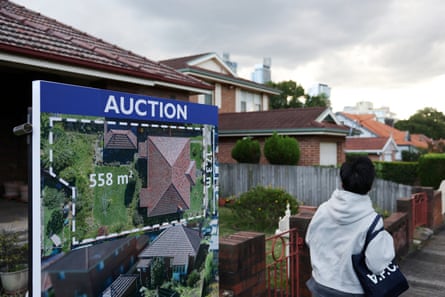
The practice is typically most effective for homes sold in auctions, which are uniquely popular in Australia and account for about two in five sales in Sydney and Melbourne.
Efforts to make the advertised range match the real asking price have faced heavy pushback.
The New South Wales government on Monday mothballed underquoting reforms just hours before they were due to take effect. The premier, Chris Minns, said he made the call after real estate agents in his electorate told him the rules would make it more difficult for sellers.
The same argument was used to oppose underquoting reforms in Victoria, which came into effect last month – but early data suggests they have done little harm.

In Victoria, sellers must now publish the reserve – the lowest price they are genuinely willing to accept – at least one week before the auction date.
Vendors and agents must also inform prospective buyers of nearby comparable sales and publish their property sale prices.
The Real Estate Institute of Victoria (REIV) has already called for the rules to be reviewed and potentially scrapped. It has said the laws could make more auctions fail, inflate reserve price and make sales riskier.
It’s not yet clear that those concerns have come to pass.
Melbourne’s auction clearance rate has fallen since the reforms came in but Sydney’s has fallen further, suggesting broader factors are at play, such as official interest rates rising to their highest level in 18 years, after five rate hikes this year.
Gerard Burg, head of research at property data firm Cotality, says the reforms should, in theory, make transactions easier.
“Transparency is good,” he says. “More information for buyers and sellers should make the market move a bit more smoothly.”
Victoria’s reforms do not address every property. Agents do not have to publish the reserve if a property is sold without an auction and without a fixed sale date.
Cotality data indicates auctions have become less attractive for sellers since reforms arrived, with new listings increasingly opting for private sales. Melbourne is hosting far fewer auctions than it was a year ago even though the number of auctions has risen overall in recent months.
“There has been a clear weakening, just in terms of those volumes,” Burg says. “But really splitting out: is it the reforms? Is it the [interest] rate changes? It’s not entirely clear.”
after newsletter promotion
The Victorian reforms don’t force sellers to accept bids that match their price guide or their reserve but they encourage upfront advertising.
Buyers may already be showing they are more willing to buy when sellers advertise at their real asking price, according to property data app Homer’s analysis of 2,164 sales in the past month.
Most sellers put forward initial prices that matched their reserve but one in six had higher reserves, which they published before the auction as per the laws.
Homes where the reserve matched the price guide had 59% sale rate. Those that revealed a higher reserve price had a sale rate of 50.4%.
Homer’s chief executive, Henry Pedersen, said the reforms had not ended underquoting but had “shifted and exposed it”.
“Buyers now see the gap a week before auction instead of on the day, and those homes are passing in more often,” he said.
Previous reviews from Homer and from Guardian Australia have found underquoting was already less of a problem in Victoria than other states, especially NSW.
Kimberley Ackerman, a Sydney buyers’ agent, says the practice is all too common.
“There’s a really awful saying in real estate: ‘set it low, watch it grow, set it high, watch it die’,” she says.
The scuppered NSW reforms proposed to raise the fines for underquoting and require a price guide on all advertisements. The package was thrown out after Minns cited specific issues with one element: a proposed ban on agents cutting the advertised price below either their private estimate or a previous rejected offer, which he argued could leave sellers who overvalued their property unable to meet the market.
Ackerman says while that element was poorly designed, the rest of the reform could have been salvaged.
“They should be advertising the price that they would sell at that day – even if it is high,” she says.
KioskNews shows a cleaned-up reading view extracted from the publisher’s page — the original always lives on their site, not ours.