Phil wanted to rent a shop in Footscray. The owner would rather it sits empty
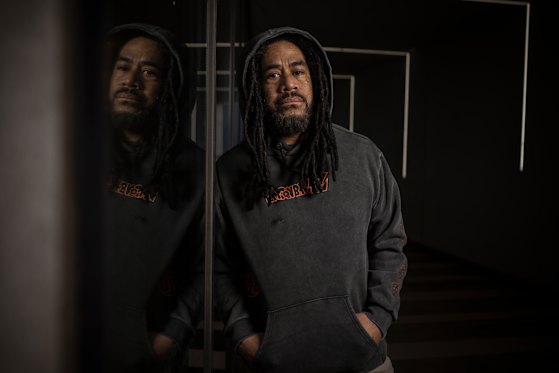
During five years’ trading in Melbourne’s west, Phil Gaby’s business has had just as many homes.
Nan’s Bakehouse began at the markets, then moved to Footscray Plaza before expanding into the business next door. A coffee van followed, then a new store in Moonee Ponds – before its closure, when they ran into financial strife.
Despite failure and two evictions, Nan’s endures in Footscray – one of Melbourne’s toughest places for businesses to thrive, a new Property Council of Australia report suggests.
But Gaby said he wouldn’t want to be anywhere else.
“After we failed at Moonee Ponds, I realised that success meant the community and the people,” he said.
“Even our store now has been held together by people from our old store, continually following us around because they believe in the same things we do.”
Despite a $1.5 billion investment in the new Footscray Hospital – and millions more in transport, education, and sporting and social infrastructure – the inner-city suburb has stalled, the Property Council found in its Revitalising Victoria’s priority precincts report, in large part due to land banking.
“I applied for one place on Barkly Street, and it has been empty for two years now … The owner said he did not want to spend any money, and he’d rather leave it sitting empty,” Gaby said.
“He was concerned that, if the business went bad, then that’s his loss. That’s how he looked at it. Whereas before, a landlord would look at it as an investment.”
Footscray’s land banking issue is symptomatic of a more complex problem, whereby high construction costs, elevated taxes and charges, expensive finance and subdued apartment values are deterring landowners from developing projects, the Property Council found.
New apartments in Footscray average $100,000 less than Melbourne’s median apartment price, making it difficult for developers to justify new builds when construction costs remain high, KPMG urban economist Terry Rawnsley said.
High costs were also accompanied by a 1297 per cent increase in approved dwellings in central Footscray in the 2022-23 financial year, compared with the previous year (908 dwellings from 65).
A similar pattern emerged in the 2024-25 financial year (with 704 approved dwellings, compared to the previous year’s 38), helping to keep prices down.
The Property Council suggests that if prices continue to fall with federal tax changes, this could be replicated across Melbourne and undermine the feasibility of new projects.
“Developers are likely to be holding sites and waiting for feasibility to improve,” Rawnsley told The Age.
“That could come through stronger sale prices, as the existing apartment supply is absorbed, although there is little indication that construction costs will fall materially in the foreseeable future.”
However, the report warns a “business-as-usual” approach, even with continued local and state government investment, won’t be enough to fix the issues in Footscray.
“Getting Footscray right would not only unlock a major opportunity for Melbourne’s west,” Property Council Victorian executive director Cath Evans said. “It could provide a blueprint for how Victoria can turn its broader activity centre and precinct ambitions into reality.”
The Property Council is urging the state government to commit to a six-step plan to haul Footscray out of its slump, pointing to vacant shopfronts, deteriorating buildings and “hoarded” development sites.
The council names the former Forges site, Little Saigon Market, Paint Spot, Kinnear’s Ropeworks, the former bus depot and the former Belgravia Hotel among them, and notes each has their own “commercial circumstances” – but they collectively represent “a significant volume of unrealised housing, employment, activation and public realm challenges”.
At a forum in Footscray making the case for Maribyrnong City Council’s $148 million Creative West arts precinct project last month, Mayor Mohamed Semra described the former Forges site as a once-thriving retail destination, since “left to decay for 17 years”.
The report suggests more should be done to capitalise on the arts precinct project, as well as other investments.
The Property Council encouraged government to prioritise improving Footscray’s streetscapes and begin demolition programs to remove derelict or condemned buildings.
The state government should also look at waving or reducing taxes and levies for developers building in Footscray and other Melbourne activity centres, tying incentives to timelines or community infrastructure, the Property Council said.
Government should also consider public-private partnerships for big development sites, dedicate a department or area of council to getting a move on big projects, and better coordinate local support services to shore up faith in Footscray’s safety, the report said.
Semra said Maribyrnong Council was working to improve Footscray’s safety, amenity and shopfronts, support economic development, and draw people to local attractions and events. He said his council would consider the Property Council’s report.
“We’re working collaboratively with landowners, businesses, community organisations, and state and federal governments to speed up action on vacant sites in the Footscray CBD.”
The Victorian government pointed to its investment in Footscray’s health, education, transport, sport and community infrastructure. A government spokesperson said that “through planning certainty, infrastructure investment and better transport connections”, the government was helping unlock the area’s growth.
Start the day with a summary of the day’s most important and interesting stories, analysis and insights. Sign up for our Morning Edition newsletter.
More:
KioskNews shows a cleaned-up reading view extracted from the publisher’s page — the original always lives on their site, not ours.