8 Classic Miniseries That Have Aged Terribly

Mary Kassel is a Senior Writer & Critic who joined the Screen Rant team in 2023.
After graduating from Emerson College with a degree in Media Arts Production, Kassel started at Screen Rant with a focus on the critical analysis side of movies and television while continuing to work on set in film production.
At Screen Rant, Kassel primarily writes for the Classic TV section, mining their encyclopedic knowledge of television history for content. However, they also contribute to the Books team and review both film and television as a critic.
There's a lot that goes into making a miniseries not only a classic, but an enduring TV show that can be watched today. While there are plenty of older series that were famous and popular when they premiered, revisiting them now exposes some harsh realities we can't ignore. Miniseries from the 1980s and 1970s are easy to view as dated, since so much has changed culturally, socially, and in terms of visual style, but there are some 21st-century projects that have aged just as poorly.
Masterpiece miniseries TV shows stand out because they're endlessly rewatchable, encouraging viewers to revisit them for years. Unsurprisingly, many miniseries are historical TV dramas based on books or real events. How a series brings a book to life and how faithful it is to the source material can impact the legacy of the project. The miniseries that have aged poorly are part of a wide variety of genres, as any type of series has the potential to live up to audience expectations and disappoint in equal measure.
The Langoliers (1995)
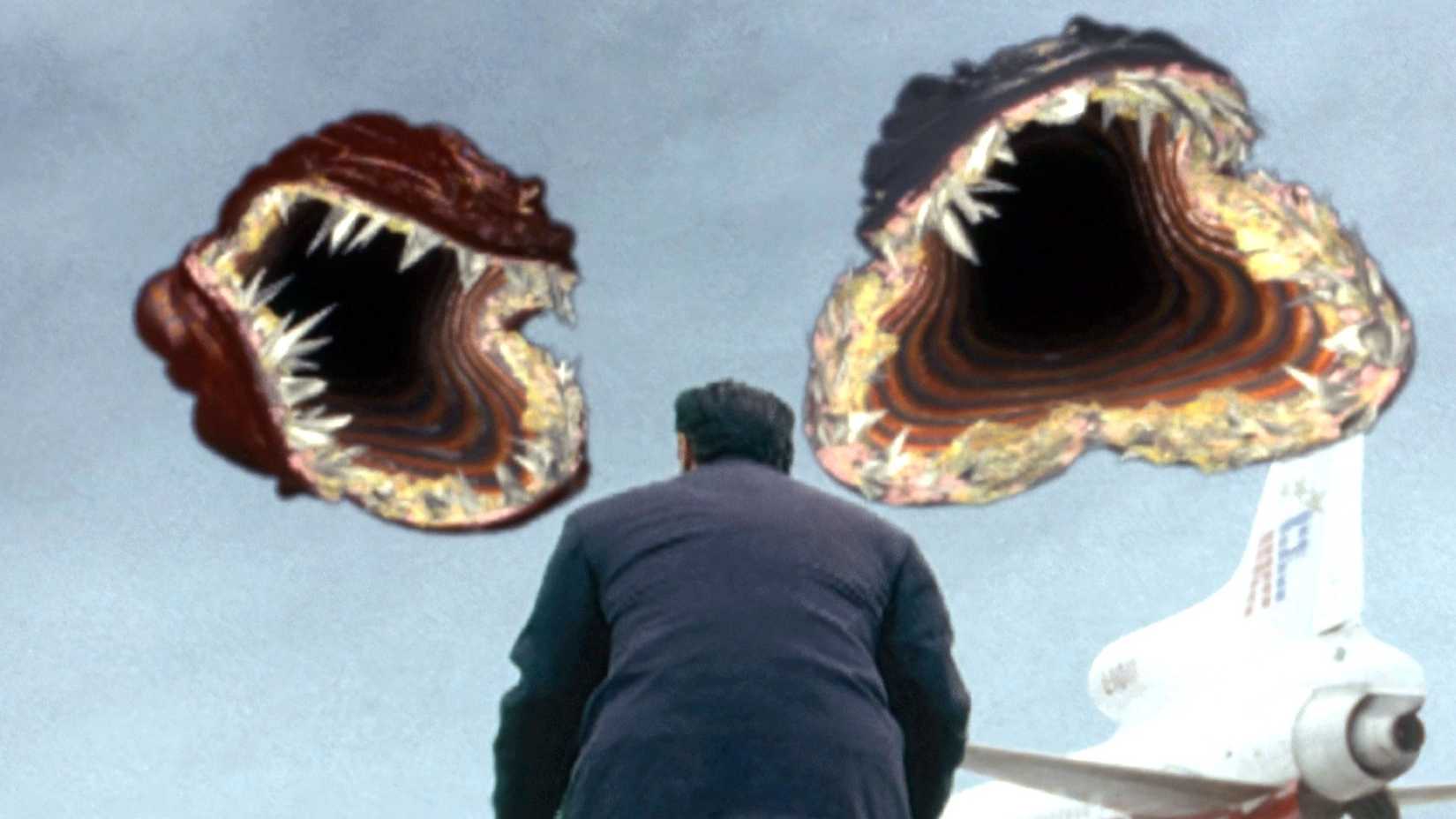
While many miniseries date themselves through social and cultural context and storylines that don't hold up, The Langoliers falls short visually, with VFX that are almost laughable to watch now. Despite being based on a novella by Stephen King, The Langoliers feels less like a tense horror story and more like a clunky work of sci-fi that leans more into camp than terror. It follows the experiences of a group of airline passengers who accidentally go through a rip in time.
It's a classic survival setup that forces the characters to grapple with their worst fears and impulses, and the character work remains one of the better aspects of The Langoliers. However, when the monsters appear onscreen, it's difficult to take anything seriously again throughout the miniseries, as they look extremely dated. Out of every Stephen King adaptation, The Langoliers is one audiences can skip.
The Thorn Birds (1983)

Despite the powerhouse ensemble cast and the best-selling novel it's based on by Colleen McCullough, The Thorn Birds is a miniseries that doesn't hold up to scrutiny in the modern era. At the time of its release in 1983, The Thorn Birds was enormously popular and received critical acclaim, nominated for and winning several Emmys, including Outstanding Lead Actress in a Limited Series for Barbara Stanwyck. Set against the backdrop of the Australian outback, The Thorn Birds relies on the love story of its leads to carry the narrative.
Unfortunately, the supposed romance is harshly undercut by the problematic nature of the central relationship between Ralph and Meggie. When Ralph and Meggie meet, Meggie is still a child, and he's in a position of power over her as a priest. This makes their eventual romance uncomfortable at best, and highly inappropriate and wrong at worst. Though the relationship is handled slightly better in the book, it's tough to root for them in the series.
House Of Saddam (2008)

Any historical drama miniseries that depicts real people and events is going to spark conversation, and House of Saddam is no exception. Chronicling the life and political rise of Saddam Hussein, House of Saddam tackles some important moments, but often comes off more like prestige drama television than an exploration of a real man and the intense political and social fallout of his time as the President of Iraq.
In the years since House of Saddam was released, it's become clear that the miniseries doesn't go far enough in engaging with how Western governments were part of his early rise to power and doesn't take itself seriously enough. Additionally, the focus on the intrigue of Hussein's political life and the omission of what life was like for people living in Iraq during this period comes off as a significant oversight when watching the series today.
Return To Lonesome Dove (1993)

It didn't take long for Larry McMurtry's novel, Lonesome Dove, to be adapted for the screen. In 1989, the book was first brought to life onscreen, earning audience and critical acclaim for the sprawling Western series. Of course, this meant that a sequel to capitalize on the success of the first miniseries wasn't far behind. Return to Lonesome Dove premiered in 1993, but this time the series didn't have McMurtry's writing to draw from, and the show suffered because of this.
Though McMurtry did pen sequels to Lonesome Dove, Streets of Laredo, the 1993 miniseries crafts its own narrative that leans heavily on the work done by the 1989 show. Without the goodwill generated by Lonesome Dove, it's unlikely that Return to Lonesome Dove would be remembered at all. Return to Lonesome Dove brings back beloved characters like Call and Newt, but it feels like a ghost of the gravitas and emotional impact made by the first series.
Jekyll (2007)

Fans of Doctor Who will recognize the writer behind Jekyll, the 2007 take on Strange Case of Dr Jekyll and Mr Hyde by Robert Louis Stevenson. Penned by Steven Moffat, Jekyll is a mind-bending version of the story which worked well at the time, as so many audiences were familiar with the narrative and needed a sharp new angle to draw them in.
Starring James Nesbitt as Tom Jackman and his alter ego, Mr. Hyde, Jekyll takes place in a universe where the original work by Stevenson exists and is revealed to be an account of true events. Jackman knows he transforms into Hyde and takes steps to protect his loved ones from this side of himself. Today, watching Jekyll is not as thrilling. The high drama of the series reads as gimmicky, and audiences who appreciate Moffat's work will find that it translates better to the fantastical sci-fi of Doctor Who.
Sense And Sensibility (2008)

Many TV shows are inspired by Jane Austen's work, as the influence of the 18th-century author continues to influence romantic period dramas today. There are plenty of adaptations of Austen's work to choose from when diving into the screen iterations of her writing, but the 2008 Sense and Sensibility shouldn't be too high on that list.
With both the 2026 and 1995 Sense and Sensibility films available to viewers, the decent, but less faithful version of the novel from 2008 isn't the best place to start. Though it features the familiar beautiful English landscape and costumes that appeal to fans of period pieces, 2008's Sense and Sensibility takes many liberties with the text that don't feel true to the intention of Austen's work, leaning into more salacious and sexual moments instead of focusing on the relationship between the sisters, Elinor and Marianne.
Sybil (1976)

Sally Field gives an amazing performance in the two-part TV movie, Sybil, but her commitment to the role can't save the 1976 miniseries. Based on the novel by Flora Rheta Schreiber, Sybil is a dramatic, intense exploration of a young woman's struggle with dissociative identity disorder after years of trauma in childhood. It's a difficult watch, as Sybil's backstory is an emotional journey that isn't necessarily truthful to the experience of the disorder.
Conversations surrounding media depictions of dissociative identity disorder have become more nuanced in the years since Sybil was released, and it's difficult not to be critical of how the miniseries dramatizes and sensationalizes the mental health issue. In recent years, the real person that Sybil was based on, Shirley Mason, may have been fabricating her disorder, causing a stir and calling for a re-evaluation of the TV movie (via NPR).
Shōgun (1980)

Based on the iconic novel of the same name by James Clavell, the explosive success of the 1980 miniseries Shōgun remains an important piece of media, even if it doesn't hold up as well against today's standards. Though miniseries existed before this, the impact made by Shōgun proved that U.S. audiences were hungry for sweeping historical dramas, and the limited series delivered.
However, like Clavell's original novel, it's hard to ignore that some aspects of the story aren't as respectful and accurate to Japanese culture as they should've been. Compared to the recent remake of the series, 2024's Shōgun, the first miniseries doesn't have the same depth of detail. Shōgun season 2 will expand the story of FX's update on the 1980 miniseries, bringing audiences back into the thrilling world and continuing to prove that Shōgun needed this update.
KioskNews shows a cleaned-up reading view extracted from the publisher’s page — the original always lives on their site, not ours.