Does India still need Russia’s S-500? How its own missile shield is changing the equation
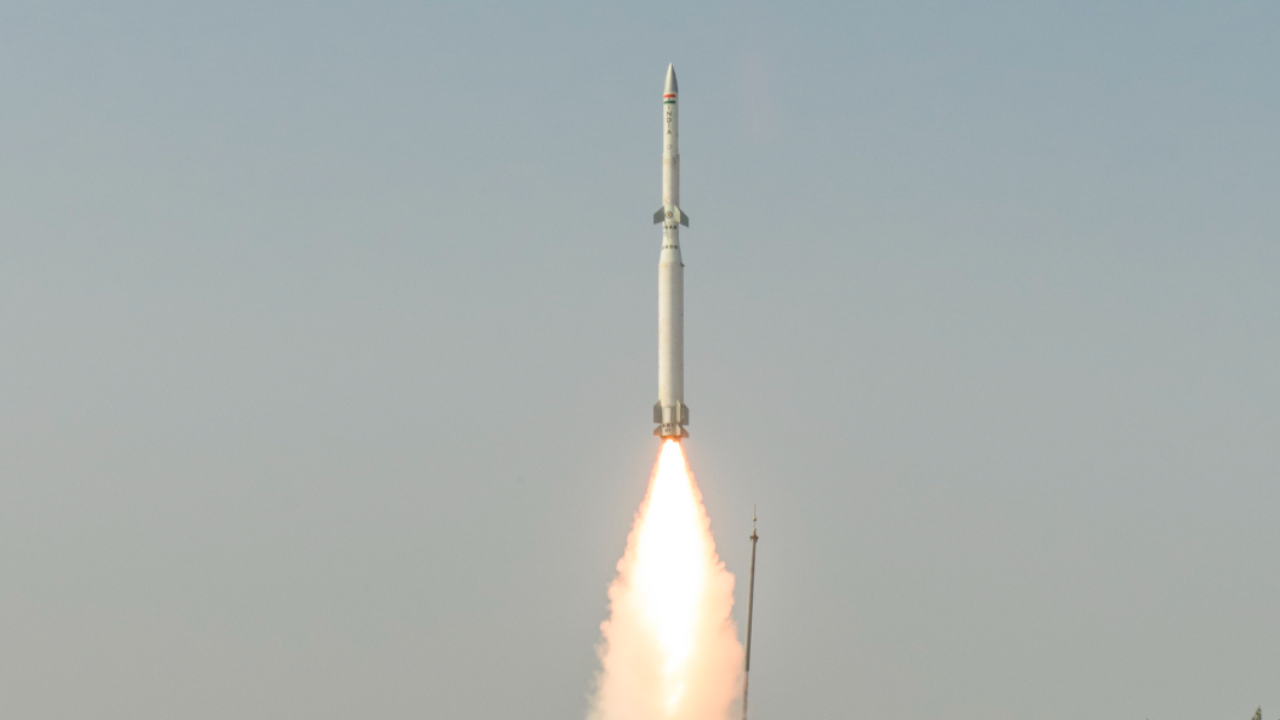
DRDO conducts a successful flight test of the Phase-II Ballistic Missile Defence interceptor off the Odisha coast. (Image credit: DRDO)
Recent and ongoing conflicts have demonstrated the requirement for a comprehensive and layered air defence environment. Modern air defences are tasked with defending against everything from the off the shelf drone to ballistic missiles and everything in between.
During the active phase of Operation Sindoor, India defended against almost the entire spectrum of aerial threats ranging from small Pakistani drones to ballistic missiles. Even, well over a year, the Pakistanis have not been able to provide proof of their strikes, instead resorting to AI generated videos on their National Defence Day earlier this month.During the active phase of the operation in May last year, the Pakistanis fired a Fatah series of ballistic missile that wad intercepted over Sirsa in Haryana by the air force.
Hunting ballistic missiles is one of the most complex tasks and requires the precise working of different types of systems ranging from the early warning radar to the acquisition radar that relays information to the firing unit and at the end the interceptor that has to connect with a projectile hurtling towards the earth at hypersonic speeds.
The devastation caused by these weapons has been on display with the Iranians and their proxies the Houthis terrorising the region with these weapons.
To tackle this problem, the Russians have developed the S-500 Prometheus system. This weapons complex armed with missiles such as the 77N6 and a variant of this missile named the 77N6-N1 which can take out ballistic missiles at ranges of up to 600 km at altitudes of up to 200 km. According to Washington DC based think tank, the Center for Strategic and International Studies (CSIS), this missile is also capable of taking out Low Earth Orbit (LEO) satellites.
Unlike the S-400, which offers theatre-level protection out to 400 kilometres against aircraft, drones and cruise missiles, the S-500 Prometheus is not designed to replace the S-400, but to supplement it. With the S-400 being more adept at taking down aircraft, drones and cruise missiles, this leaves open other threats such as ballistic missiles and hypersonic weapons. The Russians have been pitching the S-500 to India since 2021.This comes at a time when India is developing its own Ballistic Missile Defence (BMD) apparatus. The country has taken a major leap in its missile defence capability, successfully completing the final development trials of Phase-II of its Ballistic Missile Defence shield. Conducted by DRDO on June 10-11 using the AD-1 and AD-2 interceptors, the tests validated India's ability to intercept incoming ballistic missiles both inside and outside the atmosphere, placing the country in a select group of nations capable of defending against ICBM-class threats.The system is designed to counter some of the most challenging targets in modern warfare, hypersonic weapons, manoeuvring glide vehicles, and missiles fitted with MIRV technology that can release multiple warheads toward different targets simultaneously. This layered shield relies on a network of launch vehicles, long-range radars, Launch Control Centres and a central Mission Control Centre, all linked through a secure communication system.While Phase-I already offers limited operational protection to Delhi and Mumbai against threats up to 2,000 kilometres, Phase-II extends that umbrella dramatically, to missiles with ranges approaching 5,000 kilometres. Defence Minister Rajnath Singh described the tests as validating the critical technologies underpinning India's broader multi-layered defence shield.Mobility is central to the new system too, with indigenous 12x12 Transporter-Erector-Launchers, built by Ashok Leyland and integrated by DRDO and Tata Advanced Systems, giving the AD-1 and AD-2 interceptors genuine shoot-and-scoot capability across difficult terrain. With the domestic BMD system maturing under the overall ambit of Project Kusha, the space for a foreign weapons project could perhaps be reducing.
KioskNews shows a cleaned-up reading view extracted from the publisher’s page — the original always lives on their site, not ours.