Supreme Court Rejects Plea Against Maharashtra Local Body Poll Reservation Rules
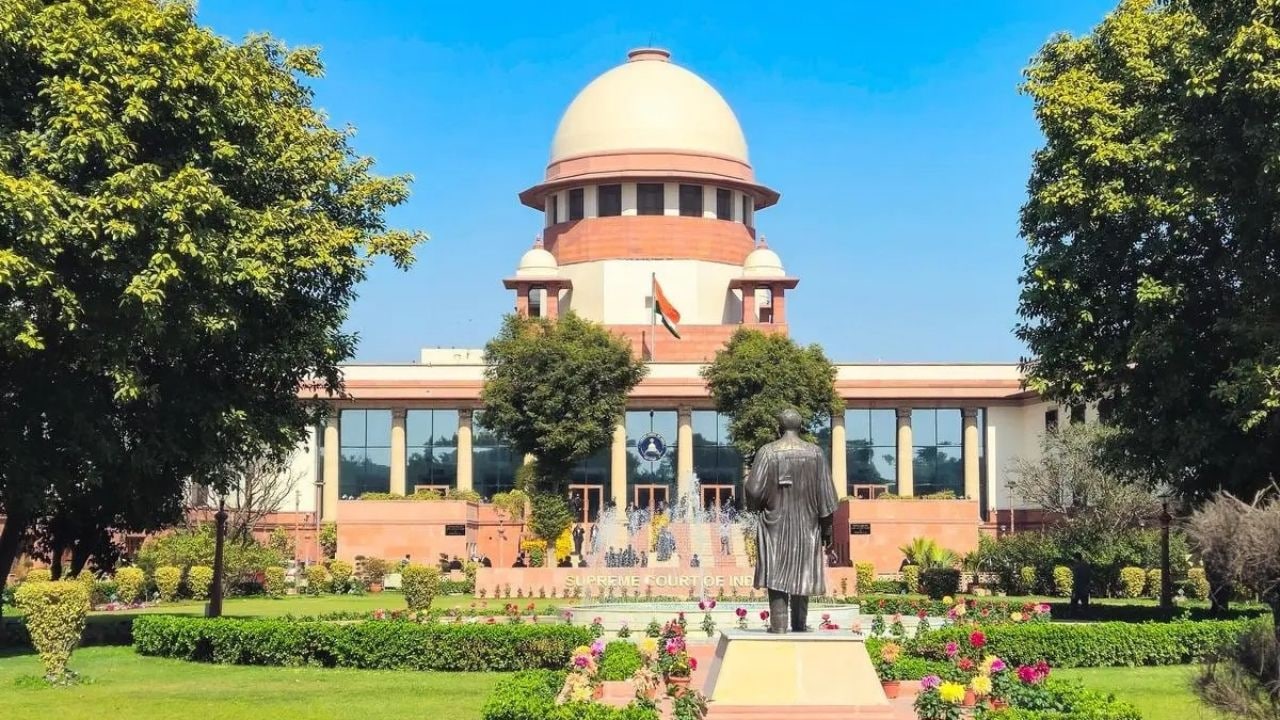
The Supreme Court on Monday refused to entertain a plea challenging a provision in the Maharashtra government's rules that treats the general elections to Zila Parishads and Panchayat Samitis after the enforcement of the rules as the first for the rotation of reserved seats for SCs and STs.
A bench comprising Justices Joymalya Bagchi and V Mohana dismissed an appeal filed by Sau. Rupali Indrabhushan Sonde against the September 19, 2025, judgment of the Nagpur bench of the Bombay High Court, saying, "No voter or a candidate can have a vested right to have a constituency declared as a reserved seat for SCs or STs."
The bench said such decisions fall under the policy domain and the petitioner cannot say that the rotation policy has to be exercised in a particular manner.
The bench, however, took note of the submissions of senior advocate Vipin Sanghi, appearing for Sonde, and permitted the petitioner to file a representation to the Maharashtra government for reconsideration of the rules related to the reservation of seats for SCs and STs under the rotation policy for local body elections.
On September 19, 2025, a division bench comprising Justices Rajnish R Vyas and Anil S Kilor of the Bombay High Court dismissed a batch of petitions challenging the provision in the Maharashtra government's 2025 rules.
It had held that the petitioners failed to establish that the introduction of Rule XII of the Maharashtra Zilla Parishads and Panchayat Samitis (Manner and Rotation of Reservation of Seats) Rules, 2025, was arbitrary or unconstitutional.
"(XII) First Election for rotation:- For the purposes of rotation of seats under these Rules, the general election held after commencement of these Rules shall be considered as the first election," the impugned rule reads.
The plea challenged Rule XII, stating that the provision would disrupt the existing reservation rotation system and adversely affect candidates seeking to contest elections from reserved constituencies.
It was argued before the high court that the new rule was arbitrary, violated Article 14 of the Constitution and exceeded the scope of the parent Maharashtra Zilla Parishads and Panchayat Samitis Act, 1961.
The petitioners had also maintained that the right to contest elections would be affected by resetting the rotation process.
Opposing the petitions, the state government had said that the rules had been framed to give effect to Section 12 of the 1961 Act, particularly after the amendment that empowered it, with the approval of the State Election Commission, to divide districts into electoral divisions.
The government had pointed out that the boundaries of electoral constituencies were being changed for the first time under the revised exercise.
As a result, the geographical composition of constituencies, population distribution and reservation status could also change, it had said.
While acknowledging that the principle of rotation must be respected, the high court had held that earlier judgments relied upon by the petitioners were distinguishable because the present case involved a fresh delimitation exercise undertaken under Section 12(1) of the Act.
(Except for the headline, this story has not been edited by NDTV staff and is published from a syndicated feed.)
KioskNews shows a cleaned-up reading view extracted from the publisher’s page — the original always lives on their site, not ours.