Tata Sons Row: Why Jimmy Tata Is Accusing Half-Brother Noel Of 'Backdoor Takeover' At Tata Sons
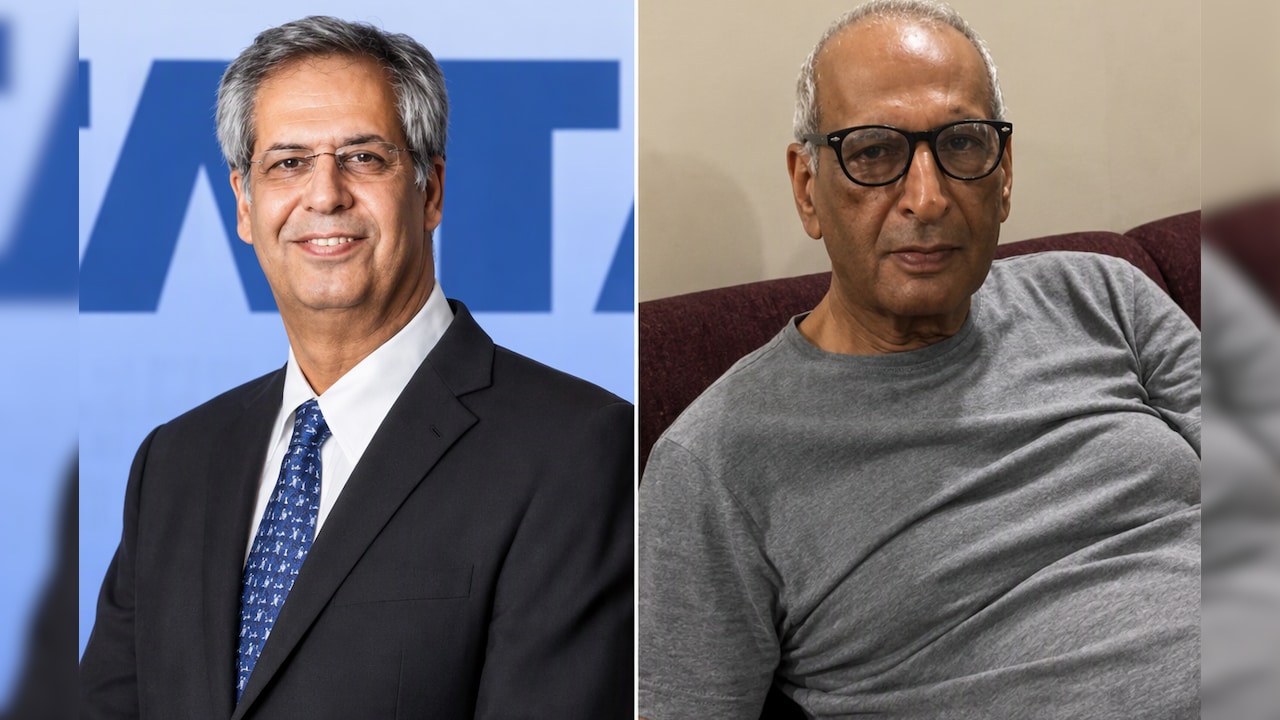
Tata Sons Row: The battle over Tata Sons is no longer just about whether India's largest business conglomerate should go public. It is also about who gets to control it, how much power the Tata Trusts should wield and whether the group's charitable institutions are being used to consolidate family control.
Jimmy Naval Tata, younger brother of the late Ratan Tata and half-brother of Tata Trusts Chairman Noel Tata, has now weighed in on the increasingly bitter dispute. He has backed Tata Sons' stock market listing, supported N Chandrasekaran's continuation as chairman, and accused Noel Tata of attempting to exercise unchecked control over the group.
In a series of remarks conveyed to fellow trustees, Jimmy Tata has called listing critical to ending secrecy and strengthening accountability. He has also warned against any restructuring of Tata Sons that could allow the holding company to escape the Reserve Bank of India's listing requirements.
Also Read | Layoffs Are Rising In Tech, But These Skills Are Helping People Unlock Better Pay
Why Jimmy Tata Wants Tata Sons Listed
At the centre of Jimmy Tata's intervention is the question of whether Tata Sons should remain privately held or become a publicly listed company.
The RBI classified Tata Sons as an upper-layer non-banking financial company (NBFC) in September 2022. Under the regulatory framework, companies in this category are required to list on stock exchanges within three years.
That deadline expired in September 2025. Tata Sons, however, did not pursue an IPO. Instead, it repaid Rs 21,813 crore in debt during FY24 and sought to surrender its core investment company registration, a move that could have helped it remain unlisted.
The RBI rejected Tata Sons' deregistration application in September 2026 and asked it to comply with the applicable regulatory framework.
Jimmy Tata believes the listing is now more important than ever. According to NDTV Profit sources, he has argued that a public listing would dismantle the group's culture of secrecy, impose statutory accountability and require changes to its Articles of Association.
He has also pointed to Tata Sons' experience with Tata Consultancy Services, which was listed during Ratan Tata's leadership, arguing that the move benefited the holding company.
His strongest objection, however, concerns the possibility of Tata Sons being broken up or restructured to avoid the listing requirement.
Jimmy Tata has alleged that such a move would undermine public and shareholder interests while preserving secrecy and personal control. He has called on the RBI to enforce strict timelines and ensure that restructuring does not become a route to bypass listing rules.
Tata Boardroom Dispute: Who Controls Tata Sons?
The listing dispute is closely linked to a wider governance battle involving Tata Sons and Tata Trusts.
Tata Trusts collectively hold around 66 per cent of Tata Sons, making them its largest shareholder. The charitable institutions were established to support public welfare and philanthropy. Their influence over Tata Sons, however, gives their leadership a significant say in the direction of the conglomerate.
Jimmy Tata has questioned whether the trusts are increasingly being used to consolidate family control.
He has argued that trustees are custodians of public charitable institutions, not their owners. In his view, multiple members of the same family occupying positions on trust boards can effectively translate into control over Tata Sons' shareholding.
He has also questioned the appointment of family members to trusts and described the arrangement as a potential "back-door takeover" of Tata Sons.
The concern comes amid the induction of Noel Tata's children into some Tata Trusts. Neville Tata is a trustee of Sir Dorabji Tata Trust, while Neville, Leah and Maya Tata have also joined boards of certain other charitable trusts.
Jimmy Tata has argued that the institutions should not become vehicles for family control and that their original public-welfare objectives must be protected.
Why Jimmy Tata Is Backing N Chandrasekaran
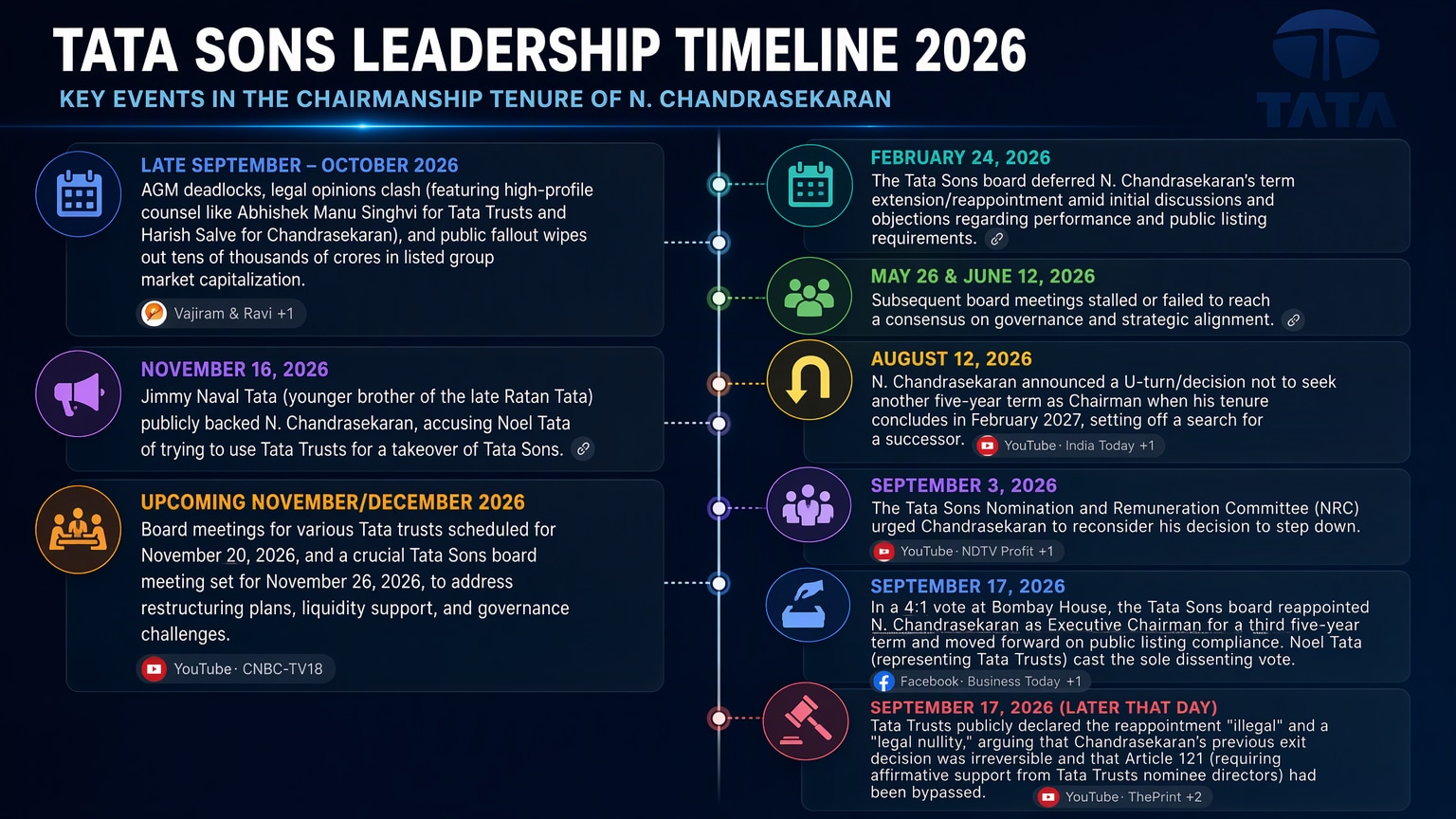
Jimmy Tata's intervention also comes at a critical moment for N Chandrasekaran. The Tata Sons board approved a third five-year term for Chandrasekaran on September 17, 2026, by a 4-1 majority. Noel Tata voted against the resolution.
The decision followed months of uncertainty. Chandrasekaran had earlier indicated that he would not seek another term after February 2027, citing a lack of consensus at the board level.
Jimmy Tata has defended Chandrasekaran's performance, arguing that he turned around heavily indebted Tata companies, delivered record earnings and generated substantial shareholder payouts.
He has cited dividend payments exceeding 6,500 per cent by Tata companies, claiming that Tata Sons itself benefited from the payouts.
Jimmy Tata has also questioned Noel Tata's decision to oppose Chandrasekaran's continuation, alleging that the Tata Trusts chairman invoked veto powers under the amended Articles of Association without providing adequate justification or accountability.
The criticism is particularly significant because it comes from Jimmy Tata, who has largely stayed away from public appearances and trust meetings despite being a longstanding trustee.
How Tata Sons' Articles Of Association Became A Flashpoint
Jimmy Tata has also questioned changes made to Tata Sons' Articles of Association around 2013-2014. According to his account, the changes gave the Tata Trusts chairman sweeping veto powers and weakened the collective authority of the Tata Sons board. He has argued that the earlier governance framework maintained a clearer separation between charitable trusts and the commercial operations of Tata Sons.
That separation, he believes, was essential to preventing philanthropic institutions from exercising excessive influence over business decisions. The dispute over Chandrasekaran's reappointment has brought these provisions into sharper focus, with Jimmy Tata questioning how veto powers can be used despite overwhelming board support for the executive chairman.
Jimmy Tata has also criticised the rules governing trustee appointments and tenure. He has questioned why certain trustees are subject to fixed tenure limits while others enjoy perpetual or lifetime positions. In his view, selective tenure rules can concentrate authority and compromise the independence of trustees. He has alleged that dissenting trustees are being marginalised or removed.
The issue has acquired particular significance at Sir Ratan Tata Trust, where Jimmy Tata, Noel Tata and industrialist Jehangir HC Jehangir are perpetual trustees.
The Maharashtra Charity Commissioner had earlier raised concerns over the trust's perpetual trustee arrangement under amended legal provisions. Jimmy Tata has called for the government and Charity Commissioner to intervene, arguing that the trusts must remain faithful to their original charitable objectives.
KioskNews shows a cleaned-up reading view extracted from the publisher’s page — the original always lives on their site, not ours.