Trump threatens ‘tremendous tax’ on US firms building AI data centres overseas
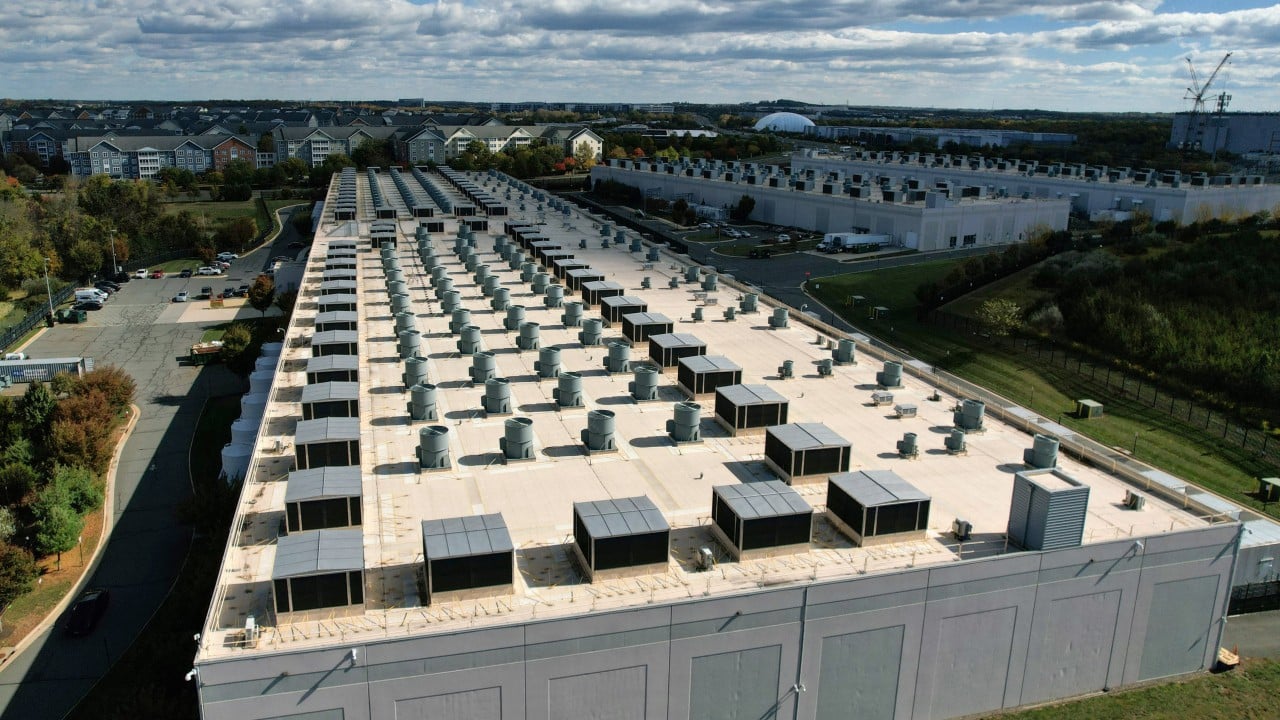
President Donald Trump on Friday threatened “a tremendous tax” on US companies that build artificial intelligence data centres abroad, highlighting a divide between a president who sees their expansion as critical to winning the AI race and an American public that is deeply sceptical of their benefits.
Briefing reporters at the White House shortly after his return from Asia, the president said the country was ahead of China in developing what he likes to call “superintelligence”. But he warned it could fall behind if a growing political backlash puts the brakes on development of the data centres that are driving the AI boom.
“We’re not going to allow companies to build data centres in other countries,” the president said. “If they do that, they can. But we’re going to put a tremendous tax on them.”
He contrasted his push to keep AI infrastructure in the US with the foreign production of advanced computer chips, which he said had been “very destructive to our country”.
Trump said he had not yet told his staff about his proposal to target data centre development outside the US, and it was not immediately clear how it would be enforced.
His statements emphasised the gap between Trump’s view of AI development and the views of most Americans and came less than three weeks after voter concerns about data centres contributed to a Republican wipeout in the midterm elections.
About three-quarters of US voters in this year’s election said they opposed the construction of a new data centre in their community, according to The AP Voter Poll.
In a survey taken over the summer, about six in 10 Americans said they supported limiting the number of new data centres that can be built, including most Democrats and Republicans, according to the poll by Associated Press-NORC Centre for Public Affairs Research and the Energy Policy Institute at the University of Chicago.
The same survey found that a majority of Americans are “extremely” or “very” concerned about the impact of data centres on electricity prices or the water supply in the communities where they are built.
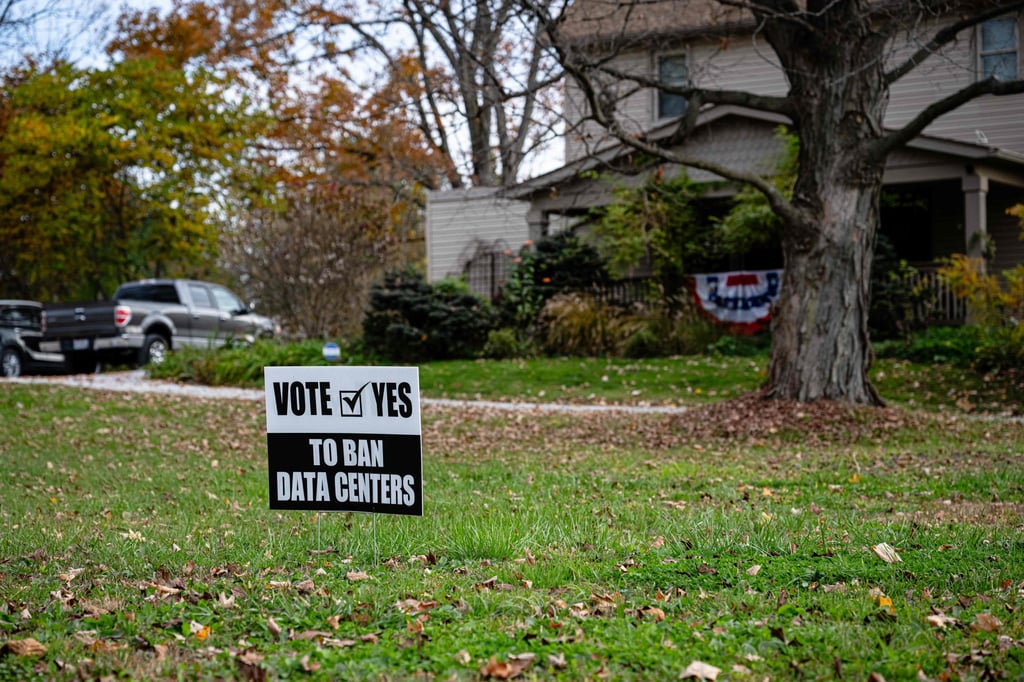
With Democrats winning large majorities in both houses of Congress, a tougher regulatory environment for AI giants and data centre developers is expected to follow, even if Trump – perhaps the industry’s biggest champion – stalls any federal crackdown.
He suggested that data centre concerns could be addressed through community negotiations with the tech companies seeking to build them. Tax breaks, reduced utility bills, money for teachers and direct payments to local residents all could be part of the talks.
“Make the deal,” Trump said. “They have plenty of money. Take it.”
The development of artificial intelligence is an important growth factor for data centres, but cloud computing services remain the dominant use of data centres in the US, industry officials say.
With host communities across the US turning against the gargantuan data centres, America’s technology giants are promising to take fewer taxpayer handouts, keep fewer secrets and shower more money on communities willing to allow the server warehouses.
Besides ramping up financial incentives, officials with Google and Meta Platforms said in interviews they were trying to address mistrust by being more transparent with communities where they would like to build.
Companies also are making pledges to reduce their impact on the environment and offering assurances that data centres will boost local property values – all while maintaining that AI is a positive force for the American economy, despite its sceptics.
“We want them to build it here,” Trump said.
Many of the tech giants already have global footprints. Google has data centres in Asia and Europe.
Trump’s threat to penalise companies that build data centres overseas reflects his view that the buildout is a boon for the US economy. Most economists agree, but with caveats.
The largest hi-tech firms are projected to spend as much as US$1.8 trillion next year developing AI, mostly on data centres, economists at UBS estimate. The build-up has also boosted wages for some construction workers, particularly skilled contractors such as electricians, who are in short supply.
At the same time, most of the goods that power data centres – particularly semiconductors, but also materials such as copper – are imported, which offsets much of the economic gain.
On Thursday, the Republican-led Senate approved bipartisan legislation to speed up permitting reviews for power plants, transmission lines and other energy infrastructure as lawmakers seek to increase the nation’s energy supplies to meet surging demand and to lower electricity prices.
The legislation’s sweeping changes would shorten the timeline to start big energy projects and make sure data centres pay for the energy they use and upgrades to the larger transmission network.
Trump praised the Senate bill, which now goes to the House: “It’s going to cause tremendous amounts of new building,” he said.
KioskNews shows a cleaned-up reading view extracted from the publisher’s page — the original always lives on their site, not ours.