China targets AI and frontier tech in newly unveiled innovation blueprint
China’s top state research body has put artificial intelligence and other frontier technologies at the heart of its new five-year plan, unveiled on Monday, as global competition in science and technology heats up.
The Chinese Academy of Sciences, China’s highest academic institution, laid out a detailed blueprint for research and technology development aligned with the country’s 15th five-year plan covering 2026 to 2030.
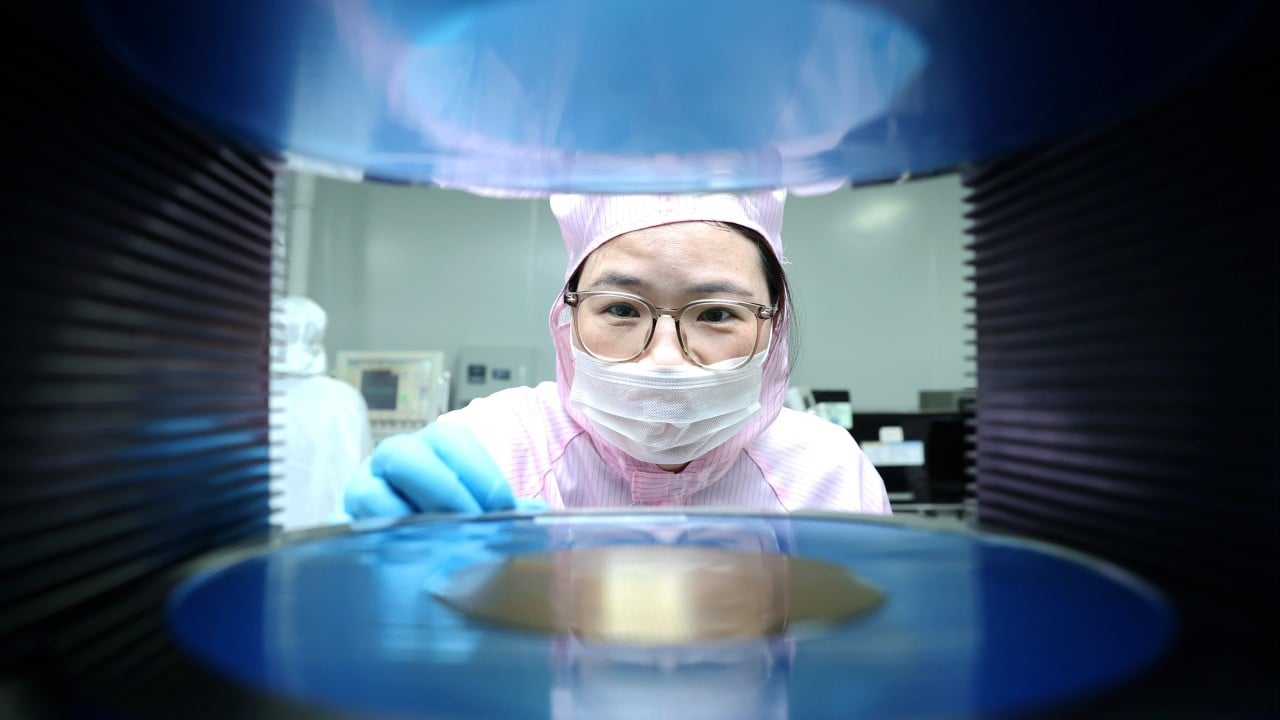
The plan focuses on innovation in areas including artificial intelligence (AI) and semiconductors while underscoring efforts to develop the next generation of scientific talent.
It identified integrated circuits, AI, quantum technology, life sciences and biotechnology, brain-computer interfaces and controlled nuclear fusion as priority areas alongside basic and interdisciplinary research.
Under the blueprint, AI will also be used to reshape how scientific research is conducted, with the academy planning to apply the technology to basic science, strategic technologies and sustainable development.
“The plan makes AI-driven transformation of scientific research a key focus in accelerating breakthroughs in scientific and technological innovation, with efforts to promote AI-enabled innovation in key fields,” said China Science Daily, the academy’s official newspaper.
The plan also outlines measures to strengthen the country’s scientific talent pool, including training strategic scientists, top engineers, young researchers and innovation teams.
It proposes attracting high-level talent – both domestic and overseas – and strengthening international scientific cooperation.
The plan comes as Beijing continues to place greater emphasis on basic research. The central government’s science and technology budget has grown steadily since 2020, according to the Ministry of Finance.
China’s 15th five-year plan also set a target for total research and development (R&D) spending to grow by more than 7 per cent annually from 2026 to 2030.
“To become a global science and technology power, we must strengthen basic research,” President Xi Jinping said at a symposium in Shanghai on April 30, according to an article published earlier this month in Qiushi Journal, a flagship publication of the Communist Party Central Committee.
Several of the technologies underscored by the academy have also become areas of strategic focus in the US, including biotechnology, quantum information science and semiconductors, according to Washington’s Genesis Mission, an AI and science initiative launched in November last year.
Washington and Beijing continue to compete over advanced technologies, with the US restricting China’s access to advanced semiconductors and related technologies while China has imposed export controls on rare earths and other critical minerals.
The competition has raised concerns about the wider impact on global technology supply chains and the decades of economic integration between the two countries.
AI and rare earth export controls were among the issues discussed during Xi’s recent summit with US President Donald Trump. But there appeared to be no new progress on semiconductor chip export controls, as there was no direct mention of them in Beijing and Washington’s accounts of the summit.
With more than 73,000 employees across over 100 research institutes, the Chinese Academy of Sciences plays a crucial role in China’s efforts to advance science and technology as the country faces growing competition with the US over advanced technologies.
KioskNews shows a cleaned-up reading view extracted from the publisher’s page — the original always lives on their site, not ours.