Delhi’s new liquor policy rollout likely, prices may surge before festive season
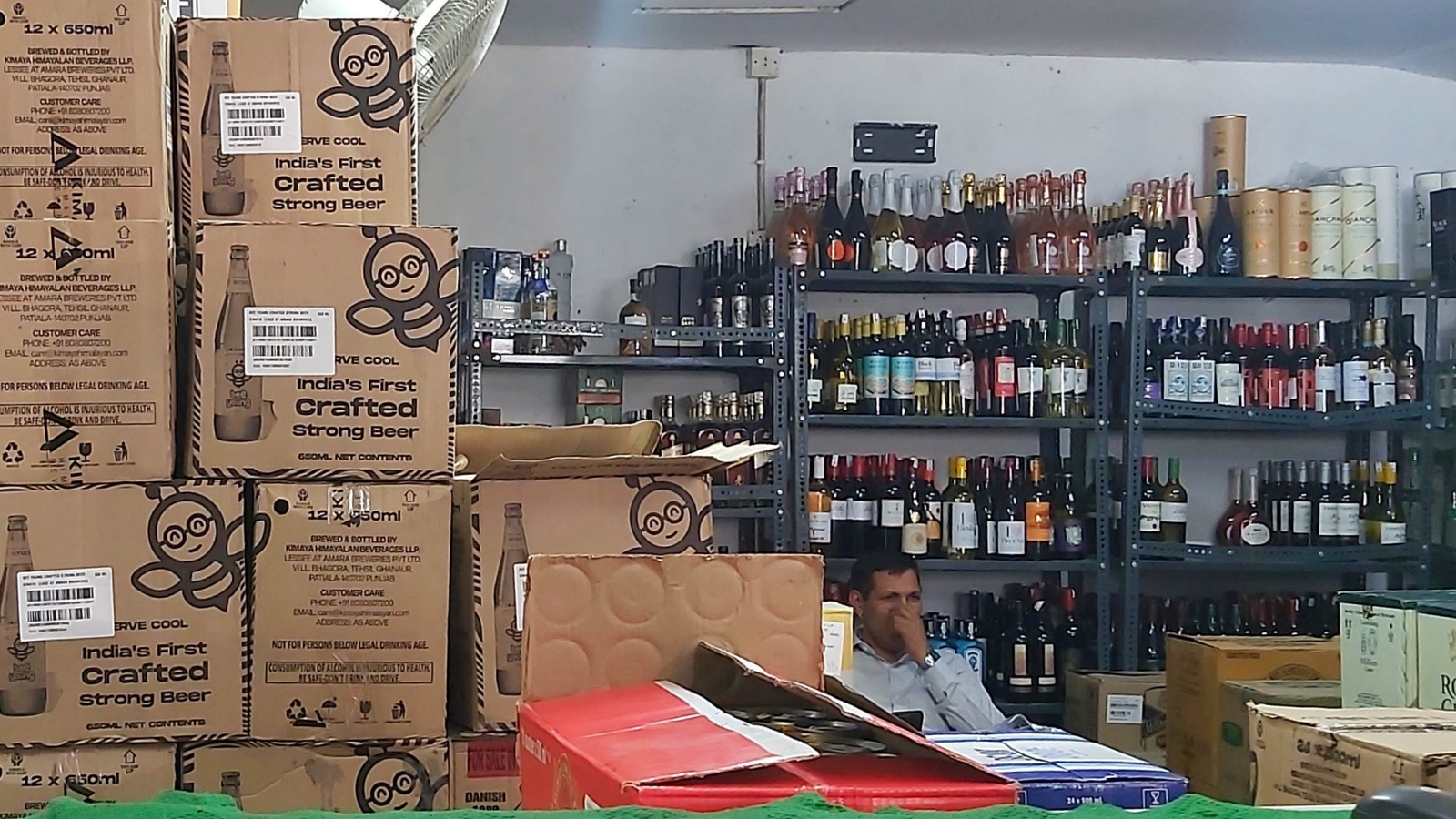
Liquor prices in the Capital may increase in the coming months as the Delhi government is planning to raise excise duty and retail margin to boost revenue under the new excise policy, which is ready and is likely to be notified in October, The Indian Express has learnt.
“The final draft of the new excise policy is ready,” said a senior Delhi government official. Last week, however, Delhi Excise Commissioner Ravi Jha was transferred to Arunachal Pradesh. “Once a new officer is appointed, the final draft proposal will be sent to the Delhi Cabinet and Lieutenant Governor Taranjit Singh Sandhu for final nod. Once the approval comes, the government plans to notify it in October ahead of the peak festival season,” the official added.
The official said, “Even as the entry of private players is unlikely, raising the fixed retail margin and excise duty are among the key objectives. This will be a major change as currently there are only government-run liquor shops in the city. The retailers do not get much revenue due to fixed margins. With this key change,the shops are expected to be upgraded and draw more customers.”
More premium liquor stores
Delhi is also expected to see an increase in the number of premium liquor stores. Explaining further, another government official said, “Currently, the retail margin cap is fixed at Rs 50 on Indian Made Foreign Liquor and Rs 100 on foreign liquor on a per bottle basis.
The liquor shops in Delhi do not keep premium imported liquors that cost above Rs 1,000 due to a fixed margin, which eventually pushes the customers to neighbouring cities such as Gurugram, Faridabad where shops operate without a fixed margin. For instance, let’s say the price of Black Label in Delhi is Rs 3,500 but you will get the same brand for a lesser price like Rs 2,400 in Gurgaon. This can be addressed once the fixed margins are removed.”
The government is also planning to increase excise duty to boost revenue, said officials. “Currently, excise duty in Delhi is levied according to different Wholesale Price (WSP) slabs and varies depending on the type of liquor. For instance, the duty on Indian spirits ranges from 30% to 300%. Any increase in these slabs is likely to raise the tax component of liquor prices…if excise duty is increased, the liquor prices will also increase,” the official explained.
Further, officials said that there might be changes in timings of serving liquor in hotels, clubs and restaurants.
Story continues below this ad
After the scrapping of the previous AAP government’s liquor policy, following a probe by CBI and the Enforcement Directorate, Delhi government brought back the older policy and allowed only government shops to operate in Delhi.
Last year, Chief Minister Rekha Gupta announced her plans to introduce a new excise policy for Delhi. She also constituted a ministerial committee headed by Minister Parvesh Sahib Singh to formulate a “transparent and socially secure” policy.
Currently, there are over 700 liquor shops in the city, which are run by the four government corporations — Delhi Tourism and Transportation Development Corporation, Delhi State Industrial and Infrastructure Development Corporation, Delhi Consumer’s Cooperative Wholesale Store, and Delhi State Civil Supplies Corporation.
Reacting to the proposed changes, Vinod Giri, Director General of Brewers Association of India, which represents the country’s largest beer makers, said, “Retail margins are currently fixed on a per-bottle basis, regardless of the price of the bottle. For Scotch whiskies, for instance, it is around Rs 100 per bottle and then comes down to Rs 50 and so on. The question is what margin they will allow under the new policy. Margins of 5%, 10% or 15% are generally the norm. There should not be an objection if the margin is up to 10%; anything substantially higher could raise questions.”
Story continues below this ad
On excise duty and liquor prices, Giri said that Delhi’s excise duties are not among the highest in the country. “If the government is looking at excise duty as a means of increasing revenue, there may be some headroom to raise it. Beer, for example, currently attracts 150% excise duty, while imported liquor attracts 85%. There is also a 25% VAT. If excise duty is increased, liquor prices will rise.
This could have a multiplier effect because an increase in excise duty raises the base price, which in turn affects the retail margin calculated on the base/landed price. Therefore, changes in both retail margins and excise duty could have a multiplier effect on retail prices,” he added.
KioskNews shows a cleaned-up reading view extracted from the publisher’s page — the original always lives on their site, not ours.