Opinion: Sai Pallavi As Sita: The Impossibility Of Pleasing Everyone
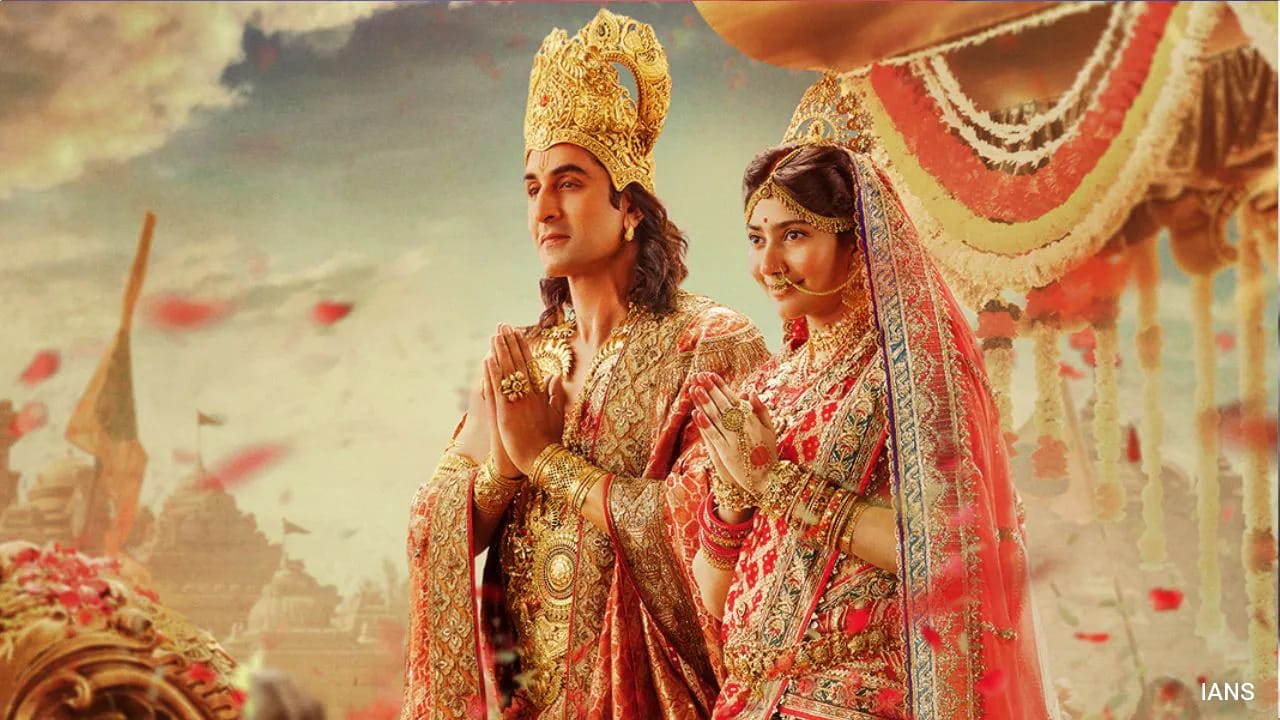
Can a person who eats beef portray Ram? Can someone with left liberal views be Sita? And can a larger-than-life-hero play a powerful antagonist like Ravana?
These were just some of the questions that predated the release of Nitesh Tiwari's Ramayana, one of the most debated movies in Indian cinema's recent history. And they say much more about the audience than they say about the filmmakers of what is supposed to be the biggest Indian film ever.
Advertisement - Scroll to continue
What was once a simple relationship between the actor onscreen and the viewer on ground has become a complicated, parasocial relationship. The relationship extends to the actor's personal life, consuming the reality of the star almost as obsessively as the characters he or she plays. It is a wasteland of worshipping the relationships characters play onscreen, sometimes giving them clickbait portmanteau names, and at other times creating fanfiction to celebrate them. The most recent example of this was the Prime Video rom com The Love Hypothesis, based on Ali Hazelwood's novel, which began life as fan fiction around Star Wars characters Rey and Kylo Ren, better known as the short form Reylo.
Modern celebritydom is as much a gift for actors as it is a curse. It can multiply stardom, often mentioned in the number of followers actors accumulate online, which in turn often becomes a deciding factor in their casting. Other things being equal, often actors with bigger followings tend to get the part.
Advertisement - Scroll to continue
One can see how this debate, between remaining enigmatic versus being chronically online, is playing out in the casting of the new James Bond, with Amazon MGM Studios, where director Denis Villeneuve seems to have auditioned almost every young English actor worth his salt. If Callum Turner is omnipresent post his marriage to pop star Dua Lipa, then another front runner Jack Lowden has already played a spy in a beloved streaming series, Slow Horses, and will soon play an even more beloved fictional character Mr Darcy in the Netflix version of Pride and Prejudice. The question of who will be the next Bond even inspired an entire satirical series, Bait, with Riz Ahmed positioning himself as a brown Bond, on Amazon Prime Video, no less.
And that's just James Bond. Multiply the anxieties and one understands the caution with which each star approached their characters in an epic as close to India's heart as Ramayana, where every character continues to be alive in the public imagination. Especially characters as open to interpretation as Sita. If there are 300 Ramayanas as AK Ramanujam told us, in the essay everyone has read despite Delhi University's best efforts to banish it, then there are also several versions of Sita. She speaks her mind in Valmiki's Ramayana, especially when it comes to accompanying Ram into exile and rejecting Ravana's repeated advances, whereas she is a trained warrior who slays demons in the Adbhuta Ramayana, and is an illusory double in Puranic texts.
It's not easy to portray someone so complex, so divine and yet human, so particular about her own individuality and yet so devoted to her partner, especially from a 21st century lens. As Sai Pallavi said in a recent interview: "Can art survive in a room with such strong opinions?"
In a country as geographically and linguistically diverse as India, it's no surprise that Sai Pallavi's casting as Sita has caused a controversy. "But who else could it have been," asks writer Sreedhar Pillai. "She is an excellent actor, a great dancer, has a spotless reputation offscreen, and is highly respected by her directors and co-stars." She is also famously particular about not wearing revealing clothes on or offscreen. With her co-star Ranbir Kapoor repeatedly saying she embodied purity and spirituality, in the prolonged promotional tour for the movie, it only helped to secure her aura.
New York psychiatrist Dr Neil K Aggarwal, who has just written Hindus, Muslims and Group Identities: Insights for Global Peacebuilding, about 500 years of Muslim interpretations of the Ramayana, adds to the debate: "I appreciate Sita depicted as adept at weapons. It makes sense as she was the daughter of a Kshatriya. She also saved Lakshman a couple of times. Sai Pallavi makes sense for casting. She is South Indian like Yash, so the movie becomes marketable across India." Indeed, according to box office reports, on its first Saturday, the Malayalam version recorded the highest theatre occupancy at a staggering 83 per cent, while the Tamil version followed closely at 78.5 per cent occupancy (collecting Rs 2.50 crore on that single day). The movie made an estimated Rs 96 crore across South India within its first four days, which is creditable given its national net gross of Rs 238 crore in the same period.
A Badaga from the Nilgiris by ethnicity, Sai Pallavi Senthamarai Kannan is a qualified doctor who can speak several languages, which makes her a dream for anyone looking for pan Indian universality.
Casting Sai Pallavi made sense also because in the Age of Ubiquity, she is rarely seen on social media. Her Instagram posts are usually limited to posters and trailers of her movies, and some scenes with her sister Pooja and her parents, Central Excise officer Kannan and dancer Radha.
The impossibility of pleasing everyone with source material that has such a vast devotional base was most evident in the casting of Kriti Sanon as Sita in another version of Ramayana, the 2023 Adipurush. Sanon was trolled for going blouseless in a scene, for tweeting in favour of students of the Jawaharlal Nehru University at the height of student protests in 2020, and even for a gesture of affection towards her director Om Raut after visiting the Lord Venkateswara temple in Tirupati.
KioskNews shows a cleaned-up reading view extracted from the publisher’s page — the original always lives on their site, not ours.