Over 33 million bottles and cans collected under beverage container return scheme; new sorting plant unveiled
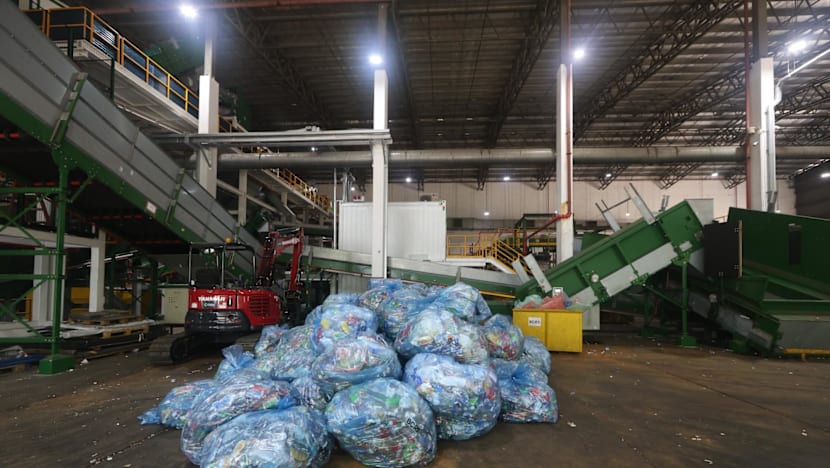
SINGAPORE: Over 33 million drink containers have been returned via reverse vending machines, with 553 tonnes of material processed at a new counting and sorting facility in Tuas, as Singapore approaches the full rollout of the Beverage Container Return Scheme (BCRS) on Oct 1.
The total amounts recycled so far are accurate as of Sep 13, said scheme operator BCRS Ltd as it unveiled its centralised Tuas facility on Monday (Sep 21).
The operator did not state what this represents in terms of the proportion of eligible containers that were returned out of those sold, also known as the return rate.
About 55 per cent of the materials collected were plastic, while the remaining 45 per cent were metal.
On Aug 5, the company disclosed that 5.5 million drink containers were returned, which meant that the number of containers returned grew by six times in less than two months.
Ms Stephanie Yip, chief executive of BCRS Ltd, said it has taken an "extended ecosystem" to bring to life efforts to create a more circular economy, acknowledging that it will not be perfect from day one.
"Our commitment is to run the scheme in a way that is fair, transparent and accountable. Whether it's our collection rates, showing you how we count and sort at our facility for recycling, we want to build your trust through transparency. Return Right is new for everyone, and we are just at the beginning," said Ms Yip.
"There will be things to improve over time. We are committed to staying open, listening to feedback, and continuing to strengthen the system so it supports everyone involved as fairly as possible,” she said.
Operational since August, the 2,000 sq m facility sorts and processes collected containers before sending them to recyclers to be turned into new products.
The scheme, which launched on Apr 1, requires consumers to pay a refundable S$0.10 (US$0.07) deposit on eligible beverage containers — pre-packaged plastic or metal containers with volumes between 150ml and 3,000ml.
Consumers can recoup their deposits by returning marked containers to one of about 1,300 Return Right reverse vending machines across Singapore, with another 200 machines slated to come online.
The scheme is currently in a transition period, during which retailers are phasing out drinks without the deposit mark. From Oct 1, drinks without the deposit mark can no longer be sold.
Metal and plastic beverage containers returned via reverse vending machines are handed over to Cora Environment, a waste management firm that operates the new facility and is in charge of the counting, sorting and baling of recycled materials for the scheme. Cora Environment was formerly known as Sembcorp Environment and SembWaste.
Capable of handling 45 tonnes daily, which is equivalent to around 2 million containers, the solar-powered facility currently processes around 20 tonnes a day, with volumes expected to rise after the transition period.
The system was designed by Nordic Recycling Systems, which has installed similar facilities in Norway. The firm also sourced the equipment, with installation in Tuas beginning in the first quarter of this year.
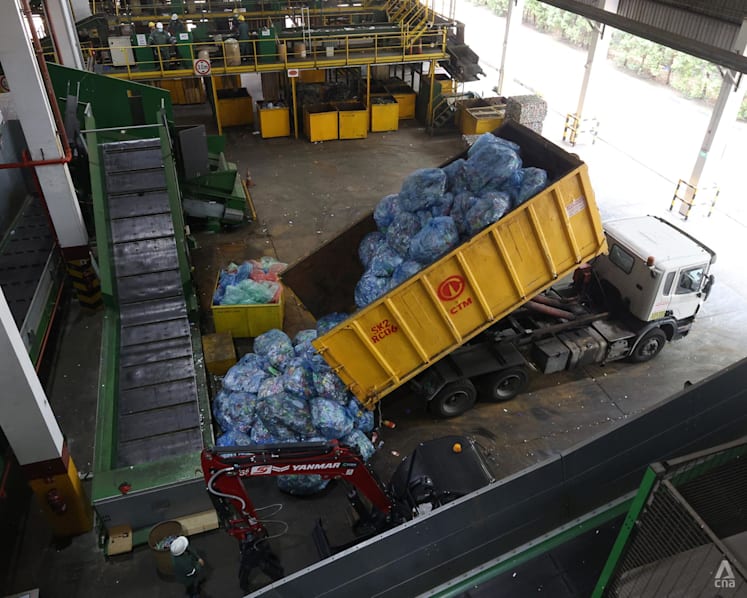
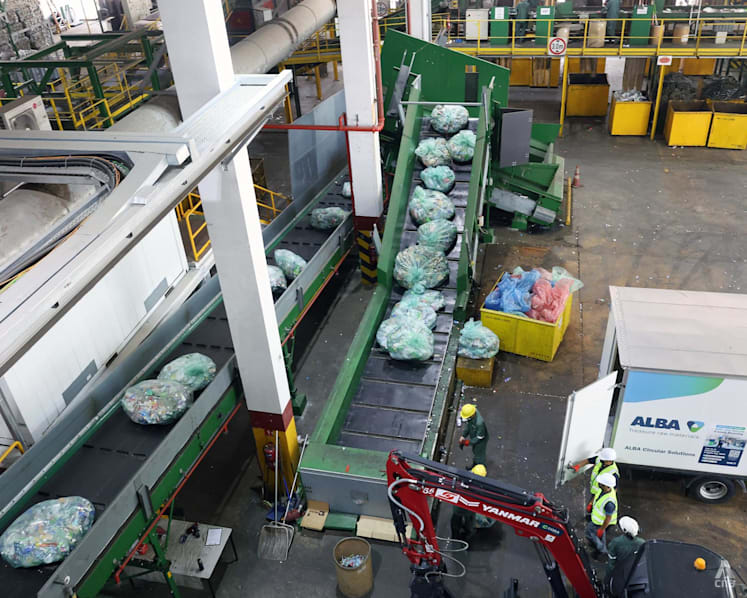
THE JOURNEY OF A CONTAINER
During a media tour of the facility, the operator showcased the automated sorting line that processed streams of containers, with robotic arms handling materials with minimal human intervention.
At this phase, the metal cans are to be sorted into separate bins for aluminium and steel, while plastics are sorted into bins for coloured and non-coloured polyethylene terephthalate (PET), high-density polyethylene (HDPE) and polypropylene (PP).
While there were steps further down the processing line to reduce odours, there were still smells from discarded drink containers when they first arrive at the facility.
Containers returned through reverse vending machines are handled by the three network point operators — RVM Systems, SG Recycle, and TOMRA — which consolidate the containers and convey them to the Cora facility.
Containers are packed in colour-coded plastic bags according to region, allowing them to be identified and counted more easily.
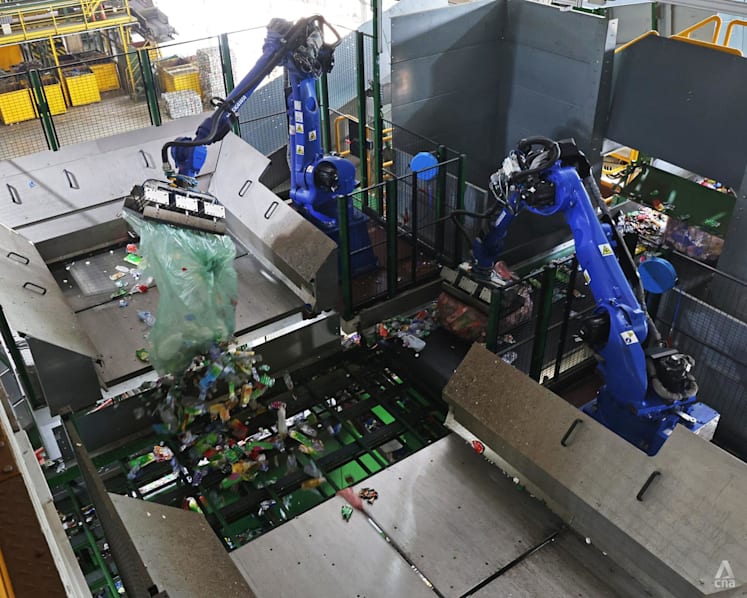
Overhead cameras log and count the bags by colour before conveyors feed them to robotic arms. The arms lift the bags onto platforms, where they are opened by slicing blades.
After the robotic arms shake the containers loose into a screw bunker below, it sends the emptied plastic bags on a separate route to be recycled.
In the screw bunker, leftover liquid in the containers are drained to reduce cross-contamination.
Further downstream, a ferrous magnet extracts steel cans and deposits them into a collection bin bound for metal recyclers.
The remaining containers are transported through enclosed pipes using an air conveying system, as opposed to open belts. Doing so helps to contain odours and reduces the dispersal of smaller particles throughout the premises. It also keeps the layout of the facility more compact.
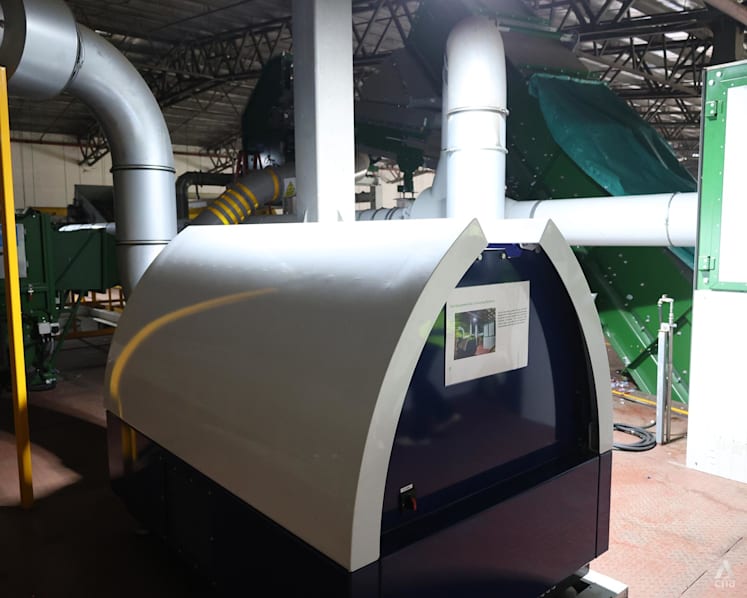
Bottle caps and rings are separated from bottles as they pass through a rotating mechanism, and labels are detached from containers by utilising controlled air and its rotational speed.
A wind sifter then removes the labels, which are collected in bulk. Removing the labels creates a cleaner stream of recyclables and helps to increase overall yield.
Next, an eddy current separator uses electromagnetic induction to sort non-ferrous aluminium cans from plastic containers. It works by generating electrical currents that repel the aluminium cans away from plastics.
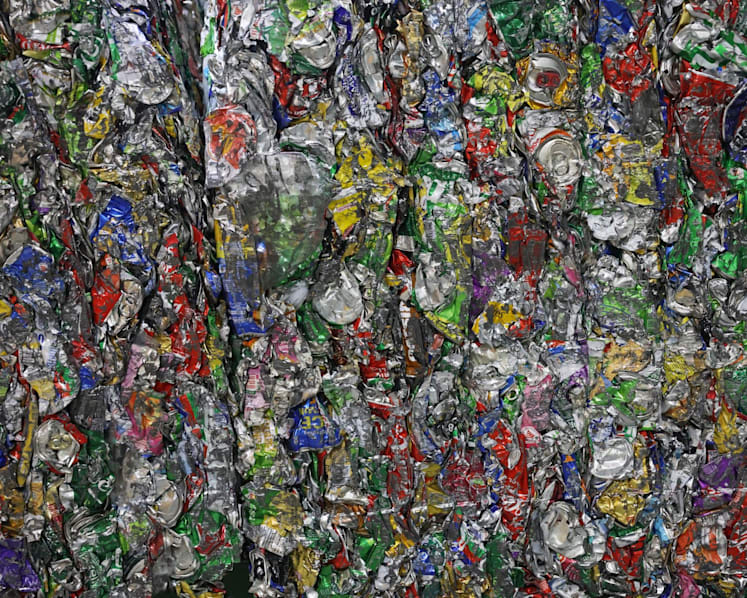
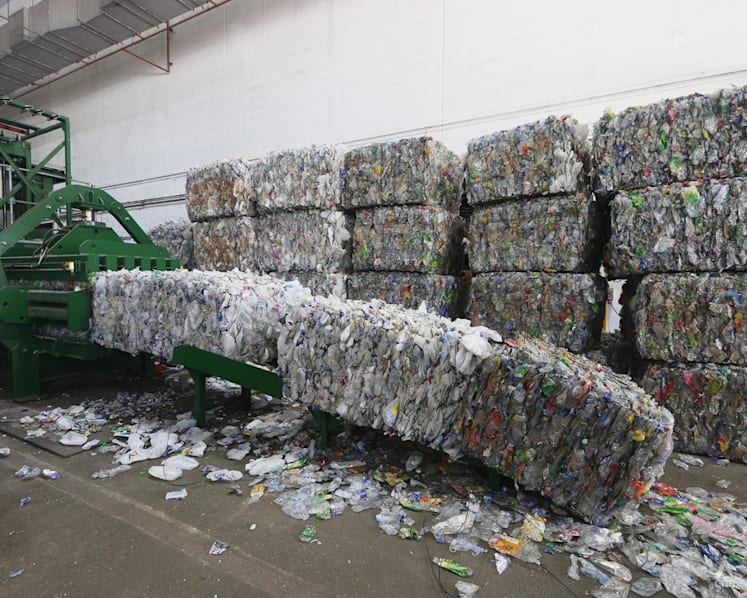
The aluminium cans are then compressed into dense blocks, also known as bales.
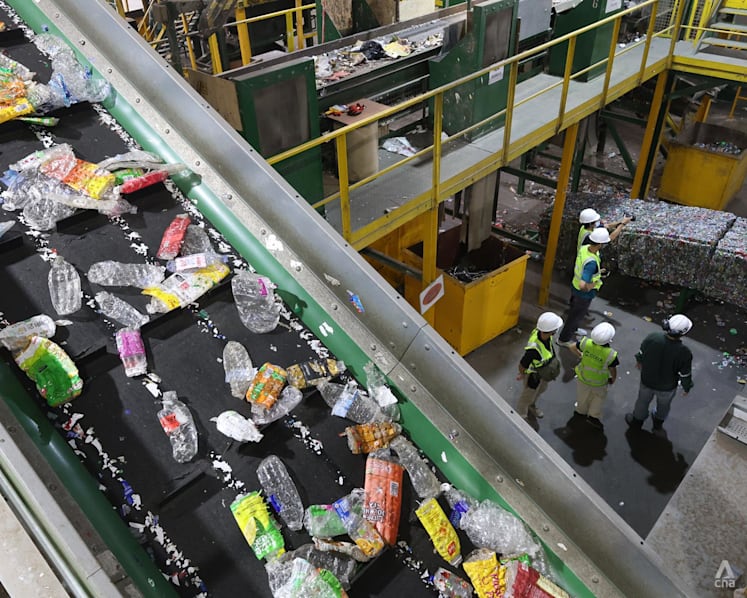
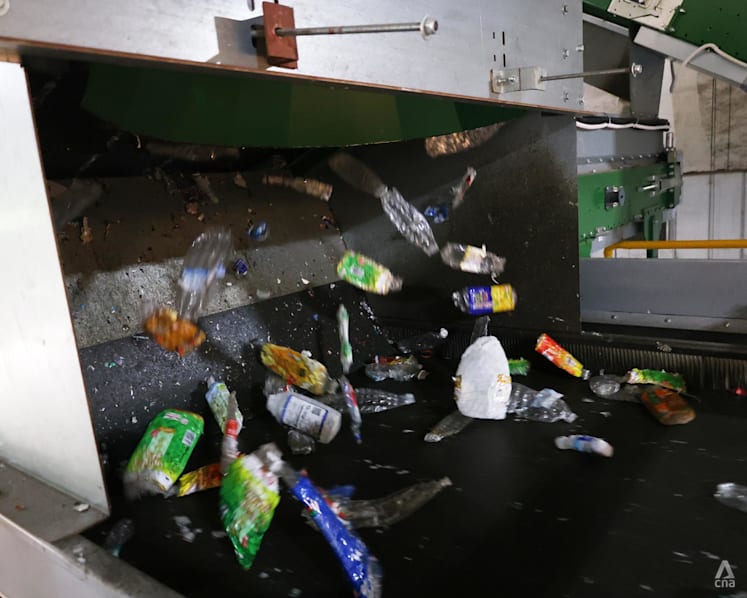
As for the remaining plastic containers, the journey through the facility is not yet over as they must be further sorted according to polymer type — PP, HDPE and PET.
Optical sensors paired with near-infrared technology identify each plastic type by how it reflects light and its colour, triggering targeted bursts of compressed air to shoot containers into designated bunkers.
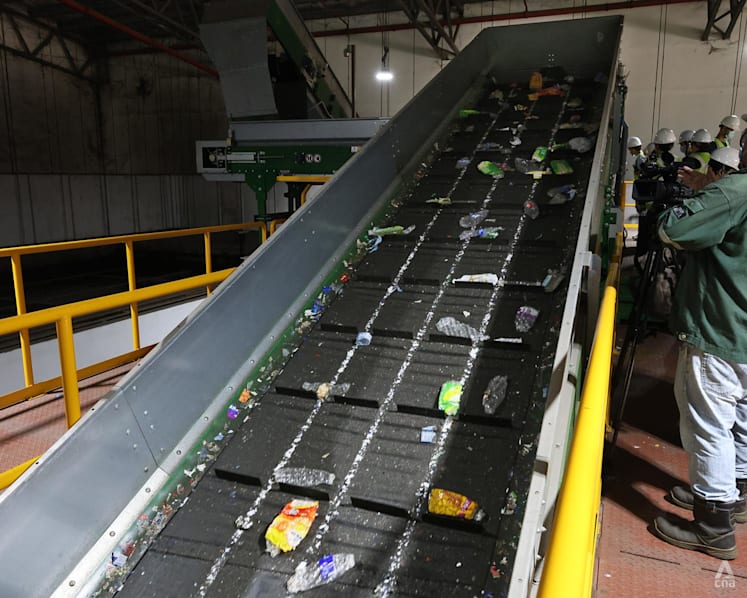
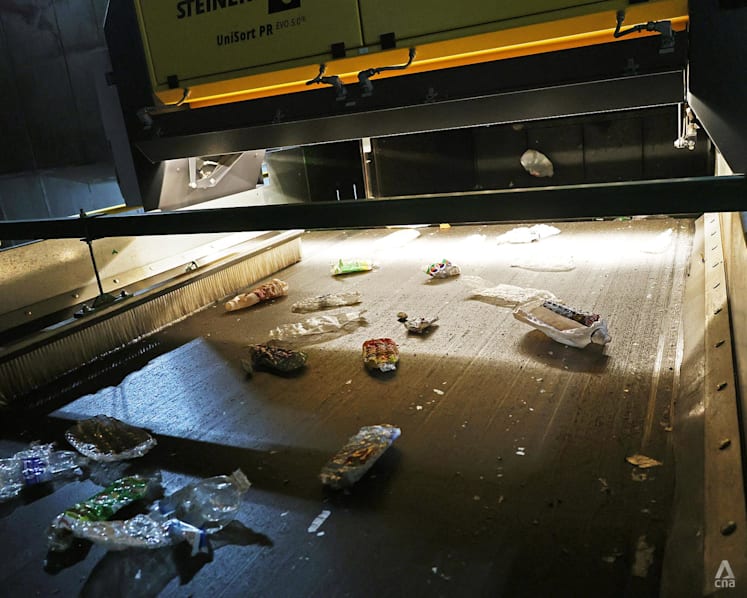
Finally, balers compress the sorted plastics into dense cubes, making them efficient to store and transport to recycling plants.
It takes about 30 minutes for a plastic bottle to travel through the system, from when it is first fed in until it is baled.
The facility generates daily operating reports detailing total bags processed, breaking down the data into important metrics, such as where the bags of containers are coming from.
Reporters were shown a Sep 7 example of such a report, which described how 1,423 bags were sorted at the facility, with 45 per cent of the bags coming from the central region, 40 per cent from west Singapore and 15 per cent from the eastern region.
As for where the bale of recyclable materials are bound for, scheme operator BCRS Ltd is working with a panel of "recycling off-takers" to close the loop.
KioskNews shows a cleaned-up reading view extracted from the publisher’s page — the original always lives on their site, not ours.