Japan names first culinary ‘living treasures’ as traditions struggle for successors
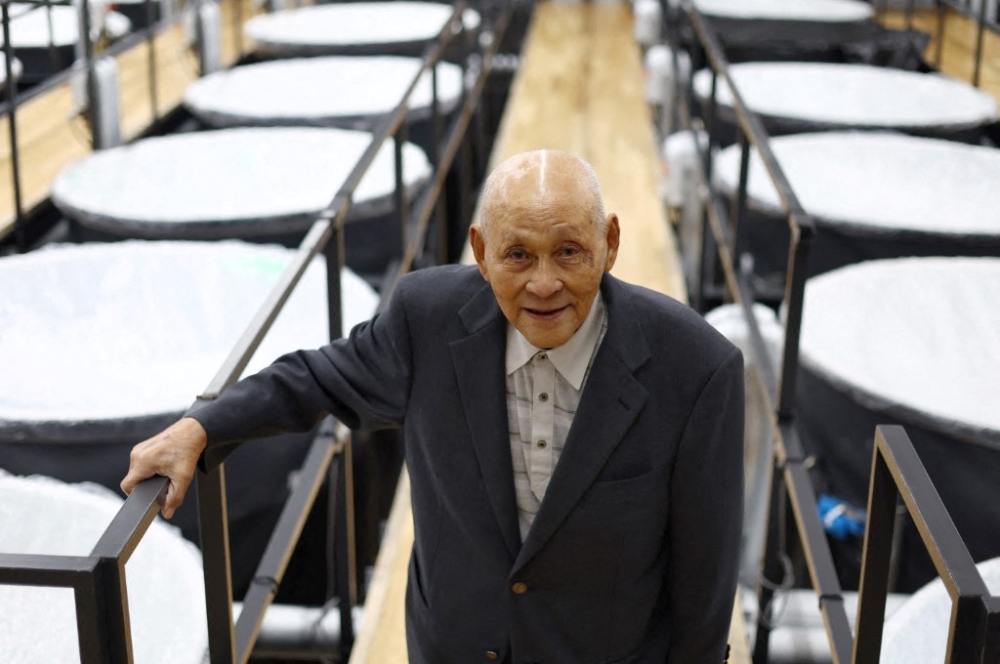

Japanese master sake brewer Naohiko Noguchi, 93, poses for a photo during an interview in Komatsu City, Ishikawa Prefecture October 12, 2026. Noguchi was recognised as a Living National Treasure for his expertise in ginjo sake brewing. The term Living National Treasure (Ningen Kokuho) refers to individuals recognised by the Japanese government as holders of Important Intangible Cultural Properties under Japan’s Law for the Protection of Cultural Properties. — Kota Kiriyama/The Yomiuri Shimbun pic via AFP
First Published: Sunday, 15 Nov 2026 9:00 PM MYT
TOKYO, Nov 15 — Japan recently recommended two people as its first-ever living national treasures in traditional Japanese cuisine, but the traditions they embody face an uncertain future amid lifestyle changes and a shortage of successors driven by the country’s shrinking population, Kyodo News reported.
While mastering the arts under a seasoned chef or sake brewer can be technically demanding and require a high degree of craftsmanship, the elevation of Eiichi Takahashi, 87, of the restaurant Hyotei in Kyoto and sake brewer Naohiko Noguchi, 93, is hoped to encourage younger generations to take up the mantle.
Interest in Japanese food and culinary culture has boomed globally since washoku and traditional dietary cultures of Japan were added to the intangible cultural heritage list in 2013 by Unesco.
The recommendation has “shaped the identity and form of Kyo ryori,” Shinichi Terada, head of the Kyo Ryori Association, said.
The association is made up of long-established traditional Japanese restaurants specialising in Kyoto cuisine.
In 2025, Kyoto welcomed a record 12.68 million inbound tourists to the city, 43.5 per cent of whom sought out culinary experiences.
The city hopes that the inclusion of a connoisseur of Kyoto cuisine as a living national treasure will be a tailwind to its popularity.
The sake brewing industry has welcomed the news, with the Japan Toji Guild Association saying it “gives all involved in traditional sake brewing hope and courage.”
Trade statistics show exports of Japanese alcohol hit a record high in 2025 to around ¥149.5 billion (RM3.8 billion).
In a bid to protect the art forms, the Japanese government in 2017 listed culinary culture alongside flower arrangements and tea ceremonies under the “revival of lifestyle culture” provisions of the country’s Basic Act on Culture and the Arts.
But a survey of related organisations by the Cultural Affairs Agency in fiscal 2017 found that, in a multiple-response question, 74.0 per cent and 72.8 per cent listed “aging membership” and “decrease in membership,” respectively, as issues plaguing the industry.
An agency official expressed concern about the industry’s future, citing the gradual decline in traditional Japanese restaurants and employees.
In 2021, the government established a registration system for intangible cultural properties, and in 2025 expanded eligibility to include “lifestyle culture,” paving the way for master chefs and sake brewers to become living national treasures.
The Cultural Affairs Agency said it hoped the move would allow “skills honed over many years to be passed on to the next generation.”
Satoshi Inoue, a professor at Momoyama Gakuin University in Osaka who specialises in the law on protection of cultural properties, said, “It’s important for people to gain a broader understanding of the fulfillment found in this work, as well as the facets of the industry itself.” — Bernama
KioskNews shows a cleaned-up reading view extracted from the publisher’s page — the original always lives on their site, not ours.