The 10 Most Universally Loved Horror Movies Based on Books, Ranked


William likes watching movies and writing about those movies. Anything else is minutae.
Sign in to your Collider account
While originality will always be praised in the genre, it's impossible to ignore the fact that some of the greatest horror films of all time are based on books. Faithfulness and financial success may vary between these films, but there's no denying that they've all become beloved by fans and critics, with all of them canonized as official horror classics. It shouldn't come as much of surprise, considering their respective novels are all beloved in the horror community as well, but it's been proven many times over that making a successful cinematic adaptation isn't the easiest of feats.
The best horror movies based on books all took different approaches when it came to adapting their source material, from slavish devotion to loose interpretation. The latter has not seemingly been a barrier to the love that's been shown towards those individual films, proving sometimes the best movie isn't always the best adaptation. By that same token, those horror films that have been more accurate adaptations are often beloved because of that fact. Either way, no matter how faithful or unfaithful, these ten horror movies based on books are the most beloved.
10 'Rosemary's Baby' (1968)
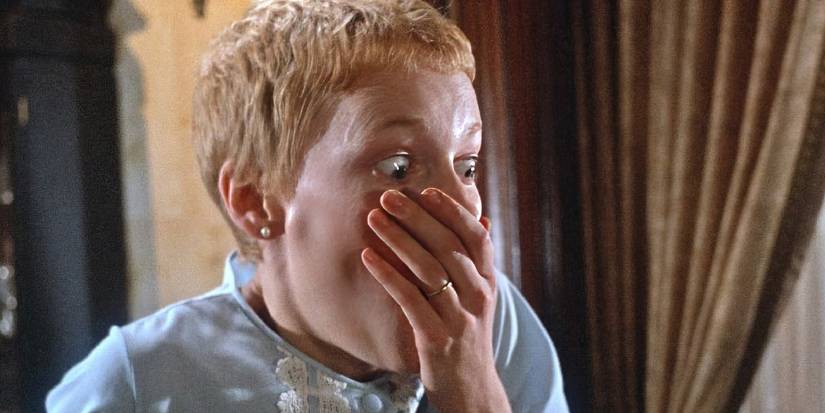
Based on Ira Levin's 1967 novel, Roman Polanski's Rosemary's Baby brought witchcraft and Satanism out of the dark ages and into modern times. It's a seminal effort of prestige horror and satanic panic, with its plot of forced demonic insemination made all the more unsettling thanks to the subsequent abhorrently evil actions of its director. While Polanski's problematic, to put it too kindly, nature may have cast a shadow over the film, it hasn't diluted its effectiveness or the power of Mia Farrow's performance in the lead role.
Rosemary (Farrow), is a newlywed who has moved into a gothic apartment building in New York City, where she finds the kindly neighbors might be harboring darker secrets of the devil-worshipping variety. After a nightmarish sequence where Rosemary is impregnated by the Prince of Darkness, the film becomes a slow burn of paranoia that becomes a roaring fire of insanity by the very end. Rosemary's Baby was as influential for the horror genre as its novel was, and its legacy can't be tarnished by the devil behind the camera.
9 'Frankenstein' (1931)
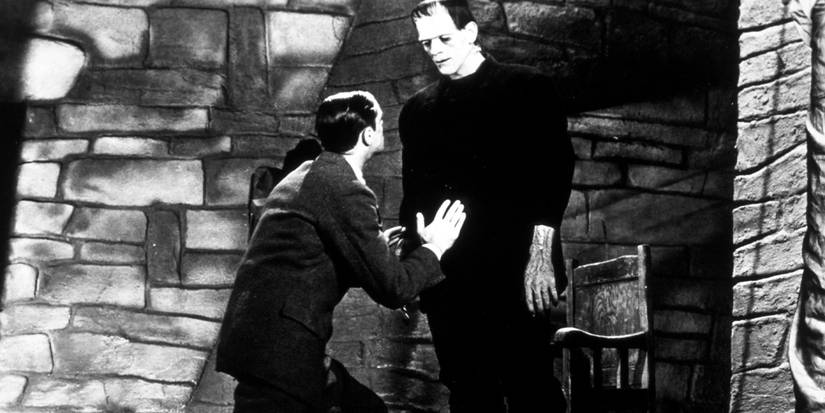
The totemic Universal Monsters began with two icons adapted from classic horror novels. While the quiet staginess of Dracula may have dated the film severely, James Whale's adaptation of Frankenstein is still an effective and affecting work of sci-fi horror. It gives Mary Shelley's masterpiece an abbreviated cinematic translation that might simplify many elements, including the iconic monster, but its legacy has been just as impactful, with Boris Karloff's performance and appearance still the standard by which all others are judged.
Dr. Henry Frankenstein (Colin Clive) builds a body out of spare parts scrounged from the local cemeteries, but ends up installing a criminal brain, which results in the lumbering and violent, yet innocent, Monster (Boris Karloff). Elements like the iconic make-up design by Jack Pierce and the electrifying production design, have become just as synonymous with the story as Shelley's novel, yet remain unique to the film. It's enough that many subsequent adaptations have gone in deliberately different directions in order to avoid unfavorable comparison, but the original is still the most universally beloved.
8 'The Haunting' (1963)

Shirley Jackson's incomparable The Haunting of Hill House has had varied adaptations over the years. There was the hated 1999 blockbuster version filled with digital effects and then the beloved miniseries created by Mike Flanagan that made massive changes to the source material to the point of being barely an adaptation. Above that wild swing in quality is the 1963 classic The Haunting, directed by Robert Wise. While it may not make the hairs on the back of modern viewers' necks stand on end like it once did, its gothic atmosphere and stunning cinematography are unmatched.
Hill House is introduced as a home with a history of death. That macabre backstory is what convinces Dr. Markway (Richard Johnson) that the house is worth studying for supernatural activity. He invites a small group of people to act as his ghostly guinea pigs. What follows could be a legitimate haunting, or just the imagination of one of the group going mad. That's a distinct change from the source material to the film, which makes them perfect companion pieces. The Haunting is the apex of old school haunted house movies, and it's still chillingly effective.
7 'Let the Right One In' (2008)
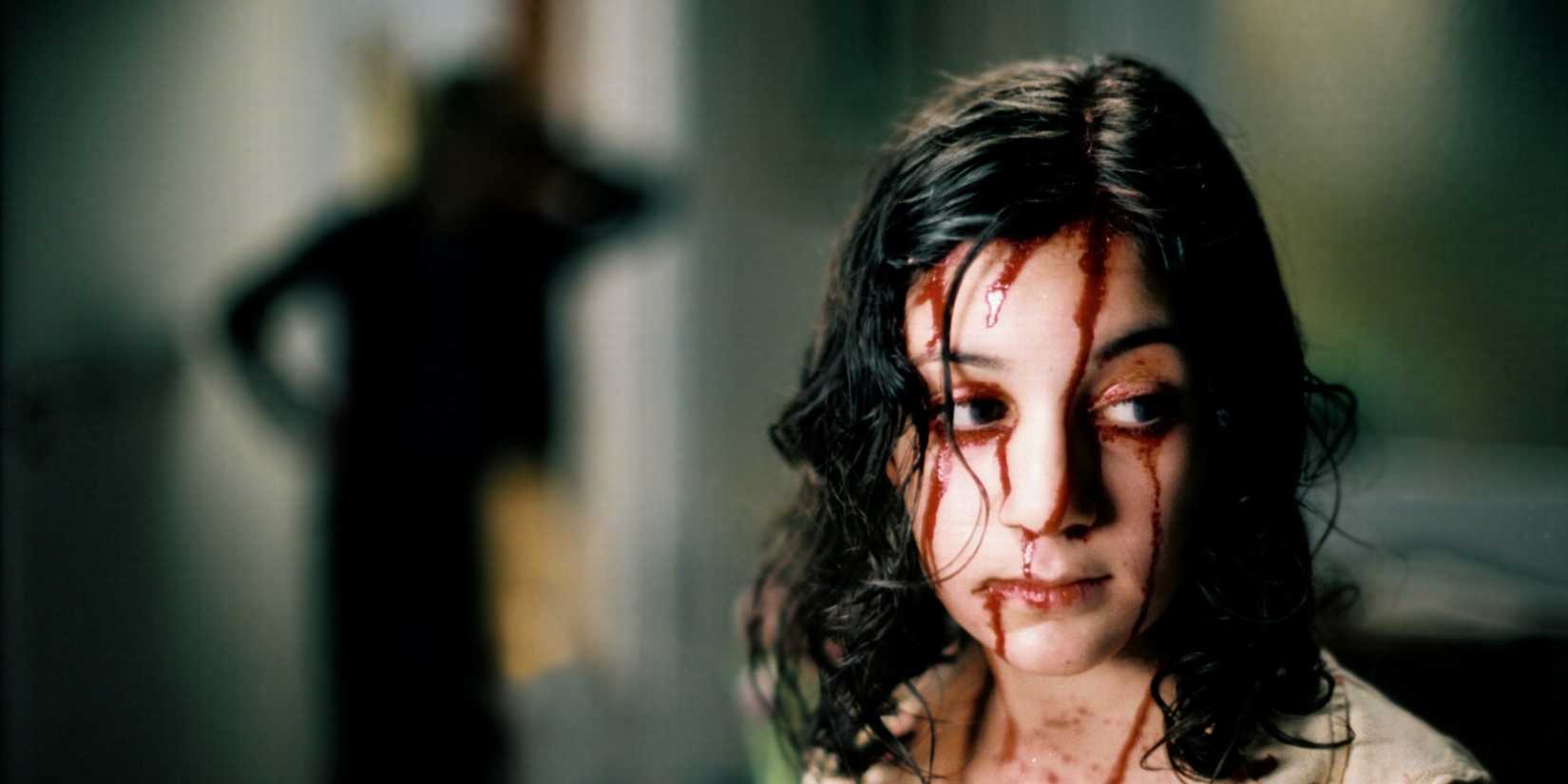
John Ajvide Lindqvist wrote both the screenplay for the vampire movie Let the Right One In, and the novel on which the movie is based. Perhaps that's why the film is such a successful representation of the book. It may be more ambiguous in terms of the gender identity of one of the lead characters and also sand the edges down on one of the supporting ones, but the film is still beautifully directed by Tomas Alfredson and captures both the novel's emotional core and the more vicious elements that surround it.
Oskar (Kåre Hedebrant) is a young bullied boy who lives with his mother in the suburbs of Stockholm. His friendless days come to an end when young Eli (Lina Leandersson) moves in next door. As the two grow closer, Oskar learns more and more that Eli is more than just another child. As frightening as it is unusually moving, Let the Right One In is a horror movie that elevates the genre without ever betraying the elemental aspects of it. There's plenty of torn flesh and blood in the film, but when it's all ripped away there's still a soul underneath.
6 'The Silence of the Lambs' (1991)

The suggested prestige of the Academy Awards has often eluded the horror genre. Not because any of the films are unworthy, but because the genre itself is often derided for its more lurid aspects. Sometimes, though, a horror movie comes along that's so effective and impactful, that even the Academy has to recognize it. In 1991, that film was Jonathan Demme's immaculately directed adaptation of Thomas Harris' The Silence of the Lambs. It's a serial killer classic that led to endless sequels, parodies, homages and rip-offs, but has not had any of its power diluted.
After the serial killer Buffalo Bill (Ted Levine) leaves behind the bodies of women, FBI trainee Clarice Starling (Jodie Foster) is tasked with consulting with notorious cannibalistic killer Hannibal Lecter (Anthony Hopkins). The performances in the film are uniformly perfect, with both Hopkins and Foster richly awarded Oscars, along with Demme and screenwriter Ted Tally. It must be acknowledged that the film has some prickly issues regarding the gender identity of its villain, but it's plainly obvious that it should not be taken as an accurate representation of a trans person, and there's no denying the effectiveness of the film's cast. While Lecter and his exploits were portrayed both before and after, Hopkins and The Silence of the Lambs are still the most universally beloved.
Collider Exclusive · 8 Questions · 2 Minutes What Is Your Biggest Horror Nightmare? Elm Street · Chucky · Scream · The Conjuring
Four horror franchises. Four completely different ways of scaring you. One waits until you fall asleep. One makes sure nobody believes you. One is already in your group of friends. And one is in the house with your family. Answer eight quick questions about how you actually watch horror, and find out which nightmare was built for you.
😴Elm Street(Freddy Krueger)
🧸Chucky(Child's Play)
📞Scream(Ghostface)
🕯️The Conjuring(The Warren Files)
01
Which horror scene makes you cover your eyes? Four classic images. One of them is worse than the others for you.
02
You are home alone and you hear a noise. First thought? Everybody has one. It arrives before you have decided anything.
03
Which horror movie rule would you break first? Everybody thinks they would survive. Almost nobody actually does.
04
Something genuinely frightening happens. What do you do? Not in a film. In your actual living room, tonight.
05
How do you actually watch a horror film? Be honest about this one. Nobody is checking.
06
Somebody offers you serious money. Which do you still refuse? The amount does not matter. There is one on this list you are not doing.
07
Which feeling stays with you a week after the film? Good horror does not stop when the credits do.
08
Something wakes you at 3am. What is the worst possibility? Eight questions in, this is the one that decides your nightmare.
The Lights Just Went Out Your Nightmare Is…
Four franchises, four completely different ways of getting underneath your skin. This is the one built out of your particular fear, why it works so well on you, and what it would leave behind.
Elm Street
Your nightmare does not wait outside the door. It waits for you to close your eyes, which you are going to have to do eventually, because nobody has ever won that particular argument.
- Freddy is horror's cruellest idea: a threat that lives in the one place you cannot guard, cannot lock, and cannot avoid forever.
- You are the one who is fine during the film and wide awake at two in the morning. Your own head is where this does its damage.
- These films understood exhaustion as a horror engine. The kids on Elm Street do not lose because they are weak. They lose because they are tired.
- You can lock every door in the house. You still have to sleep.
Chucky
Your nightmare is not really the doll. It is the face of the person you tell, and the way they decide, very kindly, that you have imagined all of it.
- Chucky works precisely because he is absurd. That is the trap: the more accurately you describe him, the less anybody is going to believe you.
- You are the one shouting at the screen because the characters are not listening. You know that feeling from real life too.
- The franchise is at its best when the adults in the room are the real obstacle, and you have met those adults.
- By the time somebody finally believes you, you will have handled most of it on your own.
Scream
Your nightmare has your number, knows your name, and has almost certainly been inside your house before. The worst part is that you already know them.
- Scream is the only one of these where the killer takes the mask off and turns out to be somebody who was at the party.
- You are the person who calls the twist out loud before it lands. You watch people the same way you watch films.
- The franchise made the rules of horror part of the plot, which means the survivors are the ones paying attention. You would be paying attention.
- Everybody is a suspect, including the person who just offered to walk you home.
The Conjuring
Your nightmare is not really about you. It is about the people asleep down the hall, and the feeling that whatever is here is not interested in leaving.
- The Conjuring films are domestic horror. The house, the family, the perfectly ordinary room that quietly stops feeling ordinary.
- Your instinct is to get everybody into one room. Your fear is protective rather than personal, which is rarer than it sounds.
- This is the one franchise where belief is the weapon. The people who come through it are the ones who are not alone and refuse to be.
- Whatever is here did not come for you. It came for the household, and you are the one standing in the hallway.
5 'Psycho' (1960)
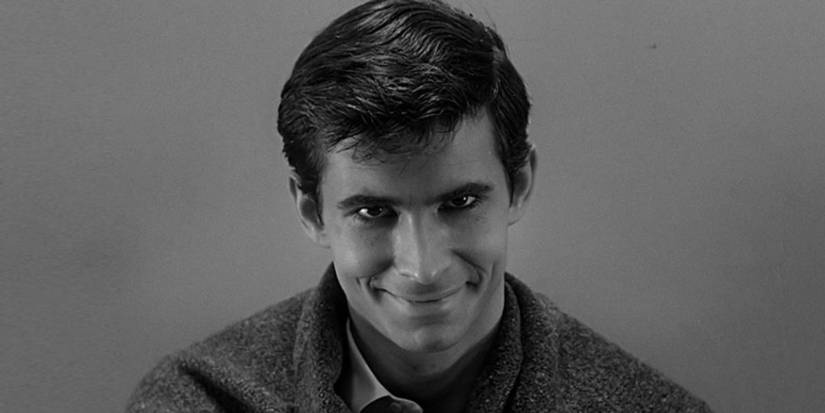
A horror masterpiece which The Silence of the Lambs certainly owes a debt to, Psycho is also beset by issues of apparent transphobia, though again, there is little to suggest that Norman Bates (Anthony Perkins) is in any way representative of transgender identity, but its contributions to harmful tropes cannot be ignored. The time in which Alfred Hitchcock's film was made certainly wasn't as enlightened and lacked the proper terminology, but as an essential piece of horror cinema, its effect has been far larger. Bates, more than an accurate depiction of dissociative identity disorder or transgender identity, is a representation of the banality of evil, a seemingly ordinary man capable of extraordinary evil.
The character of Bates, as introduced in the novel by Robert Bloch, has been inexorably tied to real-life murderer Ed Gein, whose macabre exploits informed the more sinister actions taken by his fictional counterpart, such as preserving his dear departed mother in the cellar, or dressing as her to attack poor, unsuspecting Marion Crane (Janet Leigh) in the shower. Psycho is Hitchcock's most iconic film, and every inch of it has been dissected more than the bodies which Gein stole from cemeteries. It had an immeasurable impact on the horror genre and was the progenitor for the entire slasher genre that would come to fruition a decade later.
4 'Jaws' (1975)
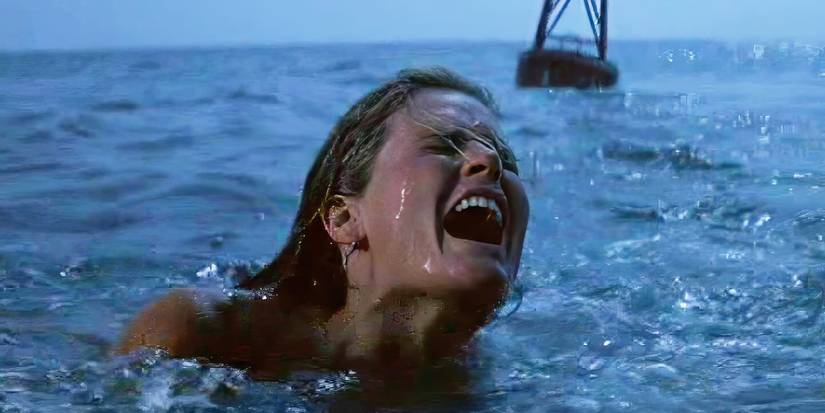
Steven Spielberg's Jaws is many things. The birth of the modern blockbuster. The director's calling card that would launch him to fame and fortune. The greatest shark movie ever made. Before all that, it was a novel by Peter Benchley. A novel which the movie definitively improved upon by excising unnecessary subplots and loathsome character dynamics and adding a crowd-pleasing climax. Jaws is an interesting book, but it's a much better movie. A movie that was made even better because of the limitations it faced, forcing Spielberg to rely on his ingenuity to suggest a shark when the mechanical one failed, and in the process created an icon of horror that scared a generation of audiences away from the water.
The shark that stalks the waters of Amity Island is hardly seen for the first half of the movie. Its presence is made known through the iconic score by John Williams, a menacing fin that glides along the surface of the water and some fleeting glimpses of its toothy maw. By the time the shark makes a proper introduction, it's well after the island's police chief Brody (Roy Scheider), marine biologist Hooper (Richard Dreyfuss) and salty dog Quint (Robert Shaw) have set out on a boat to put an end to its reign of terror. Jaws manufactures scares out of the barest of elements, and is all the more effective for it.
3 'The Exorcist' (1973)
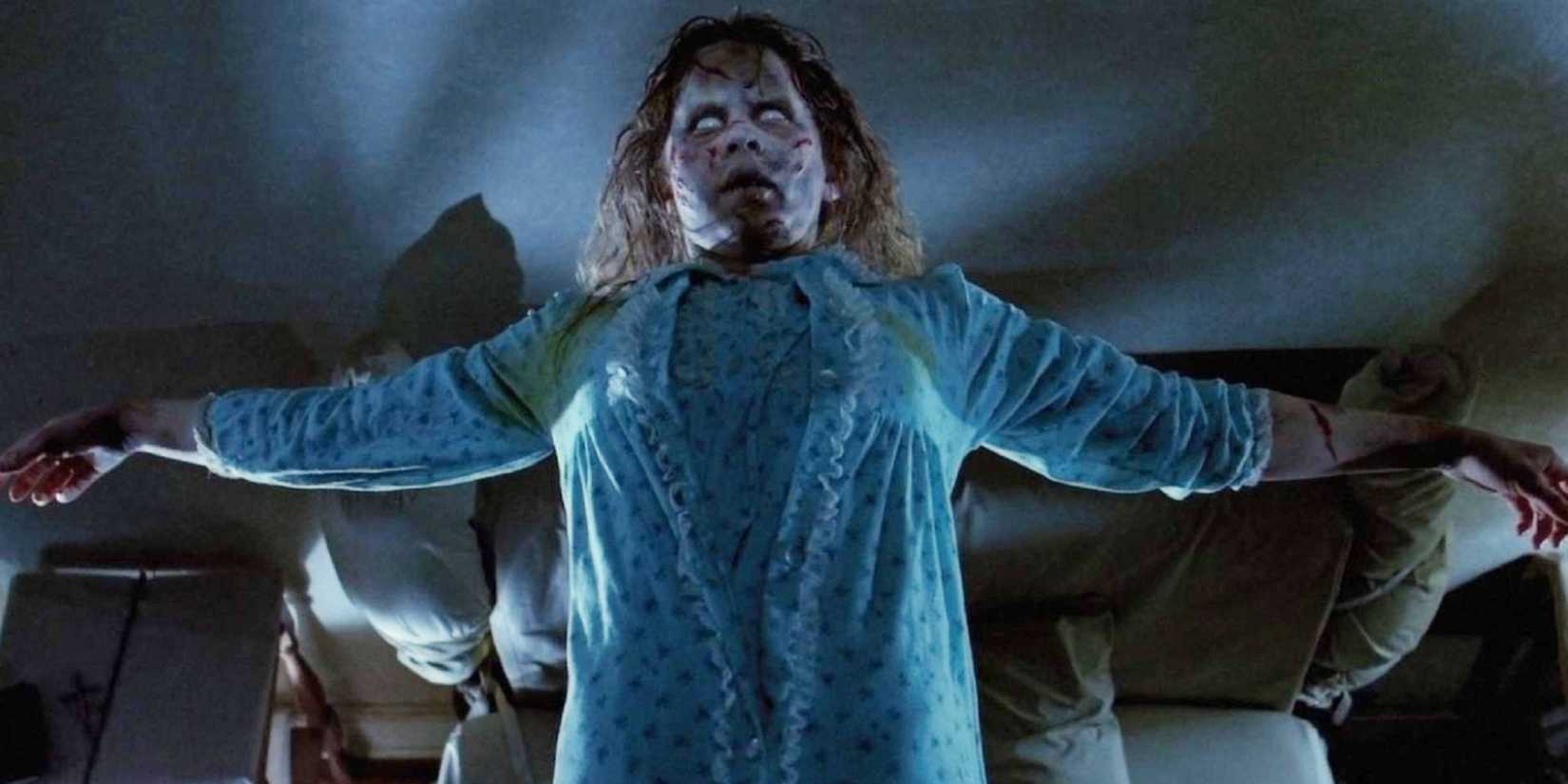
As scary as a rogue great white may be, it's got nothing on a little girl possessed by the Devil. The Exorcist had a similarly cursed production as Jaws, one to rival the curse that afflicts the little girl at the center of its plot. William Peter Blatty's novel was inspired by a real exorcism that had been performed by a priest, and while it's unlikely that there's any real truth behind it, the film, which Blatty wrote himself, makes for a compelling case. It helps that William Friedkin's direction carries the same level of realism as his cop thriller The French Connection. The director's unhinged behavior may have made the film a living hell for its cast, but that hell is all on screen.
Hell comes to Georgetown in the film, where 12-year-old Regan MacNeil (Linda Blair) becomes a conduit for the demon Pazuzu. Her violent behavior leads her mother, Chris (Ellen Burstyn), to seek the help of Father Damien Karras (Jason Miller) who calls on the elderly Lankaster Merrin (Max von Sydow) to expel the demon. Just as Jaws is the greatest shark movie of all time, The Exorcist is the greatest possession film ever made, so thoroughly codifying the key elements of it that no sequel, prequel or film otherwise inspired by it has been able to improve upon them. As with all great horror movies, the devil is in the details.
2 'The Thing' (1982)
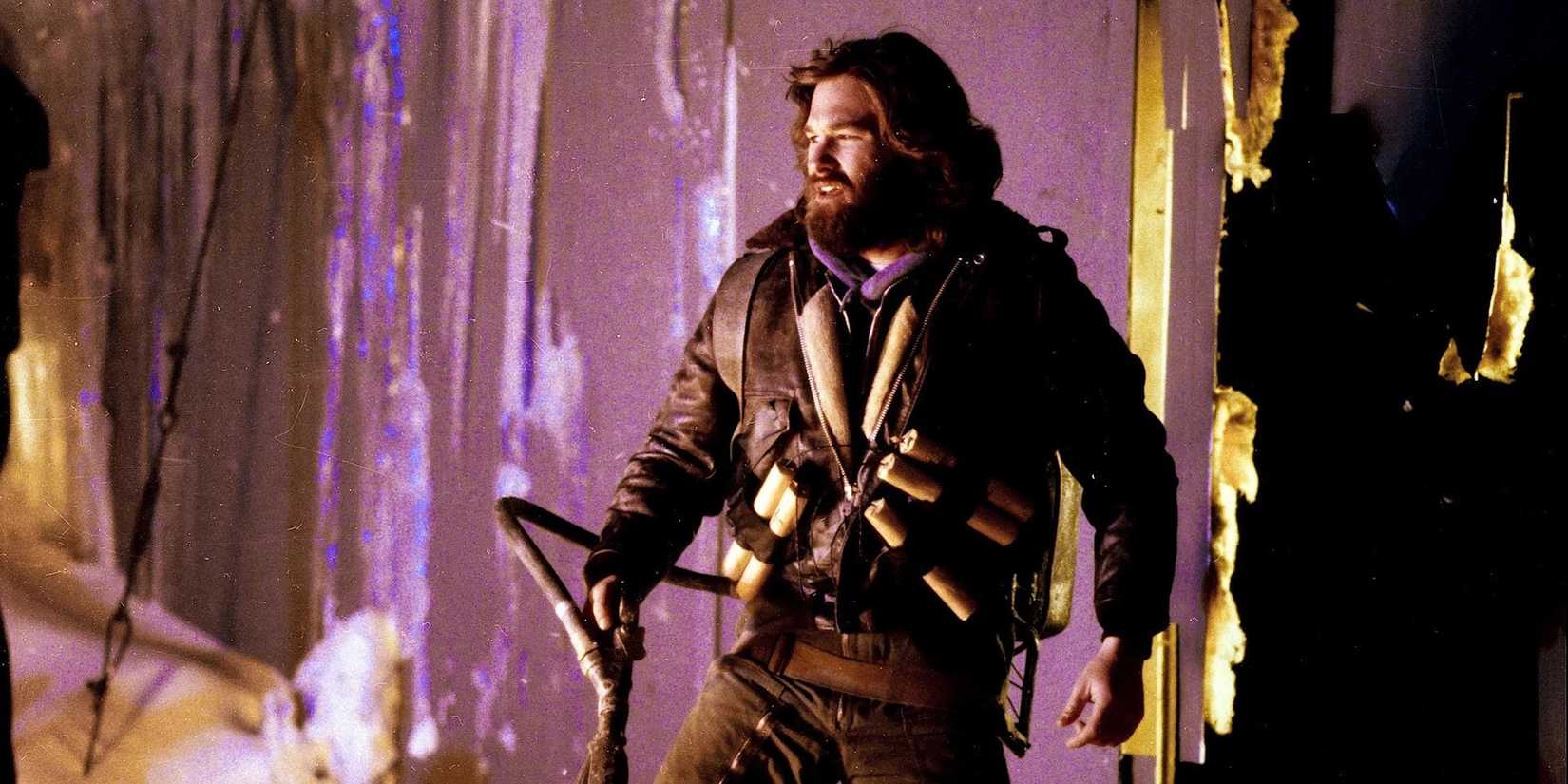
Where acclaim came easy for every previous film on this list, in the form of glowing critical reviews or numerous awards nominations, that wasn't the case for John Carpenter's The Thing. A remake of the sci-fi classic The Thing From Another World and more faithful adaptation of the novella Who Goes There? by John W. Campbell Jr., the film was lambasted by critics for its violent content and audiences stayed away from it in favor of the more kindly alien antics of E.T. the Extra-Terrestrial. In the years since, the film has rightly become recognized as one of the greatest horror films ever made, and the true masterpiece of Carpenter's career.
In Antarctica, an alien has crash-landed and infiltrated a remote research outpost thanks to its ability to imitate any living lifeform. It's only too late that the men of the outpost, reluctantly led by helicopter pilot MacCready (Kurt Russell), discover what is among them and realize they are now faced with an apocalyptic scenario if they let it survive. Nasty, nihilistic and paranoid as hell, The Thing is a feel-bad horror classic that's also a showcase for Carpenter as director and effects maestro Rob Bottin, whose designs for the alien are among the most iconic ever put on film. Though it may have become beloved belatedly, The Thing is no imitation of true horror.
1 'The Shining' (1980)

Another horror masterpiece that was offensively derided when it was originally released, The Shining carries the added dishonorable distinction of being hated by the author of its source material. Stephen King was notoriously dissatisfied with Stanlet Kubrick's adaptation of his horror novel, both the liberties it took with the story and the casting of Jack Nicholson in the lead role. He's begrudgingly accepted the film's now beloved status among horror movie fans, but doesn't deny the issues he still takes with it. As an adaptation, The Shining is no shining example, but as its own entity, it is about as perfect as a horror movie can be. A slow burn haunting that chills with its carefully constructed terror.
Jack Torrance (Nicholson) is a writer and recovering alcoholic who has taken on the duty of winter caretaker for the isolated Overlook Hotel. He brings along his wife Wendy (Shelley Duvall) and young son Danny (Danny Lloyd), who brings with him his psychic abilities that allow him to see into the supernatural nature of the hotel long before it begins to have a dark effect on his father. The Shining is a hypnotic cinematic experience, immaculately designed to unnerve and disorient the audience from its first frame. It may not be the film that King had envisioned being made from his novel, but it's Kubrick's vision of pure horror that is universally terrifying.
KioskNews shows a cleaned-up reading view extracted from the publisher’s page — the original always lives on their site, not ours.