‘No safe havens for terrorists’: With Pakistan minister in audience, Rajnath Singh calls out terror backers
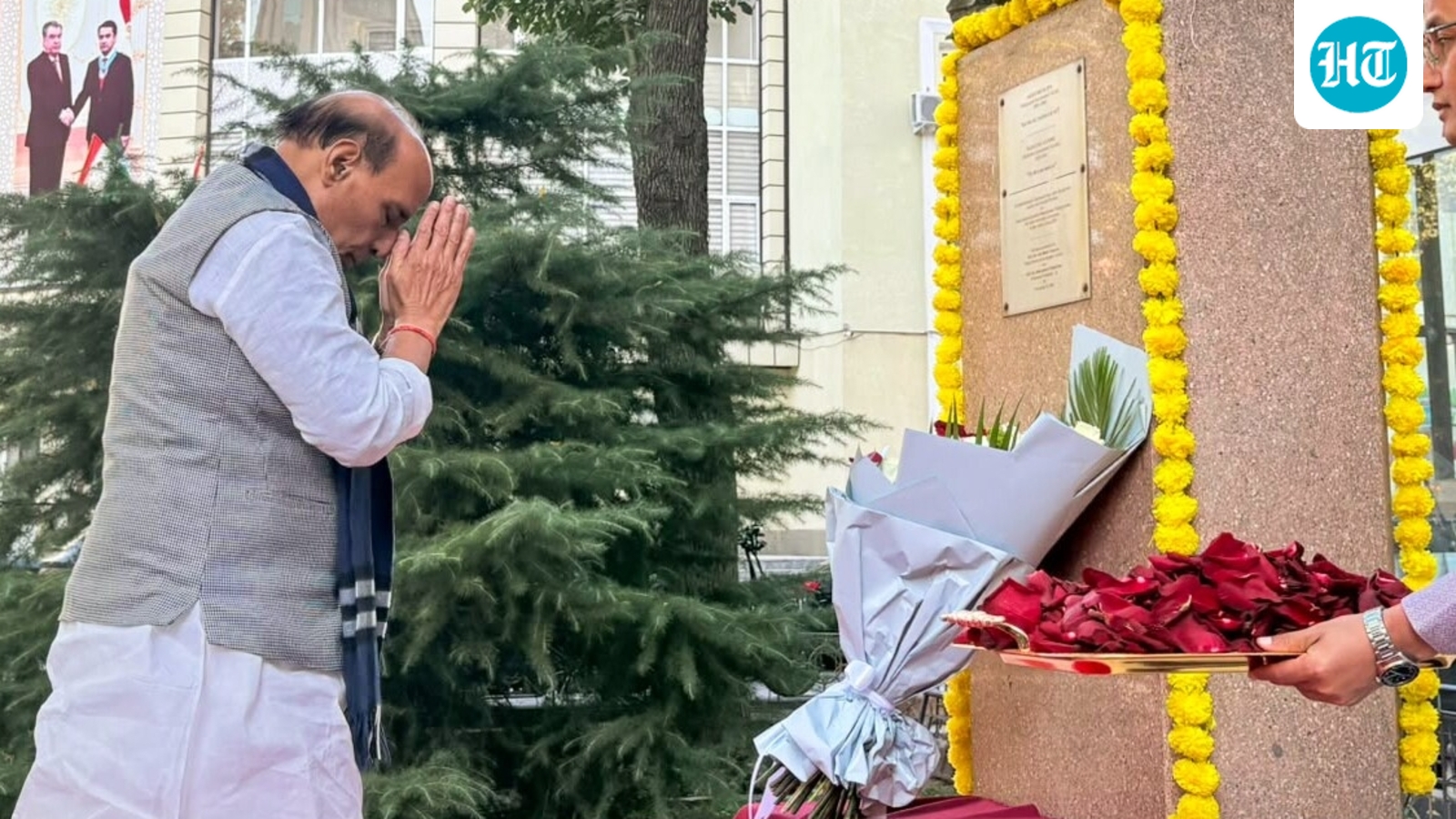
Defence minister Rajnath Singh on Tuesday called for joint action to dismantle terrorism, asserting that there can be no justification for the scourge or double standards in tackling it, in a pointed message delivered in the presence of Pakistan’s deputy prime minister and defence minister Ishaq Dar at the 25th meeting of SCO council of heads of government at Dushanbe in Tajikistan.
“Terrorism results in the loss of innocent lives and disrupts investment and commerce. It radicalises societies and deprives youth of the opportunities they rightfully deserve. There can be no justification for terrorism, no double standards in addressing it, and no place for those who finance, support, or provide safe havens to terrorists,” Singh said in a thinly veiled swipe at Pakistan.
Also read: Ecosystem of terrorism must be firmly and collectively 'dismantled': Rajnath Singh at SCO meet
Singh calls for dismantling the entire terror ecosystem
Terrorism, Singh said, poses a grave threat to peace and development, and its entire ecosystem must be collectively dismantled. India and Pakistan joined the Shanghai Cooperation Organisation as members in June 2017.
In his address, he stressed that connectivity must be based on “consultation and respect for the sovereignty and territorial integrity” of all countries, arguing that “projects not founded on these principles will not be sustainable.”
The comments are significant because New Delhi has long opposed the China-Pakistan Economic Corridor (CPEC), a flagship project under China’s Belt and Road Initiative (BRI), as a key section of the corridor passes through Pakistan-occupied Kashmir (PoK). In the past, India has expressed concern at China and Pakistan using CPEC to alter the status quo in the region, and said the connectivity project passes through Indian territory that is under “forcible occupation” by Pakistan.
Chinese Premier Li Qiang also attended the SCO meeting.
Also read: Future military power will depend on decision-making speed, not platform numbers: Rajnath Singh
India backs trade corridors linking Central Asia with wider markets
“Connectivity is crucial for our shared prosperity. India supports initiatives that link markets, facilitate trade and create new avenues for development. Initiatives such as the International North-South Transport Corridor and the Chabahar Port can contribute significantly to connecting Central Asia with broader markets,” he said.
Singh also highlighted the need to move beyond physical connectivity by simplifying customs procedures, promoting digital documentation, improving logistics and adopting interoperable digital solutions to reduce the cost of doing business across the region.
Economic engagement must be inclusive and mutually beneficial for all member states, he said. “India believes that the SCO must remain efficient and steadfast in its adherence to the principles of sovereign equality, consensus, and mutual respect. New mechanisms should focus on clearly identified needs, avoid duplication, and prioritise delivering practical value to Member States.”
Also read: Rajnath Singh signals push for deeper military ties with ASEAN, offers radars, air defence systems
Singh flags geopolitical tensions and supply-chain disruptions
Singh said the SCO must build consensus and translate it into concrete action to address the uncertain global economic environment marked by geopolitical tensions, disruptions to trade and supply chains, concerns over energy and food security, and emerging technological divides. There is a need to strengthen supply chains, facilitate trade and investment, and leverage technology to drive development, he said.
The meeting reviewed progress in multilateral economic and trade cooperation among SCO Member States and discussed measures to further strengthen cooperation in areas such as transport, finance, digital economy and social development, the defence ministry said in a statement.
KioskNews shows a cleaned-up reading view extracted from the publisher’s page — the original always lives on their site, not ours.