All 66 Episodes Of Hulu's R-Rated Thriller Deliver Psychological Horror At Its Best

Cathal Gunning has been writing about movies, television, culture, and politics online and in print since 2017. He worked as a Senior Editor in Adbusters Media Foundation from 2018-2019 and wrote for WhatCulture in early 2020. He has been a Senior Features Writer for ScreenRant since 2020.
While Hulu’s greatest dystopian show is often listed among the best sci-fi series of the last decade, the adaptation rarely gets credit for just how great it is at pulling off psychological horror, too. If Blade Runner’s links to the Alien franchise prove anything, it is that the line between sci-fi and horror is often thinner than it might seem.
One need only look at the Star Trek franchise’s Borg or the earliest, eerily human Cylons from the Battlestar Galactica reboot to see that the uncanny line between man and machine can be mined for horror just as much as wonder or awe. Similarly, from the Xenomorph to its natural enemy, the Predator franchise’s Yautja, there are plenty of extraterrestrials in movies and TV that are a lot less friendly than Steven Spielberg’s awe-inspiring childhood favorite.
On occasion, sci-fi shows can also end up taking their dark dystopian plots so far that they essentially become psychological horror shows in disguise. For many fans of the genre, the term “psychological horror” will likely conjure up straightforward horror shows like Prime Video’s Stephen King adaptation Carrie or The Haunting of Hill House. However, with its oppressively bleak tone and truly terrifying sense of dread, Hulu’s Margaret Atwood adaptation, The Handmaid’s Tale, is just as scary as any of these titles.
The Handmaid's Tale Is Just As Much A Horror Show As A Sci-Fi Series

Set in the Republic of Gilead, a totalitarian near-future America run by Christian fascists, The Handmaid’s Tale is loosely based on Atwood’s award-winning 1985 novel of the same name. While the book is an epistolary novel told mostly through the diaries of one “Handmaid,” the show’s sprawling narrative takes the perspective of various female characters to explore the horrors of its setting.
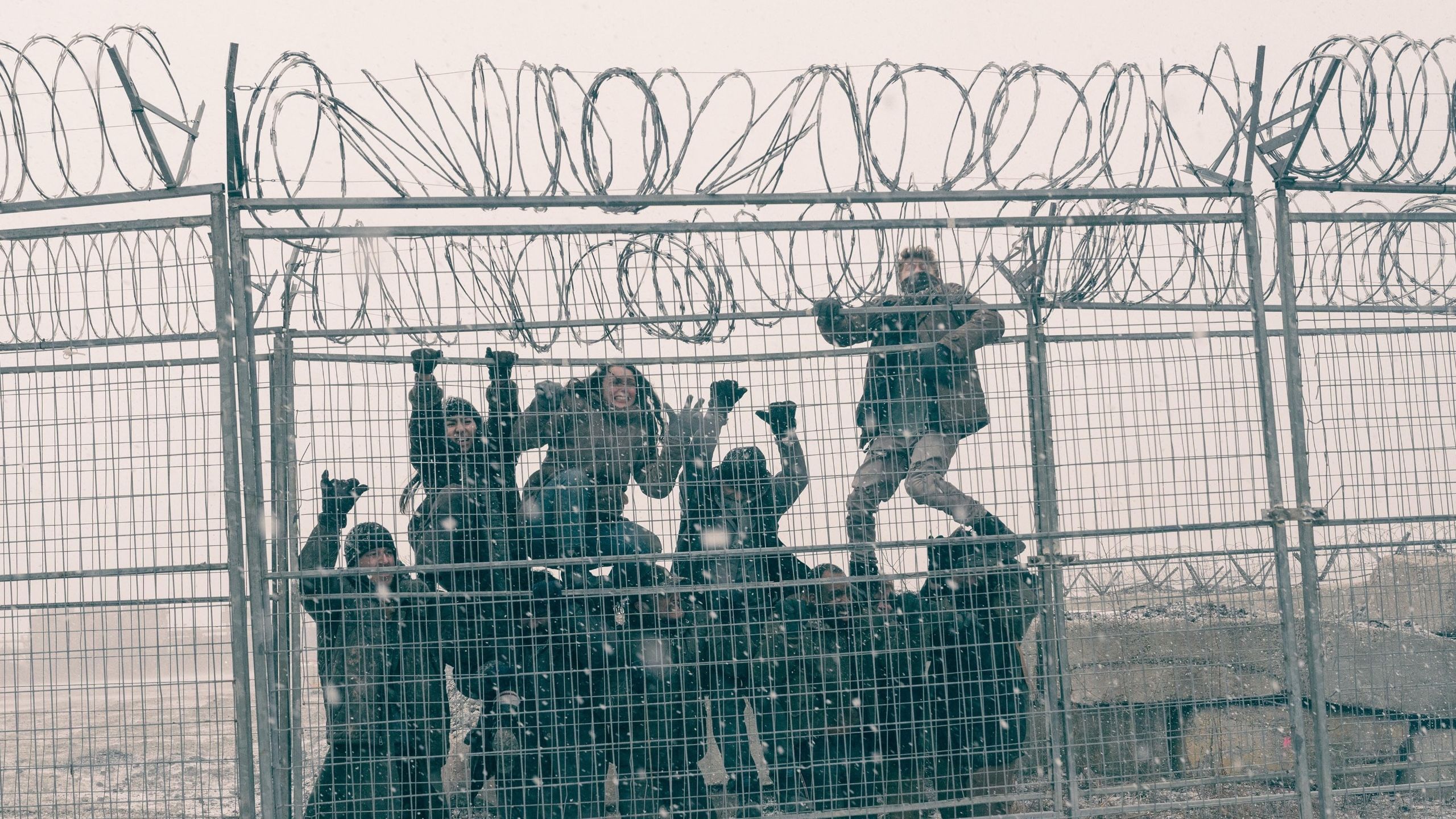
In Gilead, women like Elizabeth Moss’s Offred are held captive and have their bodies used as incubators to produce the offspring of the Republic of Gilead’s patriarchal zealots. The regime’s leaders are nightmarishly ruthless and the fate of these women is horrifying, but there is some hope despite the country’s fascist takeover as Offred spends season 1 plotting an escape to the Canadian border.
Suffice it to say that things are not quite that simple for Offred, and the horrors of The Handmaid's Tale’s setting don’t end when she escapes in the season 1 finale. This does, however, mark the moment that the show expands beyond the story of Atwood’s novel, with the remaining five seasons of the series expanding on the slight, sparse original story.
While ambitious sci-fi shows like HBO’s Westworld also depicted believable dystopian settings around the same time, The Handmaid’s Tale was notable for the sheer harshness in the show’s depiction of Gilead. Westworld had plenty of graphic violence, like so many shows that arrived after Game of Thrones and The Walking Dead, but lacked the overwhelming dread that defined every storyline in The Handmaid’s Tale.
The Horror Of The Handmaid’s Tale Became A Problem In Later Seasons

That said, this wasn’t an unambiguously positive thing for the series. Later seasons of The Handmaid’s Tale were criticized precisely because the show was accused of relying on downbeat shock value to keep viewers invested, with some commentators claiming that the worst excesses of the series felt exploitative and gratuitous. For fans, The Handmaid’s Tale was an unblinking depiction of fascism’s cruelty.
However, for detractors, the show’s lingering focus on torture and public executions felt too lurid and grotesque to be justifiable. The Handmaid’s Tale seemingly addressed this critique when its final two seasons eased up on the brutality somewhat. This also resulted, inevitably, in the ending of The Handmaid’s Tale feeling less impossibly bleak and hopeless than seasons 2 and 3 of The Handmaid’s Tale might have led viewers to expect.
- Release Date
- 2017 - 2025-00-00
- Network
- Hulu
- Showrunner
- Bruce Miller
- Directors
- Mike Barker, Kari Skogland, Daina Reid, Reed Morano, Floria Sigismondi, Jeremy Podeswa, Kate Dennis, Richard Shepard, Amma Asante, Christina Choe, Deniz Gamze Ergüven, Bradley Whitford, Dearbhla Walsh, Liz Garbus
- Writers
- Kira Snyder, Eric Tuchman, Yahlin Chang, John Herrera, Jacey Heldrich, Dorothy Fortenberry, Marissa Jo Cerar, Lynn Renee Maxcy
-

Elisabeth Moss
June Osborne / Offred / Ofjoseph
-

Serena Joy Waterford
KioskNews shows a cleaned-up reading view extracted from the publisher’s page — the original always lives on their site, not ours.