Singapore opens gold vault to foreign central banks in race to become Asia’s gold hub
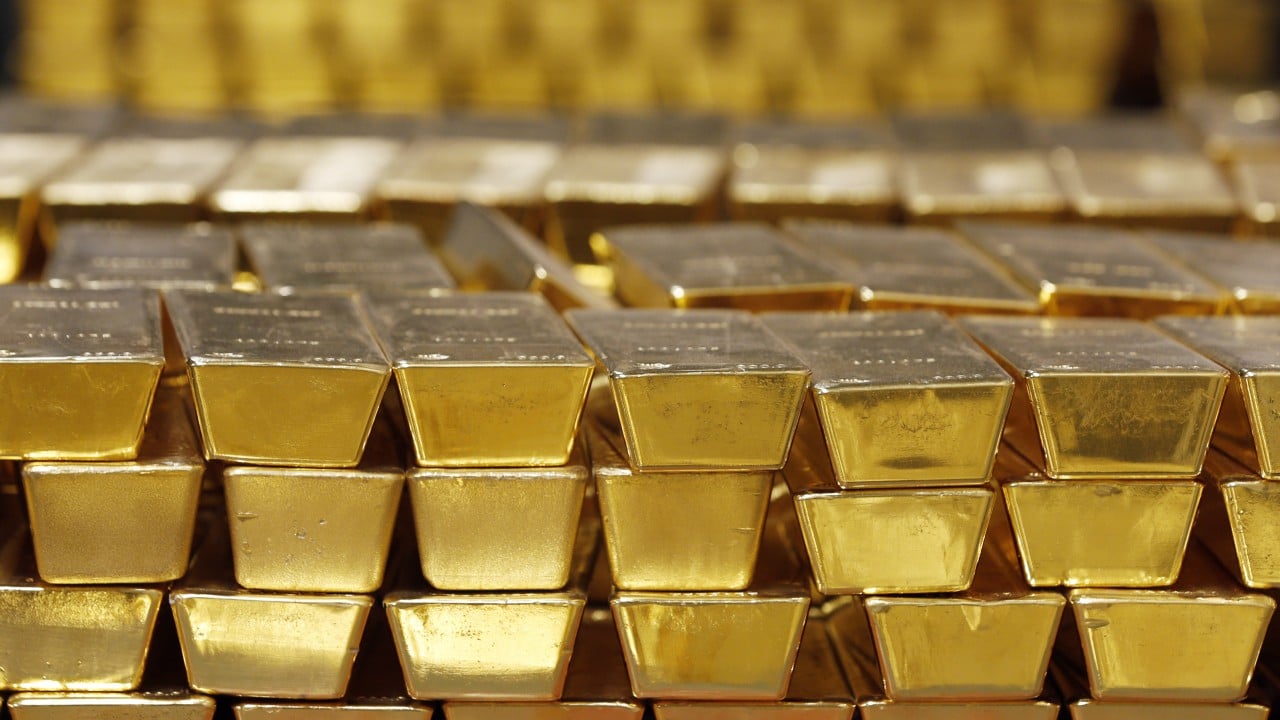
Singapore has opened its national gold vault to foreign central banks, a move analysts say will sharpen its head-to-head rivalry with Hong Kong for the title of Asia’s leading bullion hub.
The Monetary Authority of Singapore (MAS) has announced that it would store gold for overseas central banks, international financial institutions and sovereign entities in its currency vault. The facility can hold 500 tonnes and has room for expansion.
Deputy Prime Minister Gan Kim Yong, who chairs the authority, said several central banks had already expressed interest in storing bullion in the city state, though he declined to name them, according to international media reports.
A Singapore Exchange clearing system for institutional gold trades is expected to be ready by year-end, with live trading targeted for the first quarter of 2027, according to the official statement released on Tuesday. Gold futures settled in physical 1kg (2.2lb) bars are due to follow in the second quarter.
A new tax framework, expected to take effect in April 2027, will exempt selected services between institutional players, including vaulting and refining, from goods and services tax.
Tang Bo, head of the Hong Kong University of Science and Technology’s Institute for Financial Research, said Singapore was combining storage, trading, clearing and financial services to build an integrated gold market that would intensify competition with Hong Kong.
Hong Kong, however, retained important advantages: a rapidly expanding settlement infrastructure, deep connectivity with mainland China – the world’s largest gold consumer – and an established physical delivery ecosystem, analysts said.
Earlier this month, Secretary for Financial Services and the Treasury Christopher Hui Ching-yu said Hong Kong would launch an interbank tokenised gold project, with each digital token representing a standard 400-ounce bar priced against HAU, the city’s gold price benchmark launched in July.
06:53
‘Hong Kong speed’: treasury chief details city’s gold and yuan ambitions
Tang said tokenisation could transform gold, long seen as a passive store of value, into a “more accessible, transferable and financially productive asset”, adding that it could also ease cross-border transfers and serve as collateral in financial transactions.
In its first five-year plan, unveiled in September, Hong Kong designated gold as the “entry point” to a broader commodities-trading ecosystem. The plan called for infrastructure covering gold clearing, storage and supply.
A government-owned central clearing system has been on trial since July, ahead of a formal launch in the first quarter of 2027. Authorities also aim to expand storage capacity from about 150 tonnes at the airport vault to more than 2,000 tonnes within three years.
Hong Kong’s developing clearing and settlement infrastructure, together with growing cooperation with mainland exchanges, could further strengthen its position, according to analysts.
Since July, an arrangement with the Shanghai Gold Exchange has enabled participants to use gold holdings to settle trades across both markets. Tommy Ong, managing director of T.O. & Associates Consultancy, said it allowed bullion held in Hong Kong’s certified vaults to “move seamlessly into the mainland” to meet China’s vast consumer demand.
Hong Kong is also the world’s largest offshore yuan hub, he noted, with yuan-denominated gold backed by ample liquidity from swap agreements between the Hong Kong Monetary Authority and the People’s Bank of China.
Even so, analysts did not view the rivalry as a zero-sum game: Asia’s growing appetite for gold and reserve diversification, they said, would leave room for both financial centres to thrive.
“Greater competition should encourage innovation, improve market liquidity and strengthen Asia’s position in the global gold market,” said David Ng, co-founder and CEO of Arki Finance, a Singapore-based fintech company.
“The next generation of global gold hubs will be defined not just by how much gold they store but by how effectively they connect physical gold with capital markets and digital financial infrastructure,” Tang said.
KioskNews shows a cleaned-up reading view extracted from the publisher’s page — the original always lives on their site, not ours.