10 Greatest Books of the Last 30 Years, Ranked

Linda Chavers is a writer, cultural critic, and longtime consumer of stories in just about every form they come in. Her essays have appeared in The Boston Globe Magazine, The LA Times, The Independent, Elle, and
(the now sadly defunct) Gawker Media.
Linda can turn almost anything—from a novel to a reality TV reunion—into an argument. That's because she's opinionated about anything she gets to stay in pajamas for. It's also because she holds a Ph.D. in African and African American Studies from Harvard University, where she specialized in modern literature. She has taught at Harvard University and Temple University.
Her tastes are wide-ranging. She loves literary fiction, popular culture, reality television, and Law and Order marathons.
When she's not writing, or avoiding writing by thinking very seriously about writing, Linda is usually reading a novel or trying to remember which show she watched on which streaming app she's still subscribed to.
Sign in to your Collider account
There’s no such thing as a completely objective ranked list, so I bypassed the scientific approach altogether and asked myself a simpler question: what books have stayed with me? I’ve read every book on this list and chose them because I still can’t stop thinking about them. I'm not alone in finding these works to be transformative: all but two of the books below have been adapted for television or the stage. Without further ado, here are the best books of the last 30 years.
10 'Persepolis' by Marjane Satrapi (2000)

Marjane Satrapi literally draws us a picture of growing up in Iran during the 1979 Islamic Revolution and the Iran-Iraq War. She is funny, stubborn, political, frightened, and occasionally ridiculous in exactly the ways children are. One minute, she's trying to understand the revolution and martyrdom that's disrupting her childhood; the next, she is worried about Western music and getting caught in the wrong clothes (such as a rhinestone-beadazzled jean jacket à la "Thriller"-era Michael Jackson). Those shifts make the world around her feel immediate.
Governments fall. Wars begin. People disappear. Children still want cool sneakers. That tension between history and ordinary childhood is what makesPersepolisstay with me. In 2007, Satrapi and director Vincent Paronnaud adapted her novel into a film of the same name and won the Jury Prize at the 2007 Cannes Film Festival.What I haven’t stopped thinking about: the way Satrapi changes the size of God’s head depending on his influence in Marji’s life. A drawn bracelet in the rubble from a bombing signals that her friend is dead.
9 'The Year of Magical Thinking' by Joan Didion (2005)

While their daughter, Quintana Roo Dunne, is critically ill in the hospital, Joan Didion’s husband, John Gregory Dunne, suddenly dies at their dinner table. The Year of Magical Thinking is about living inside grief rather than examining it from some safe distance. Didion knows her husband is dead. She also cannot put away his shoes because he might need them when he comes back.
She cannot read his obituary because everyone keeps referring to him as dead. That is the terrible logic of grief: maybe if you keep returning to the moment, asking the same questions, the ending will change. Grief rearranges logic until knowing something and accepting it become entirely different things. In 2007, David Hare adapted Magical Thinking for the stage. It premiered on Broadway at the Booth Theatre, with Vanessa Redgrave as Didion. What I haven’t stopped thinking about: those shoes waiting for someone who will never wear them again.
8 'The Brief Wondrous Life of Oscar Wao' by Junot Díaz (2007)

At heart, this is a coming-of-age story about an overweight Dominican kid from New Jersey who wants to be the next J.R.R. Tolkien and finally kiss a girl. But Yunior’s unreliable narration keeps getting interrupted by footnotes about dictatorship, migration, masculinity, and Dominican history. Those footnotes make history that normally gets pushed to the bottom of the page keep barging into Oscar’s present.But that's the whole point — Diaz's novel is a textual demonstration of how the past is never gone, and there's no such thing as a single storyline.
What I remember most is thefukú, the curse supposedly hanging over Oscar’s family and perhaps over the Dominican Republic itself. Is the family cursed, or do people simply inherit the consequences of what came before them? What I haven't stopped thinking about: footnotes. To this day, whenever I’m writing something, I’m looking for an excuse to add a one. Even — especially — in emails.
Collider Exclusive · 8 Questions · 2 Minutes What Fantasy World Do You Belong To? Middle-earth · Grand Line · The Continent · Camp Half-Blood
Pick your magic, your crew, where you want to wake up and who you would rather be fighting, and we will tell you which world you actually belong in. Four are open to you: an ancient kingdom living through its last good age, an endless sea full of pirates, a continent that pays people to kill monsters, and a summer camp where the Greek gods are extremely real and mostly a nuisance.
💍Middle-earth(Rings of Power)
👒Grand Line(One Piece)
🐺The Continent(The Witcher)
🔱Camp Half-Blood(Percy Jackson)
01
What kind of power do you want? Every one of these worlds runs on a completely different sort of magic.
02
Who is travelling with you? Nobody gets through any of these stories entirely on their own.
03
Where do you want to wake up tomorrow? The best fantasy is usually just somewhere you would genuinely like to live.
04
How are you making a living out there? Even in fantasy somebody has to pay for the horse.
05
There is something in the woods. What do you do about it? All four of these worlds keep something unpleasant out there in the dark.
06
Who is the villain of your story? The enemy tells you far more about a world than the hero ever does.
07
What do you actually believe in out there? Every world hands its heroes one rule and asks them to hold onto it.
08
A thousand years from now, how are you remembered? Eight questions in, this is the one that decides your world.
The Map Is Drawn Your World Is…
Four worlds and four completely different ideas of what a good life looks like. This is where you belong, what it would ask of you, and what you would get back in return.
Middle-earth
You belong somewhere old enough that the mountains have names and somebody can still tell you who gave them. Middle-earth is for people who think the right thing is worth doing even when it will not be finished in their lifetime.
- This is the only world on the list where doing good is understood as a very long defeat, fought anyway, by people who will never see how it ends.
- You are drawn to grandeur, to white cities and deep forges and the sense that almost everything you touch is older than your entire family line.
- The Rings of Power is set in the last good age before it all goes wrong, which gives every quiet scene in it a slightly unbearable weight.
- You would take the hard road, and you would take it on foot.
The Grand Line
You want the sea, a crew, and absolutely nobody telling you where you are allowed to go. The Grand Line is the world for people whose main ambition in life is finding out what is over there.
- One Piece has run for decades on one very simple engine, which is a group of people who each want something impossible and have decided to go and get it together.
- You collect people. Your ideal crew is a set of misfits who were each written off somewhere else before you turned up and offered them a better idea.
- The world is enormous and deliberately ridiculous, and the emotional gut punches land harder because of that rather than in spite of it.
- You would set sail knowing the map runs out, which is more or less the entire point of it.
The Continent
You would rather be feared and useful than liked and useless. The Continent is a world where the monsters are the straightforward part of the job and the people are where it all gets complicated.
- Witchers get paid to do what nobody else will and resented for existing at all, which is a trade most people would refuse and you would probably accept.
- You have no real illusions about which side is the good one, largely because on the Continent that question tends to have a disappointing answer.
- The best of these stories are not about the fighting. They are about somebody with a rigid code being repeatedly cornered into caring about people.
- You would take the coin, finish the job properly, and be out of town before the story got told wrong.
Camp Half-Blood
You want the myths to be real and loose in the actual world, and you want to find out at about thirteen that you were never anywhere near as ordinary as everybody kept telling you.
- Percy Jackson takes the oldest stories we have and drops them into car parks and diners, which makes the gods considerably funnier and a great deal worse.
- You would be the kid every school gave up on, who turns out to have been built for something nobody thought to test for.
- The series is genuinely about friendship rather than destiny, and it says so out loud every time a prophecy tries to get in the way.
- Camp Half-Blood is the real fantasy here: a place where the thing that made you difficult everywhere else is the thing that makes you belong.
7 'The Known World' by Edward P. Jones (2003)

Twenty-three years later, and I may tear up all over again. Edward P. Jones begins with a fact about American slavery that many readers still find startling: Henry Townsend is a Black man in antebellum Virginia who has enslaved Black people. From there, The Known World moves among enslaved and free Black people, their neighboring white landowners, families, and descendants, jumping through time as though the narrator already knows everybody’s ending.
Nobody gets to remain simply innocent or evil. People love one another, betray one another, gain power, misuse it, survive, and sometimes help maintain the very system crushing them. What I haven’t stopped thinking about: a husband and wife escaping a plantation, only for the wife to be kidnapped and sold back into slavery. And his repeated attempts to find her.
6 'Invisible Child' by Andrea Elliott (2021)

Andrea Elliott began reporting on Dasani Coates when she was 11 years old and living with her parents and seven siblings in a Brooklyn homeless shelter. Then Elliott did something most reporters don’t: she stayed. Over the next decade, Elliott follows Dasani through shelters, schools, foster care, addiction, and government agencies supposedly designed to help her family stay secure and intact.
Instead, what Dasani, Elliott, and the readers learn over and over again is how hard it is to be a family when such systems keep breaking them up. Dasani is funny, furious, ambitious, loving, protective, and sometimes impossible. She gets to be a child rather than a symbol of childhood poverty. And the institutions around her seem to be very, very good at documenting her family’s problems without ever actually solving them. What I haven’t stopped thinking about: Dasani’s stepfather repeatedly reporting a broken sink, only for social services to later fail his home inspection because the plumbing didn’t work.
5 'Salvage the Bones' by Jesmyn Ward (2011)

We know Hurricane Katrina is coming. The Batiste family does not. Salvage the Bones follows 15-year-old Esch and her brothers in rural Mississippi during the days before the storm. Their mother is gone, their father drinks, their home is crumbling, and Esch has discovered she is pregnant by a boy who doesn't really care. And then there's her sweet brother, Skeetah, who's obsessed with his pit bull, China, and her new puppies.
The Batistes are poor, but poverty is not all that is happening to them. They are jealous, lustful, competitive, loving, reckless, and fiercely loyal. And then Katrina arrives. The storm does not create their vulnerability. It makes that vulnerability impossible to ignore. What I haven’t stopped thinking about: Young Skeetah searching for his puppies in the hurricane.
4 'Say Nothing: A True Story of Murder and Memory in Northern Ireland' by Patrick Radden Keefe (2018)

I picked up Say Nothing while traveling in Leeds, knowing very little about The Troubles. I figured a huge nonfiction book would keep me occupied for two weeks. Reader, I sat down Friday evening and barely got up until Sunday. Jean McConville, a Belfast mother of 10, is kidnapped from her home in 1972 and never seen again. Her disappearance takes Keefe through the IRA, British soldiers, informants, activists, prisoners, politicians, and decades of violence.
The book moves like a thriller (it was adapted into a Hulu series in 2024 featuring the incredible Lola Petticrew), especially when you remember none of this was invented for suspense. Its title comes from Irish Nobel laureate Seamus Heaney's poem Whatever You Say, Say Nothing, and silence, indeed, hangs over everything: what can be said, what must stay hidden, and who gets to decide what the past officially was. What I haven’t stopped thinking about: Dolours and Marian Price being force-fed during their prison hunger strike.
3 'The Overstory' by Richard Powers (2018)

Richard Powers has a knack for making ordinary relationships feel almost sacred, which makes sense for a novel about trees. Except The Overstory is also not really a novel about trees. Several seemingly unrelated characters eventually converge around chestnuts, redwoods, pines, and entire forests — ecosystems that existed long before any of them and may continue long after.
I genuinely have not looked at trees the same way since reading it. Powers takes something we usually treat as scenery and changes the scale. Suddenly, trees are communities, archives, communication systems — living things operating on a timeline that makes human urgency look a little ridiculous. What I haven’t stopped thinking about: the woman who lives in a tree to keep it from being cut down, inspired by the true story of activist Julia Butterfly Hill.
2 'Pachinko' by Min Jin Lee (2017)
Pachinko follows four generations of a Korean family, beginning with Sunja, who becomes pregnant by a wealthy married man and eventually emigrates to Japan. From there, Min Jin Lee builds a family story around colonialism, migration, poverty, ambition, and anti-Korean discrimination. But the characters are too busy living to behave like representatives of broad historical forces.
Sunja makes decisions because of what seems urgent in the moment. But what's in the moment can change entire timelines for others. Sunja's children inherit the consequences of her seemingly small choices, and their children inherit different versions of the same problems. History keeps changing the rules, while the family keeps trying to make a life anyway. In 2022, Apple TV adapted the novel into a critically acclaimed series that ran for two seasons. What I haven’t stopped thinking about: how one seemingly immediate decision can quietly become the architecture of several generations.
1 'The Underground Railroad' by Colson Whitehead (2016)
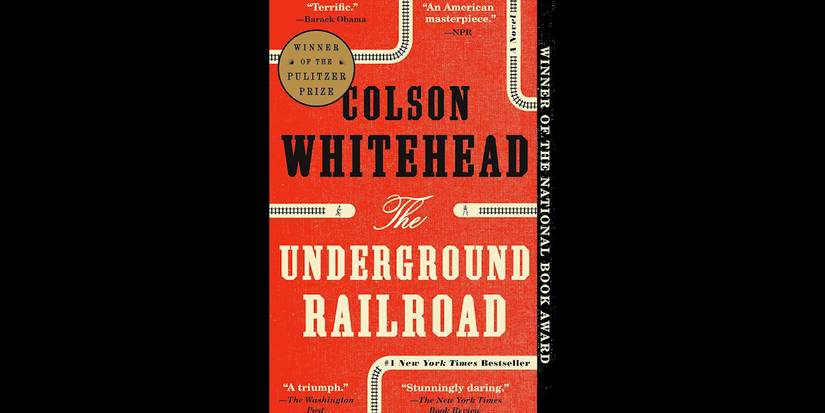
This book, this book! Colson Whitehead takes the Underground Railroad and makes its metaphor literal: trains, conductors, stations, tracks beneath the country transporting those escaping slavery. Cora escapes a Georgia plantation and travels through states offering different versions of America’s racial nightmare.
One stop seems to be progressive until we learn it is quietly sterilizing Black people. Another has all but eliminated its Black population through terror campaigns. Every stop changes the rules. Whitehead turns American history into a landscape Cora (and the reader) must physically travel through. And because we know the history Cora does not yet know, there is something horrific about watching her move through it. In 2021, Barry Jenkins adapted the novel into a wildly successful series on Amazon. What I haven’t stopped thinking about: Cora stepping off that train at her final stop.
KioskNews shows a cleaned-up reading view extracted from the publisher’s page — the original always lives on their site, not ours.