India gave 3 lakh undertrials a free lawyer. Now that lawyer is leaving, mid-trial
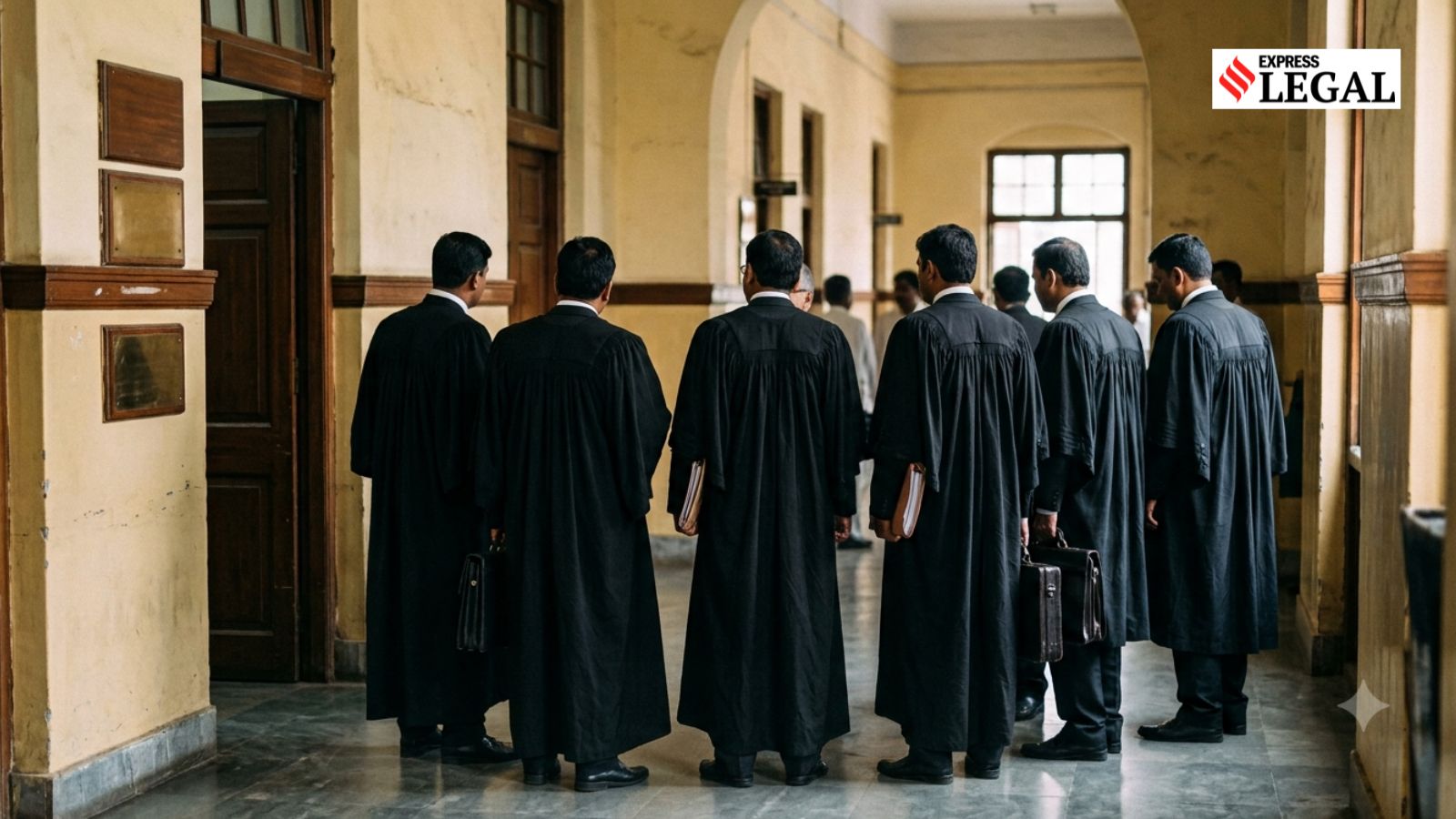
Earlier this year, 44 men from Somalia, arrested in two separate cases of piracy at sea, told a Mumbai sessions court that their families had paid lakhs of rupees to lawyers who then never represented them. The lawyers, the men claimed, had effectively “duped” them. The court turned to a panel that had existed for barely three years – the Legal Aid Defence Counsel System, a set of salaried lawyers whose only job is to defend people who cannot pay.
In August, the men pleaded guilty and were sentenced to life. Their LADCS lawyers are still working the case, coordinating with the Somali embassy to have the men transferred home to serve out their sentences.
In January, those lawyers’ contracts end. There is no plan for who picks up the file.
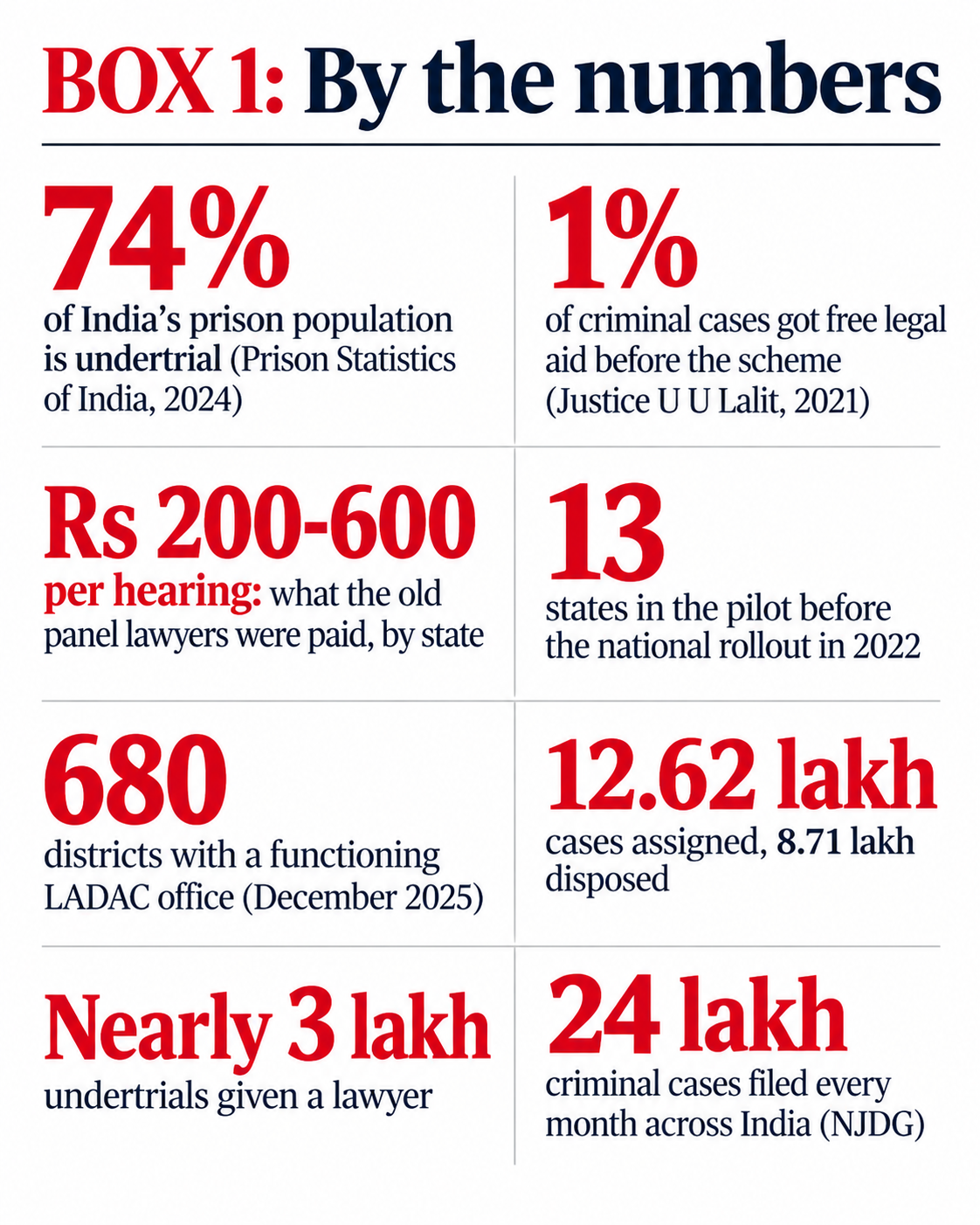
The LADCS was India’s first experiment with a public defender model, the kind that operates in the US and elsewhere, where an accused is guaranteed a lawyer whose entire practice is defending people like him, free of cost. Piloted in 13 states and extended to every district in 2023 it has given lawyers to nearly 3 lakh undertrials. In September, the National Legal Services Authority (NALSA) said the scheme would have to be reconsidered after bar associations in Punjab and Haryana went on strike against it. The contracts of panel lawyers in every district, NALSA said, would not be renewed.
As those contracts run out, district by district, the people they were defending are being left where the Somali men will be in January – mid-trial, or at the end of one, with no one standing for them. Lawyers who built the system are asking why the whole thing had to go. An association of LADCS lawyers and staff, along with district legal services authorities from Assam, Meghalaya and Nagaland, has challenged NALSA’s decision in the Supreme Court.
Acquitted, and still inside
Samyak Gimekar, the LADCS chief in Mumbai, remembers the case that told him what the system was for. “We had dealt with a case of a man, who spent five years in jail after being acquitted as he could not furnish a bail bond of Rs 50,000,” he said. The man was 43, booked under the stringent MCOCA. Acquitted, and still inside, because nobody had been there to point out that he was free. It took the panel’s intervention to get him out. Word spread through the prisons after that. Undertrials who had always assumed a private lawyer was the only lawyer worth having began asking for the panel instead.
A lawyer who would show up
The idea that an accused person should have a lawyer regardless of what they can pay is older than the scheme. Article 39A of the Constitution promises free legal aid so that no citizen is denied justice for want of money. The Legal Services Authorities Act, 1987, extends it to anyone in custody, among other categories. What was missing, for decades, was a lawyer who would actually show up.
Story continues below this ad
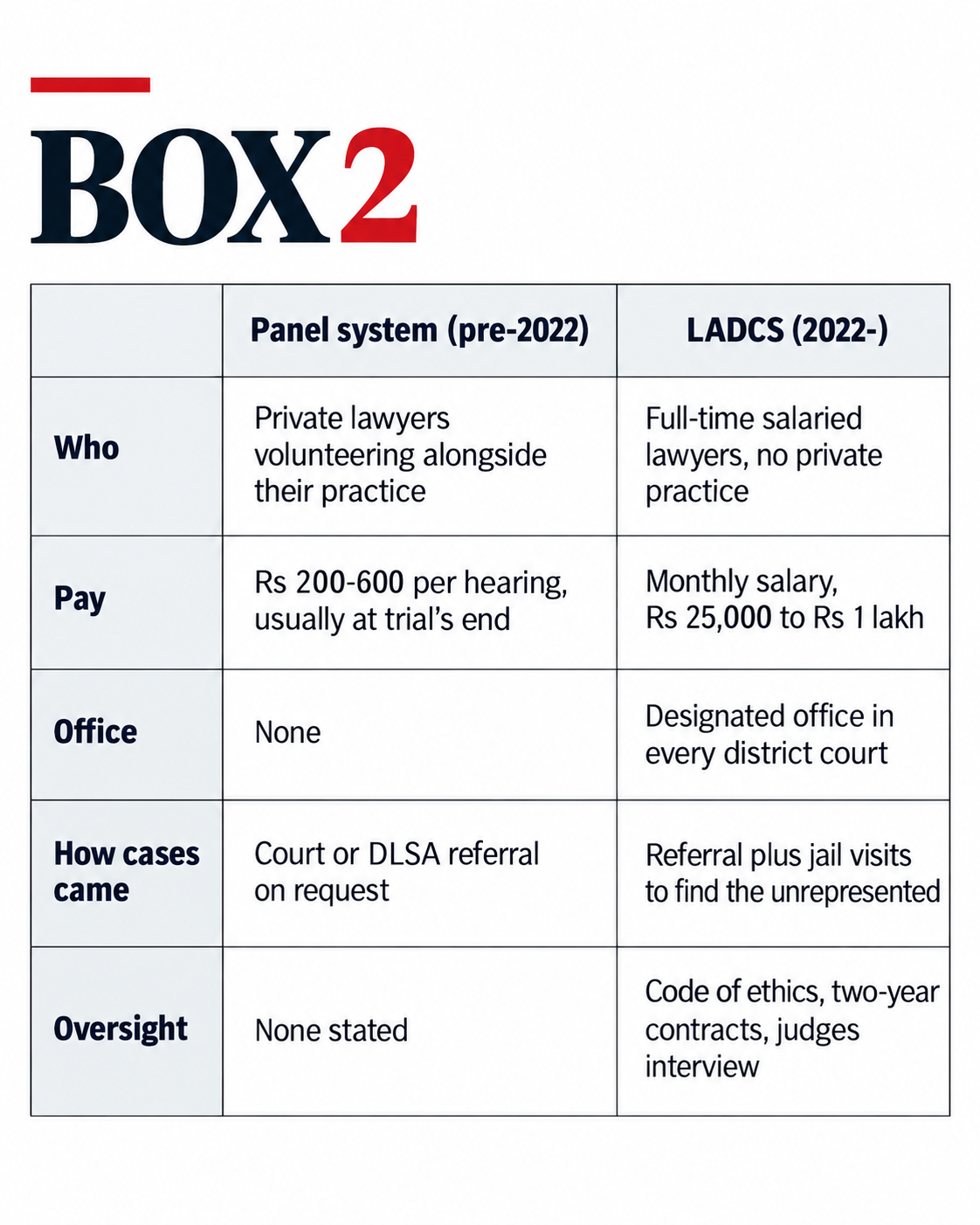
Until 2023, legal aid meant a panel of private lawyers who volunteered alongside their own practice, assigned cases by the court or the district legal services authority, and paid per effective hearing at rates that varied by state, Rs 200 in some, Rs 600 in others. The money usually came at the end of the trial, after paperwork to the state government. Panel lawyers complained to courts that it was too little and too late. Their clients complained that the lawyers were not easily available.
NALSA, whose executive chairperson is a Supreme Court judge, admitted as much when it launched the LADCS. Legal aid had been provided in 2 lakh criminal cases at the district level, it said in 2022, but panel lawyers with private practices did not devote themselves to the work. “Many times, their availability remained an issue for timely client consultation and updating the legal aid seekers about the progress of their cases. There are few instances, wherein the lawyers were found harassing beneficiaries or demanding fee from them,” the NALSA statement in 2022 said.
A year earlier, Justice U U Lalit, then NALSA’s chairperson, had put a number on the failure. Only one per cent of criminal cases in the courts got free legal aid. “If we say that 70% of our people are below poverty line, then going by the same logic and the same proportion, perhaps 70% of the litigants must be those, who are below poverty line, rough and ready estimate then why is it only 1% of them land up in the legal aid services clinics,” he said in a 2021 keynote address. Litigation had become a “bleeding wound,” he said, with families selling jewellery and mortgaging property to hire a lawyer.
Salaries, not fees; jails, not referrals
The LADCS inverted the old model. Instead of private lawyers fitting legal aid around paying clients, it hired lawyers who could take no paying clients at all. Instead of a per-hearing fee at the end of a trial, a monthly salary was given. Instead of an office of their own, a designated room in the district court was provided. Instead of waiting for a referral, they were told go into jails and find the people nobody was representing.
Story continues below this ad
In Bihar, the jails were full of people who needed finding. Prosecutions surged after the state’s 2016 liquor ban, and many of those booked faced up to life imprisonment without knowing it, said Manvendra Kumar, a deputy LADC in Buxar. The state ended up among those with the highest disposals in the country, and Kumar says the scheme did something the old panels never had. It made people trust free legal aid.
He is also careful about what the panel did not do.
“In many of these cases, when we visit prisons, people approach us through the paralegal convicts (convicts in jail, who work as paralegal volunteers to help trace those who need legal aid). The prison administration chooses a few to act as intermediaries between the LADCS and the undertrials who need representation. While the Legal Services Act permits anyone in custody to get free legal aid, unlike what is being portrayed, we do not go to jails to get clients. We are only referred cases by the paralegal volunteers, of those who need representation. Even if someone comes to us, who already as a private lawyer, who only assist them in getting in touch with their lawyers, and not take over their cases,” Kumar said.
Most of the Excise Act cases do come to the panel, he said, because many of those booked don’t have the money for anyone else.
Story continues below this ad
The bar strikes back
That phrase, “unlike what is being portrayed,” is the fault line. The bar had grievances from the start, and in most states they were negotiated away. In Bihar, Kumar says, the settlement was that courts would refer a case to the LADCS only after it was clear the accused had no private lawyer. Punjab and Haryana didn’t settle. Bar associations there alleged that panel lawyers were taking over cases from private lawyers who had missed as few as one or two hearings, and that people ineligible for free aid were getting it. They wanted directions that LADCS lawyers do not “solicit” work for themselves or for family members in practice. The strike was called off on an assurance that their complaints would be examined.
The Punjab and Haryana High Court, which heard the matter, left no doubt about where it stood. “We have reiterated our sentiments to the learned Members of the Bar, that denial of access to justice, to the common litigant, would be a failure on the part of the entire justice delivery system, which cannot be permitted,” a division bench said in an order on July 28.
NALSA’s communication came anyway in August 2026. The contracts will not be renewed.
Former Supreme Court judge Abhay Oka, when asked about the decision, said the scheme had worked for exactly the people it was meant for. “If there are issues, they can be resolved rather than doing away with the scheme altogether. There can be steps like not appointing the same lawyers for more than one term to keep it open for more lawyers to be appointed. Also, now that NALSA has said that the contracts will not be renewed, there should be alternatives created for those currently being represented with directions given to that effect,” he told The Indian Express.
Story continues below this ad
Legal experts say the scheme never needed to displace anyone. Nearly 24 lakh criminal cases are instituted across the country every month, according to the National Judicial Data Grid. The LADCS handles a small fraction of that. There is room, they say, for the panel, the old legal aid lawyers and the private bar all at once.
‘We had no money left’
In Kolkata, a family is waiting to find out what room is left for them. The 34-year-old was a driver when he was arrested on a murder charge in 2016. His father, who ran a small shop, spent his savings on a private lawyer who charged Rs 5,000 a hearing. “In the initial few years itself, my father took a loan and spent nearly Rs 3 lakh on the private lawyer’s fees. We even approached the High Court for bail. Once it was denied, we had no money left,” says the undertrial’s 27-year-old younger brother, who did not wish to be named as the case is subjudice.
The father died in 2019. Through the Covid years, with trials stalled, the family managed without a lawyer. In 2023, the undertrial heard about the LADCS in jail, and the court gave him a panel lawyer, who has run the trial since. The last witness is now being examined. “Since then, we did not have to pay any legal fees. We believe he has been wrongly implicated and will be acquitted but the pending case impacted our lives too. I had to drop out of college and begin working at 18,” the brother said.
He had not heard that the scheme was ending. The panel lawyer’s contract runs to 2027. After that, he said, they will ask the court for whoever it can give them. They cannot afford anyone else.
KioskNews shows a cleaned-up reading view extracted from the publisher’s page — the original always lives on their site, not ours.