Can opera change the world? These young artists are keen to try
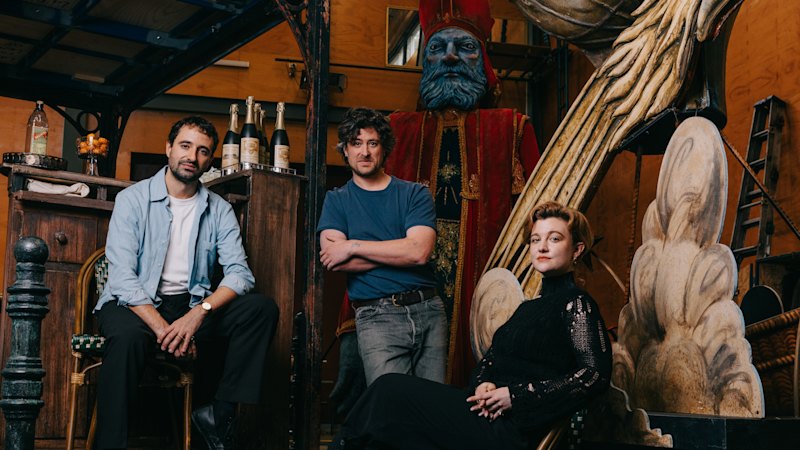
Constantine Costi doesn’t have small dreams. He wants to slap down the hideous encroachment of technology on our lives, while at the same time championing humanity and art. How? By directing Opera Australia’s new production of Puccini’s beloved La Boheme as if it’s been devised by the very Parisian bohemians who populate the story.
His excitement is contagious as he explains that he and his creative team have sought to see the world through the eyes of the poet Rodolfo, painter Marcello, musician Schaunard and philosopher Colline, who share a freezing garret adjacent to Rodolfo’s ill-starred lover, Mimi, a seamstress. Costi envisaged a heightened world, referencing famous artists, with painted backdrops and tactile surfaces being his riposte to sterile technology and projections.
Given that the bohemians were young, Costi assembled a creative team in their 30s, like himself. They included the acclaimed set designer Dann Barber and costume designer Sabina Myers, with whom he’d studied at the National Institute of Dramatic Art many years before. They shared Costi’s passion for using hyper-theatricality to transport audiences beyond everyday mundanity.
“To achieve something divine, beautiful and ecstatic is the world that we’re interested in,” Costi enthuses. “I don’t experience the world as a two-plus-two-equals-four kind of space. I see the world as something that’s full of imagination, mystery and subjectivity. That’s something that art does – and opera can do – particularly well: elevate the lived experience to find something that is emotionally profound and true. With the presence of music, as well, opera is always going to elevate things beyond naturalism.”
When we speak, Costi is outside Opera Australia’s headquarters in Sydney’s Surry Hills, where he’s swooped by a belligerent pigeon, as if a rebuke for our using Zoom while decrying technology. He’s been watching the show’s scenery, props and costumes coming to life, and laughs off the sudden pigeon attack with a good humour that must be vital when steering a production that, across the Melbourne and Sydney seasons, involves a staggering 378 people on stage, backstage, in the orchestra pit or manufacturing and transporting.
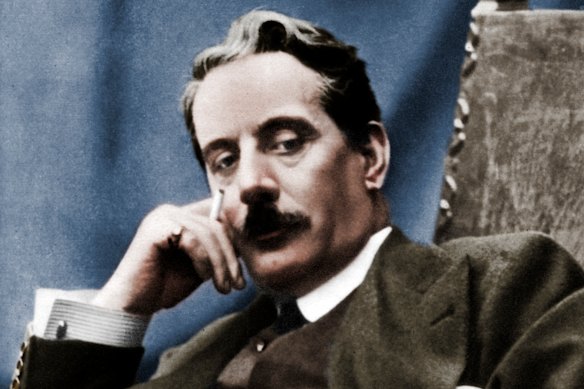
To begin, Costi researched the context in which Puccini wrote the opera in the 1890s, when experimentation with the new, more naturalistic “verismo” approach was rife. “Boheme has one foot in verismo, where these are real people with immediate concerns,” he observes. “But what Puccini does to elevate this piece beyond the work of his contemporaries is that you get these huge poetic, almost dream sequences that take off from this realistic world.
“The love story between Mimi and Rodolfo is unrealistic even by operatic standards, but if you look at it from the perspective of passionate artists who are leaving the real world and going to a place of painterly dreams, then it makes complete sense. That’s something we’re trying to capture in our staging.”
A huge attraction of the work is the depiction of young artists with their cycles of optimism and disappointment.
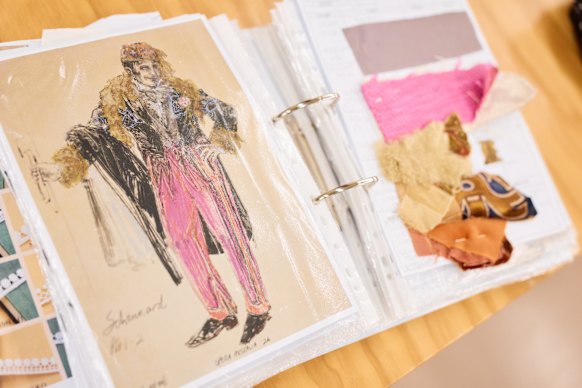
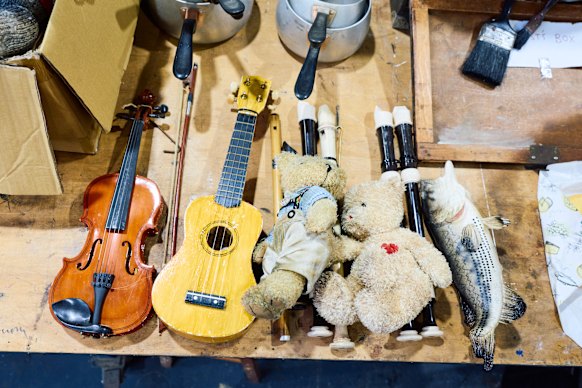
“There’s something so fantastic,” says Costi, “that their personalities are also reflected in their artistry: that Marcello the painter is immediate and physical, and you almost think of Jackson Pollock, the way he would attack his canvases; Rodolfo in this world of poetry, the lofty dreamer; Colline, the disgruntled, nihilistic philosopher; and Schaunard, the great performer, dandy and musician. That’s essentialised so beautifully by Puccini that their crafts are their personalities, and there’s this beautiful interplay between those two things.”
Nonetheless, like so many artists, they’re actually just scratching livings from menial versions of their vocations, or, as Costi has it: “When you’re young, you want to change the world with your artistry, but the gig economy has always been around. We’re young enough that being a struggling artist is in our recent memory – and current lived experience as well! So there’s a bit of us in this piece, and it’s really important that we want to infuse our personalities into this thing as much as possible.”
In a separate interview with Barber and Myers, the latter tells me that, just like the protagonists, she shares a house with other artists: the reality of chasing an artistic dream in a big city. “You take a risk by choosing a career in the arts,” she says, “and you’d better love it, cherish every moment of it and romanticise the whole thing, or you’d just be so depressed that you wouldn’t be able to function.”
Of their take on the bohemians, Myers says, “They’re eccentrics through and through, they’re grubby, and they live in this squalid apartment together. It’s not a glamorous depiction of being an artist, but a romantic one. The bohemians have a romance with the art that they’re making, but they also have a romance with the idea of the bohemian lifestyle, or self-presentation as an artist, and the strange status that comes with it of being an outsider – and the freedom of that.”
This is the first opera the trio has done as a team, and the excitement of the collaboration reminds Barber of their time at NIDA. Early reference points on which they agreed included the films of Federico Fellini and Terry Gilliam, and the paintings of James Ensor and Marc Chagall, as they sought to achieve a heightened, poetic and sometimes surreal world. To aid this, they’ve moved the Paris setting from the 1830s to the 1900s, which Costi sees as “the ultimate symbol of artistic freedom, passion and libertinism”.
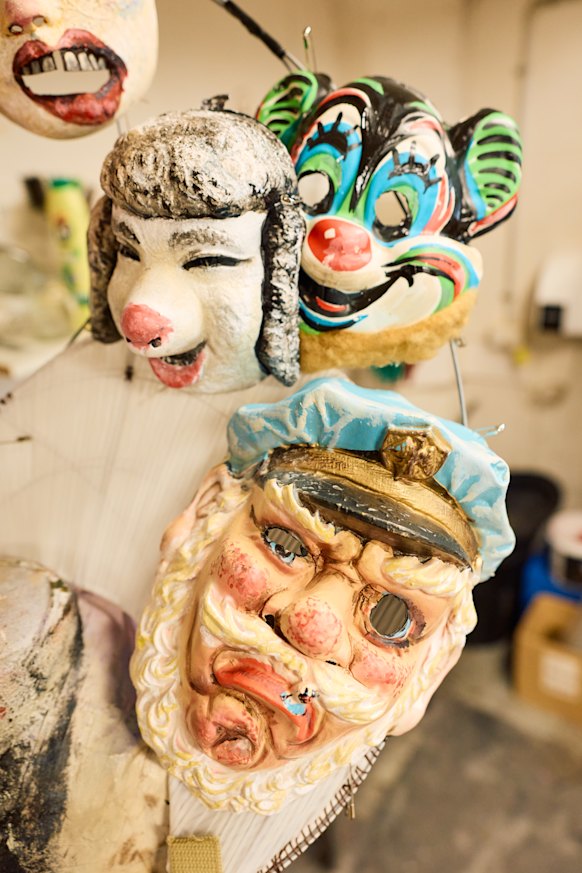
Stylistic shifts between influences aren’t camouflaged. “It’s a chaotic melding of all the bohemians and their individual art forms that get represented on stage,” says Myers. “In my romanticised view of what 1910s Paris might’ve been, how jealous I am that I wasn’t there at that time and in that circle of bohemians. I hope the audience feels that too.”
The blurring of lines between the fictional bohemians, the real-life creatives and the resultant production includes Barber’s backdrop designs. “Marcello being a scenic painter as well as a painter was a launching pad,” he says. “The first time we see Rodolfo and him, they’re on a painter’s cradle, and he’s painting a sky with Rodolfo sitting next to him writing poems. That gave us the idea that if they’re painting a theatre cloth, that cloth can at some point become the sky.
“Con loves the Chagall painting Over the Town,” he continues, “where two lovers are embracing while flying. That’s where we wanted to get to for the aria that Rodolfo and Mimi sing which ends act one. So there were these puzzle pieces that we always had, and we just needed to fill in the gaps.
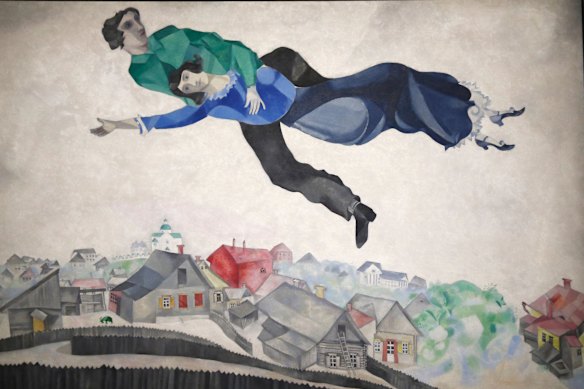
“And by and large,” adds Myers, “those anchoring puzzle pieces were paintings, which I think then influenced everything else we did.”
In effect, it’s not just the lead creatives who have an equivalency with the bohemians, but all the Opera Australia craftspeople involved. “There’s much love of analogue craftsmanship that we’ve been able to give space to in this production design,” says Myers. “We’re trying to make room for the art to be on stage as much as the story itself is.”
This, she believes, stands in contrast to a vanishing, romantic notion of theatre-making and even of bohemianism in our current, coldly technological world. “We’re trying to celebrate the purest form of all those old crafts,” she goes on, “and this dream of what opera could be – or should be! – on stage.”
That’s reflected in the set and costume-making techniques. With Mimi now not just a struggling seamstress, but an artist in her own right, her costumes and their textiles reference the work of Sonia Delaunay, who experimented with colour and textiles in Paris in the 1910s, raising such contemporary women’s handicrafts as patchwork to fine art. “So one of Mimi’s main costume pieces is this patchwork coat,” Myers explains.
“Next door to me right now [as we speak] is someone painstakingly sewing the most beautiful antique pieces of coloured velvet together to put this coat on stage. The whole offering from us is not a sham of being about art or about craftsmanship. That really is what the show is about.”
Similarly, Barber details how the aforementioned night-sky cloth incorporates a variety of painting and textural techniques so it can be lit from behind. “I suppose everything in theatre’s a trick,” he says, “but what a beautiful trick to try to emulate light like van Gogh does!”
Costi, who became an Opera Australia director via being an intern and then an assistant director, has now staged La Traviata (on Sydney Harbour) and Il Tabarro. He’s aware of the company’s rich history of Boheme productions (including by Baz Luhrmann), and, like Myers and Barber, treasures the opportunity to join that tradition, as well as having the chance to direct a work he believes can play its part in uplifting our souls in the face of the technological onslaught.
“The human creature is this mysterious, spiritual, and poetic little animal that is capable of great pain, great joy, great happiness, and great sorrow,” he says. “I feel like there is something that really connects us all with the [operatic] medium, and believe that these communal experiences that unite us are more important now than ever.”
He came to opera having been a musician who directed plays for fun. When he first sat in on an opera rehearsal as a student, he found himself covered in goosebumps. “From that point, I was hooked,” he says, “and haven’t looked back.”
La Boheme is at Melbourne’s Regent Theatre, November 7-18 and the Sydney Opera House, January 2-March 17.
More from Spectrum
- The one bad habit David Sedaris can’t break
- Why Robert Pattinson changed his mind about Primetime
- How cinema warned us about AI
- Kyle MacLachlan’s journey into the darkness
KioskNews shows a cleaned-up reading view extracted from the publisher’s page — the original always lives on their site, not ours.