Surprise right whale calf spotted near Quebec Newfoundland
Right whales, ravaged by interference from commercial fishing and climate change, are clinging to existence by a thread
By PATRICK WHITTLE / AP, PORTLAND, Maine


It would seem difficult to miss an almost 7 tonne baby, but for months scientists who study rare whales did just that, and they could not be happier.
Researchers in Canada captured images of an unidentified baby North Atlantic right whale, one of the rarest sea mammals in the world, off Anticosti Island in Quebec in September. Scientists with the New England Aquarium in Boston said this week that after analyzing photos and data about right whales, they have determined it was a calf likely born months ago that went unseen during winter surveys for the giant animals.
The discovery puts the number of baby right whales discovered from the most recent birthing season at 24, the most productive year for the whales since 2009 and the fourth-highest count on record, the aquarium said. There are only about 380 right whales in the world, and their population has fallen since 2010.
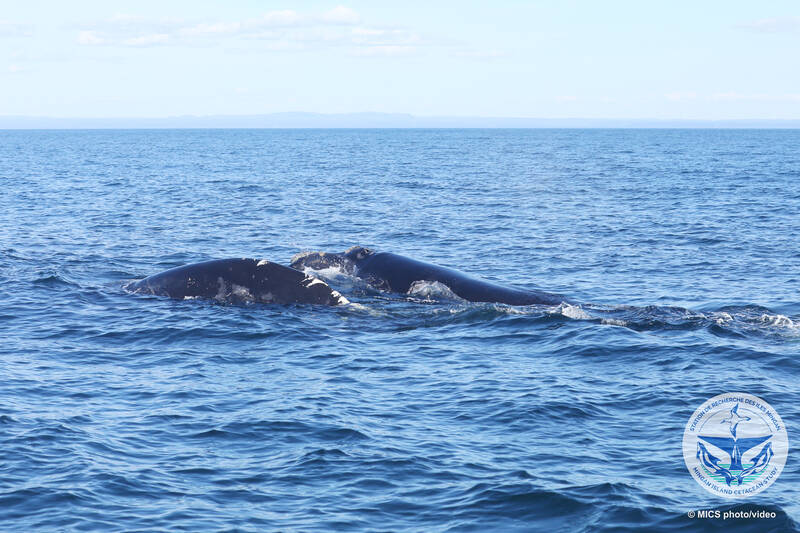
A North Atlantic right whale, Silt, swims with her calf in the Jacques-Cartier Passage in Canada’s Gulf of St. Lawrence on Sept. 25.
Photo courtesy of Mingan Island Cetacean Study via AP
The whale was seen with its mother, a 38-year-old whale known to researchers as Silt, scientists said. Right whales give birth off the southeastern US in winter before venturing north to New England and Canada to feed.
The whales are extensively cataloged with photography by researchers because they are so rare. It is rare for the researchers who study the whales to miss a baby, but the discovery was a welcome surprise, said Amy Warren, a scientist at the New England Aquarium’s Anderson Cabot Center.
“Silt was briefly seen in the southeastern US calving grounds in February 2026, so it’s possible she had the calf there but snuck away before they were documented together. This is an exciting discovery for us so late in the year,” Warren said.
Baby right whale births are closely tracked by scientists because the tiny population needs successful calving years to remain viable. There are only about 70 reproductive-age females left in the population, and scientists have said the whales have reached 20 calves in a season only a few times since 2010.
That was when their numbers started falling, as they lost about 25 percent between 2010 and 2020. The whales are vulnerable to collisions with large ships and entanglement in commercial fishing gear, and the warming of the ocean has heightened those threats because they have strayed from protected areas, scientists have said. They suffered a disastrous year in 2018 when no calves were born.
The past few years have been slightly more encouraging, as the whales have gained back some of their population since 2020. Conservationists have decried moves by US President Donald Trump’s administration to delay new protections for the whales for a decade in favor of commercial fishing interests.
The whale calf sighted off Quebec was spotted by researchers with Mingan Island Cetacean Study, a nonprofit research organization in the province’s coastal Cote-Nord region. The whale was not seen by researchers despite boat-based and aerial surveys along the US East Coast all spring and summer, the New England Aquarium said.
Scientists are celebrating the animal’s addition to a successful breeding season for the rare whales, said Richard Sears, founder and director of Mingan Island Cetacean Study.
“It just goes to show you how big the ocean is, and how those animals can get lost out there,” he said.
KioskNews shows a cleaned-up reading view extracted from the publisher’s page — the original always lives on their site, not ours.