Coogee ranks as Sydney’s worst ocean beach for faecal pollution – again
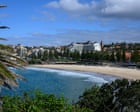
Coogee has ranked as the Sydney ocean beach most polluted with faecal matter, an annual state survey has found.
Of 245 swimming sites across New South Wales, 43 sites (17.6%) received a rating of “poor” or “very poor” in the 2026 State of the Beaches report, part of an annual survey by the state’s environment department.
Coogee’s grading – unchanged from last year – indicates “microbial water quality is susceptible to faecal pollution, particularly after rainfall and occasionally during dry weather conditions”.
Across NSW, 97% of oceans beaches achieved a “good” or “very good” rating.
Prof Stuart Khan, a water quality expert and head of the School of Civil Engineering at the University of Sydney, said Coogee’s “poor” rating was unsurprising and was largely weather dependent.
Storm water runoff to beaches brings bacterial pollution via several sources, washing dog poo from streets and bird droppings from roofs. Sydney’s sewers were also designed to overflow at times of heavy rain, running into storm water drains that discharge directly into the ocean or waterways.
“So we get sewage contamination into the storm water and therefore on to the beaches,” Khan said.
Because Coogee beach was a very steep catchment, “when it rains, you very quickly generate a lot of runoff moving … into the storm water system, and very quickly down to the beach”, he said.
As a semi-protected bay, Coogee “doesn’t flush as well as some of the other beaches”.
“After a big wet weather event, you can see the water in Coogee turn brown and stay that way for potentially a couple of days,” Khan said. “So you’re more likely to take a sample that’s contaminated at Coogee than you might at Bondi, even if you had the same pollution going on, because Bondi will flush out quicker and recover quicker with clean marine water.”
Khan, who also chaired a NSW Environment Protection Authority expert panel to investigate the poo balls that washed up on Sydney beaches, said wastewater outflows from the Malabar waste treatment plant were a “negligible contributor” to Coogee’s poor water quality, as those deep ocean discharges occurred kilometres out to sea.
after newsletter promotion
Across all NSW swimming sites, including rivers, lagoons and tidal pools, 79% were rated “good” or “very good”, which the government characterised as a statewide improvement “largely associated with drier weather conditions across many parts of NSW during the reporting period, which generally reduced stormwater runoff and pollution entering waterways”.
Twelve other Sydney swimming spots received a rating of “poor” – including the Bayview baths, Frenchmans bay, the Kyeemagh baths and Rose Bay beach, which are all classified as estuarine sites.
Foreshores beach, beside Sydney airport, and the Gymea Bay baths were the only two Sydney sites to receive ratings of “very poor”, in addition to Yosemite Creek in the Blue Mountains.
The government advises swimming should always be avoided at “very poor” sites, while the water quality at “poor” sites is often unsuitable, especially after rain.
Malabar beach in the Randwick local government area, and Shelly beach in Manly, which both received a rating of “poor” last year, improved to a “good” rating this year.
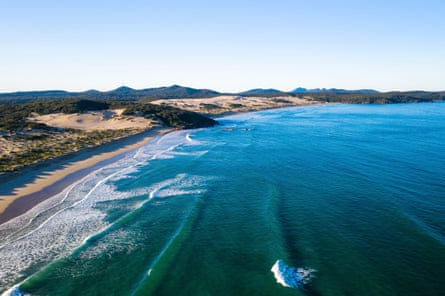
Eight coastal beaches shared the state’s highest water quality rankings, including Avalon beach in Sydney’s north, Wollongong’s City beach, One Mile beach in the Hunter, and three Central Coast beaches.
“Good environmental decisions rely on good science,” the NSW environment minister, Penny Sharpe, said. “Through decades of consistent monitoring, Beachwatch provides the robust data needed to track water quality trends and give swimmers confidence in the information they use.”
KioskNews shows a cleaned-up reading view extracted from the publisher’s page — the original always lives on their site, not ours.