10 Near-Perfect ’90s Adventure Movies That Remain Essential Viewing Today

Senior Music Editor at Screen Rant, Sarah's love of sound and story drive the beat. A globetrotting brand whisperer and award-winning journalist, she’s built cross-cultural narratives around the world—but music has always been her true north. She launched DJ Mag North America, successfully introducing the iconic UK brand to the U.S. market. Previously, she carved a space for EDM inside the pages of VIBE, blending electronic and hip-hop culture long before it was trendy.
Summary
- '90s adventures felt physical and real—practical stunts, locations, real danger.
- CGI grew but hadn't taken over—studios still backed varied, non‑franchise adventures.
- Range and emotional weight make these diverse '90s adventures endlessly rewatchable.
Adventure felt a little more real in the 1990s. Movies could be huge without feeling manufactured, and even the wildest concepts still seemed grounded in something physical. You could feel the locations, the stunt work, the weather, the danger.
It was also a strange sweet spot for filmmaking. CGI was finally becoming powerful enough to show audiences things they had never seen before, but it had not yet replaced everything around it. Studios were still willing to back a historical epic one year and a completely different kind of adventure the next without demanding that every movie become the start of a franchise.
That freedom is a big part of why the decade still feels so rich. Jurassic Park does not resemble The Last of the Mohicans, and The Mummy has very little in common with Apollo 13. More than 25 years later, that range is exactly what makes these movies so easy to revisit. These 10 near-perfect '90s adventure movies remain essential viewing today.
Jurassic Park (1993)
Few adventure movies from any decade have aged as well as Jurassic Park. Steven Spielberg took Michael Crichton's science-fiction premise and turned it into a movie that can still make a T. rex feel more convincing than creatures created with far more advanced technology.
The effects deserve their reputation, but Jurassic Park works because the spectacle is attached to a simple survival story. Alan Grant, Ellie Sattler, Ian Malcolm, and the children never disappear beneath the dinosaurs. More than three decades later, it remains one of the greatest sci-fi adventure movies and the standard every subsequent Jurassic movie has had to chase.
The Last Of The Mohicans (1992)

Michael Mann is better known for crime movies, but The Last of the Mohicans proves he could handle sweeping historical adventure just as confidently. Daniel Day-Lewis stars as Hawkeye, a frontiersman caught in the middle of the French and Indian War while trying to protect the people he loves.
The movie moves with remarkable urgency for a historical epic. Its romance gives the story emotional weight, while the final mountain pursuit remains one of the most beautifully shot climaxes of the decade. It also delivers the kind of devastating payoff that has produced some of the most epic death scenes in adventure movies, without ever treating the setting like a museum piece.
Jumanji (1995)

Before Jumanji became a franchise built around avatars and video-game worlds, the original turned an ordinary family home into the center of a supernatural disaster. Robin Williams plays Alan Parrish, who spent decades trapped inside a mysterious board game before finally being released when 2 children begin playing.
Some of the digital animals show their age, but the movie's imagination does not. Stampedes crash through walls, vines take over rooms, and every roll of the dice introduces another problem. Beneath all of that is a surprisingly melancholy story about childhood fear and lost time, giving Jumanji considerably more weight than its wild premise suggests.
The Rock (1996)


Michael Bay's The Rock is about as polished as '90s action-adventure gets. Nicolas Cage plays an FBI chemical-weapons specialist forced to infiltrate Alcatraz alongside Sean Connery's former British operative after rogue Marines threaten San Francisco with deadly gas.
The premise is ridiculous in exactly the right way. Connery brings effortless movie-star authority, Cage brings nervous energy, and Ed Harris gives the villain enough humanity to keep him from becoming a cartoon. The enduring theory that Connery's John Mason is secretly James Bond only makes one of the decade's most entertaining action movies even more fun to revisit.
Apollo 13 (1995)

Ron Howard's Apollo 13 has an unusual advantage over most adventure movies: audiences already know how it ends. That does almost nothing to reduce the tension. Tom Hanks, Kevin Bacon, and Bill Paxton play astronauts trapped aboard a damaged spacecraft, while Ed Harris leads the desperate effort to bring them home.
The movie finds suspense in engineering problems, dwindling oxygen, and people forced to improvise under impossible pressure. There is no conventional villain because it does not need one. Space itself provides enough danger, making Apollo 13 one of the decade's best examples of real events becoming gripping cinematic adventure.
The Mask Of Zorro (1998)
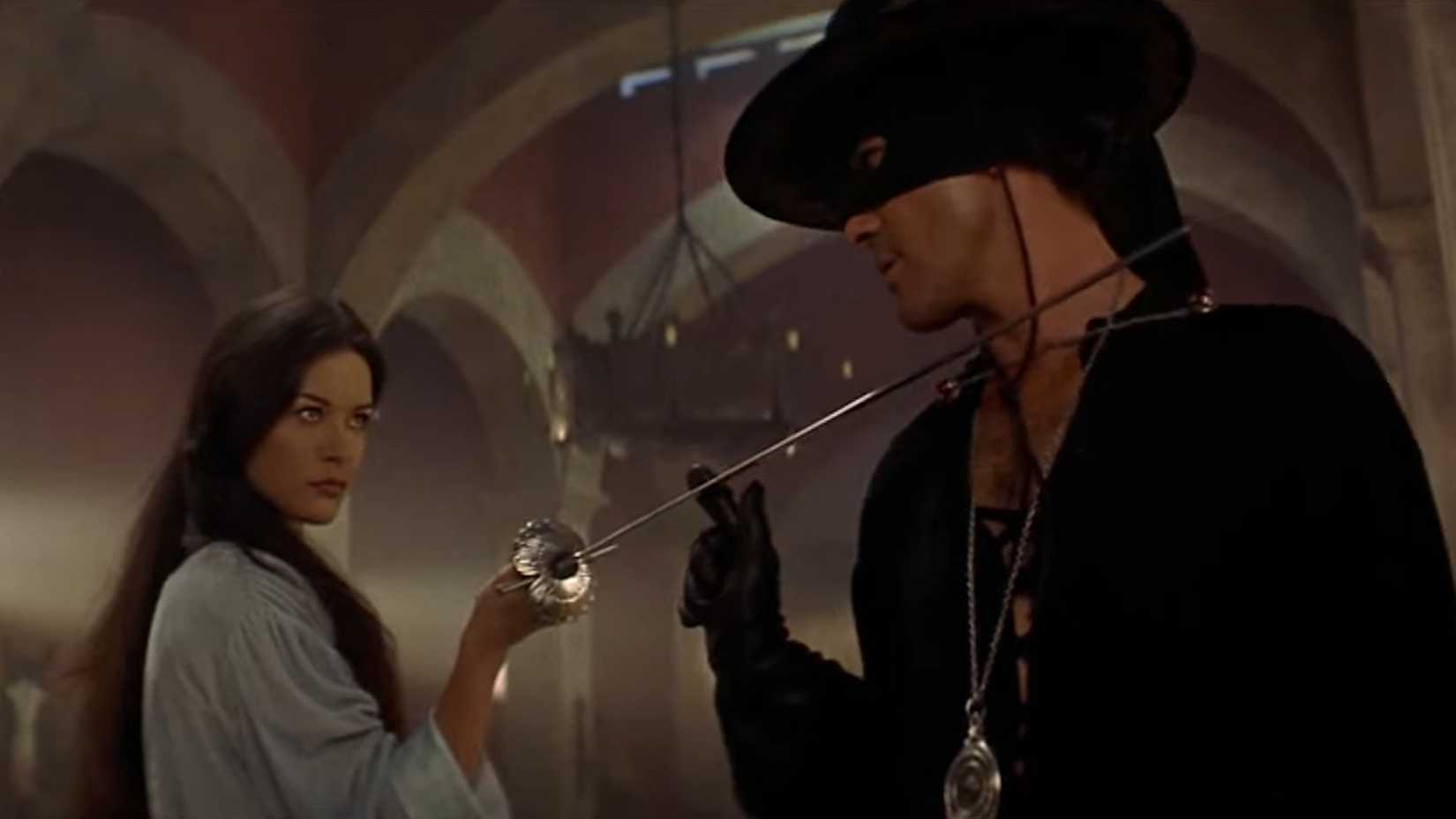
By the late 1990s, old-fashioned swashbucklers were hardly dominating Hollywood. The Mask of Zorro made a convincing case that they should have been. Antonio Banderas stars as Alejandro Murrieta, who is trained by the original Zorro, played by Anthony Hopkins, to take up the mask and pursue revenge.
Director Martin Campbell keeps the action fast without sacrificing clarity, while Banderas and Catherine Zeta-Jones have the kind of chemistry adventure movies cannot manufacture with visual effects. The sword fights are playful, the villains are satisfyingly awful, and the entire movie understands that being stylish and entertaining is more than enough.
Twister (1996)

Twister understands exactly what audiences came to see: enormous tornadoes and reckless people driving directly toward them. Helen Hunt and Bill Paxton lead a group of storm chasers attempting to deploy a new weather instrument while surviving increasingly violent storms across Oklahoma.
What keeps the movie from becoming a collection of effects sequences is the personality surrounding them. The storm-chasing team feels like a real crew, Philip Seymour Hoffman steals scenes with very little effort, and the practical debris flying across the screen still gives the tornado sequences a physical danger many modern disaster movies struggle to match.
Mission: Impossible (1996)
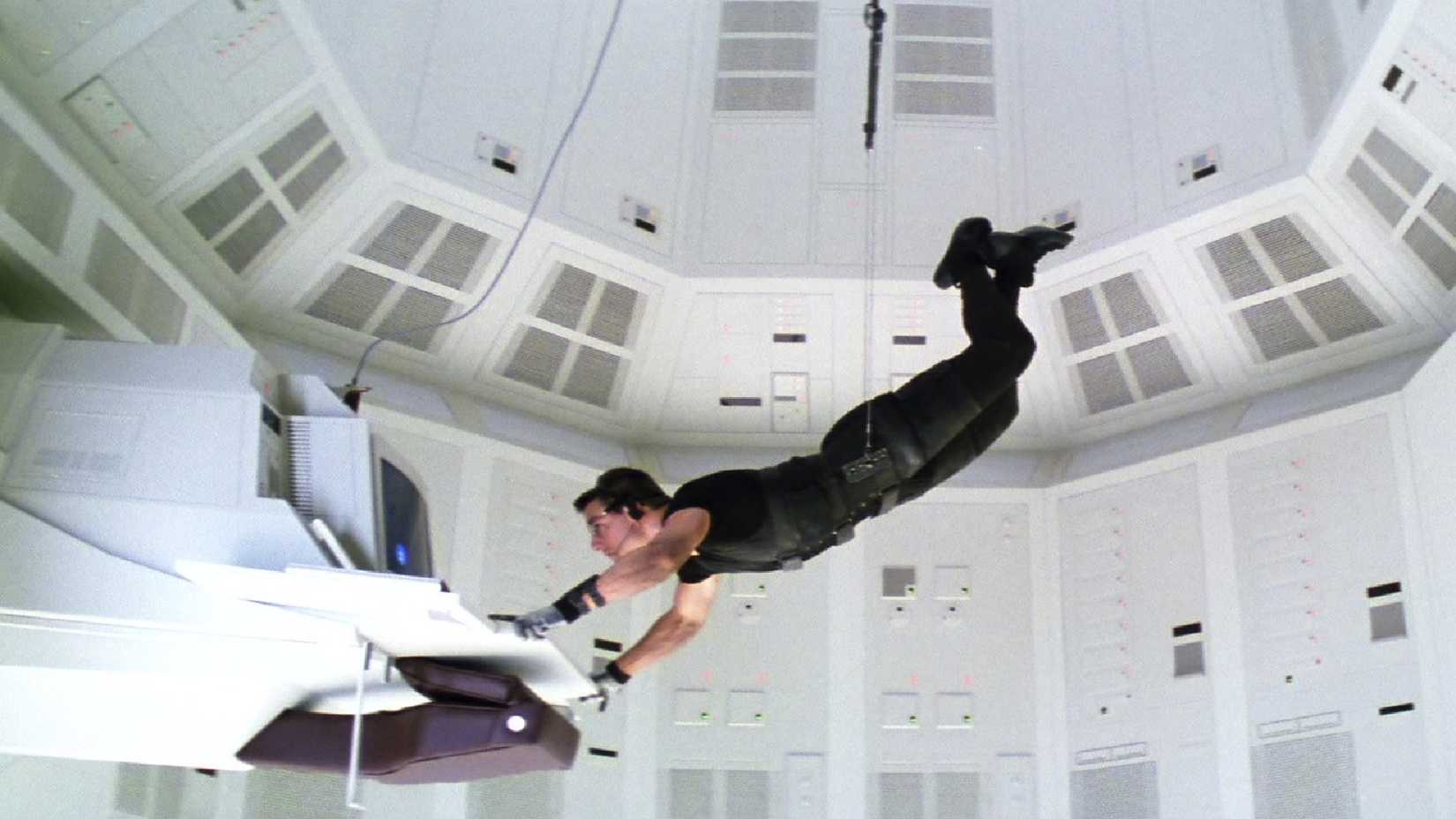
Before Mission: Impossible became synonymous with Tom Cruise risking his life for increasingly enormous stunts, Brian De Palma's original was a much stranger and more controlled spy adventure. Ethan Hunt spends much of the movie trying to determine who betrayed his team rather than simply outrunning explosions.
That restraint makes its biggest sequences even better. The CIA vault break-in remains one of the most recognizable suspense scenes of the decade, while the climactic train sequence hints at the giant practical spectacle the franchise would eventually embrace. Thirty years later, the first Mission: Impossible still feels distinct from every sequel that followed it.
The Iron Giant (1999)
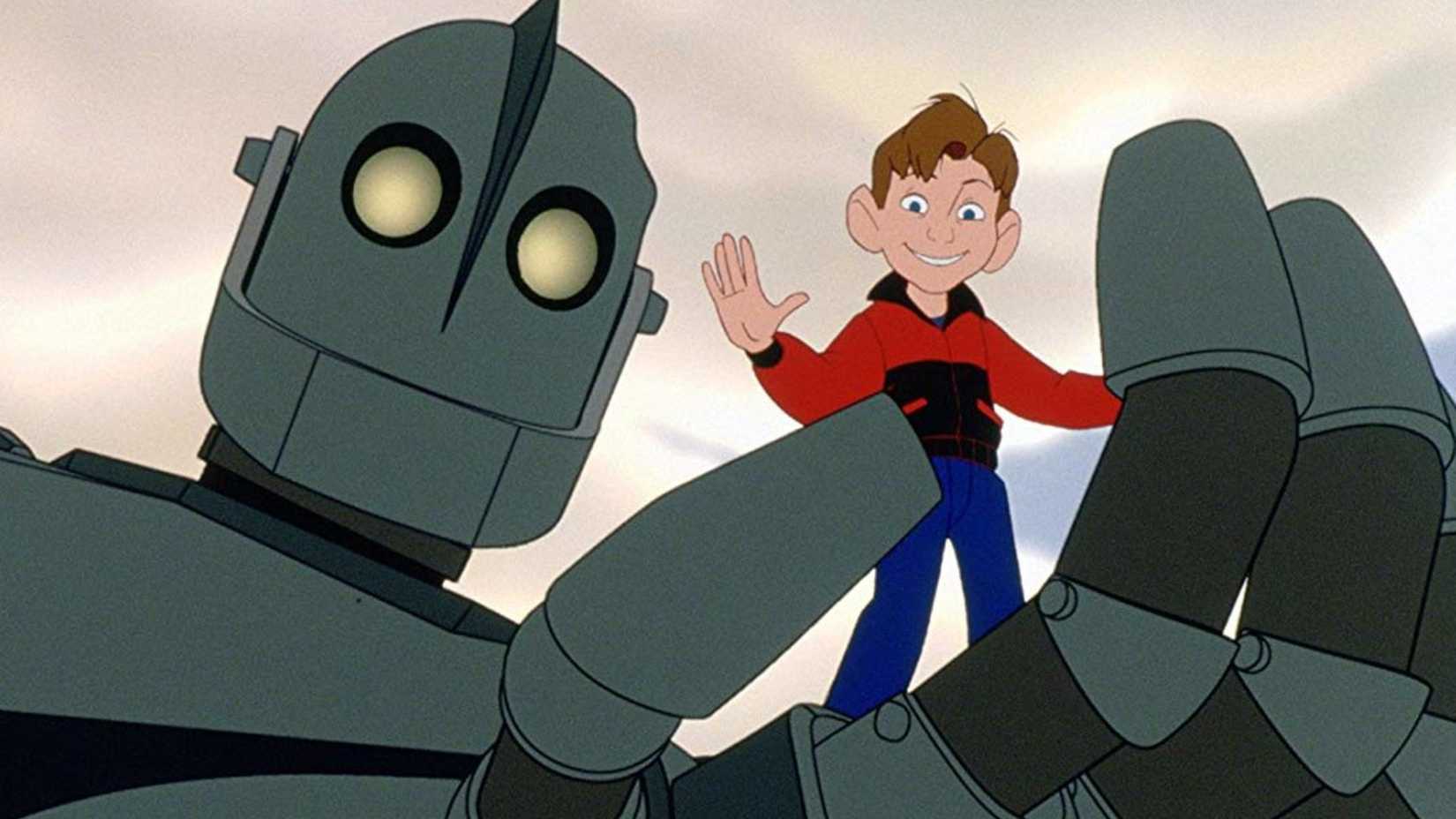
The Iron Giant was not a box-office success when it opened in 1999, but its reputation has grown enormously in the years since. Brad Bird's animated adventure follows Hogarth Hughes, a lonely boy in Cold War-era Maine who discovers and befriends an enormous robot that has fallen from space.
The movie has everything required of a great childhood adventure, but it refuses to talk down to younger viewers. Its ideas about violence, fear, and choosing what kind of person to become give the story genuine emotional weight. The Iron Giant's final decision remains devastating no matter how many times the movie is revisited.
The Mummy (1999)
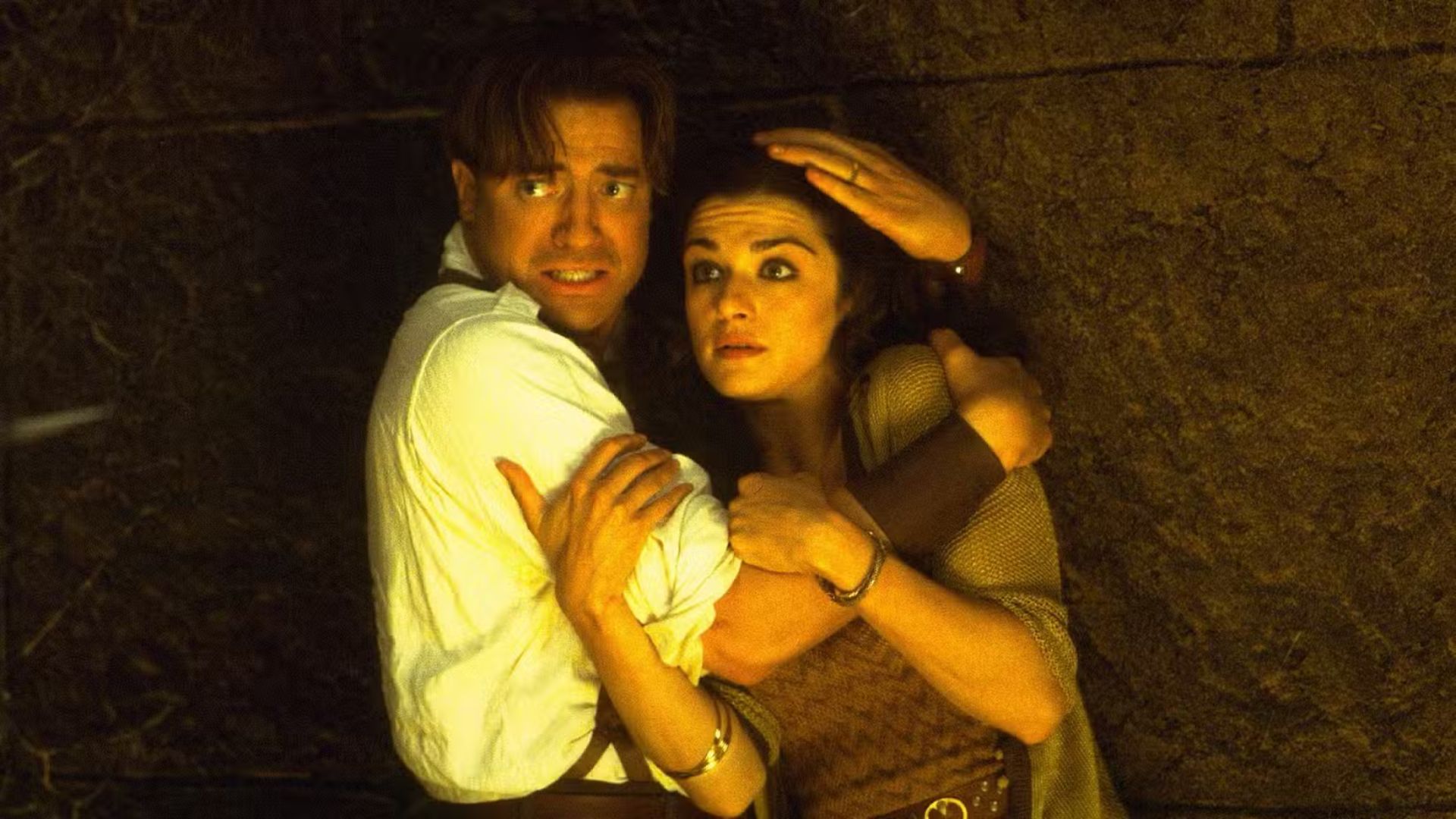
The Mummy may be the purest adventure movie on this list. Brendan Fraser's Rick O'Connell and Rachel Weisz's Evelyn Carnahan battle an ancient resurrected priest, treasure hunters, supernatural plagues, and a remarkable amount of sand without the movie ever losing its sense of humor.
Stephen Sommers blended horror, romance, comedy, and old-school adventure without allowing any one element to overwhelm the others. Fraser and Weisz remain enormously likable, while Arnold Vosloo gives Imhotep far more presence than the average blockbuster villain. Plenty of adventure movies have tried to recapture this exact mixture since 1999. Very few have managed it.

- Release Date
- April 16, 1999
- Runtime
- 124 minutes
- Director
- Stephen Sommers
- Writers
- Stephen Sommers
- Producers
- James Jacks, Kevin Jarre
KioskNews shows a cleaned-up reading view extracted from the publisher’s page — the original always lives on their site, not ours.