Tragedy and loss helped forge Steph Hodgins-May into a steely climate campaigner. Now she’s taking on Anthony Albanese
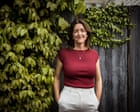
It was during a visit to Samoa, soon after her mum was killed in the 2009 tsunami, that Steph Hodgins-May decided she could no longer work as a corporate lawyer.
Born in Ballarat to a fifth-generation farmer and school teacher, the new deputy leader of the Greens says she had always been passionate about the climate crisis, and talking politics at the dinner table with her dad, an organic farmer, a local councillor and later, mayor.
But life fundamentally shifted as she realised her job gave her no purpose.
“I knew after the tsunami the livelihoods that had been absolutely destroyed, the people who’d lost their lives, and how many epic challenges they were continuing to face on a daily basis because of climate change,” she said. “My work as a lawyer, sitting up at my desk on Bourke Street (in Melbourne) felt suddenly just completely and utterly meaningless.”
Her path to politics is similar to that of new Greens leader, David Shoebridge, also a former lawyer who walked away from his career as a corporate lawyer in the early 2000s.
But Hodgins-May’s journey to the Greens took a few more years.
After quitting law, she travelled to New York and worked as a support negotiator at the United Nations. For AusAid, she worked on climate and food security and the Pacific.
“I was sitting behind the Australia placard negotiating our positions and feeling like, OK, maybe this is meaningful, purposeful work. But then when I came home from New York … each of those promises started to be unraveled,” she said.
“I realised the laws that were there to protect the environment aren’t good enough. The positions that we’re putting on the global stage can be so easily undone, so where’s the engine room?”
It was in 2011, while watching a 2003 video of Bob Brown protesting against George W Bush in parliament, that she was compelled to join the Greens.
“I thought, ‘oh my goodness’, the courage and conviction he had to stand up and shout at the leader of the free world out of our parliament, that gave me that spark to be like, ‘this is the courage that I want’. This isn’t incrementalism. This is challenging power.”
In 2017, tragedy struck again when her dad, Rod, was killed in a car crash by a driver with methamphetamines in his system.
No ‘inner-city lefty’
Hodgins-May was no stranger to politics when she entered parliament in 2024, replacing retiring Victorian senator Janet Rice. She had already spent more than a decade on the campaign trail.
Hodgins-May had run four times in two different federal seats in safe Labor electorates. In 2013 Hodgins-May ran in Ballarat, followed by an attempt in Port Melbourne in 2016 before it was abolished and became Macnamara in 2019. She ran unsuccessfully against Labor backbencher, Josh Burns, in 2019 and 2022.
In 2022, she won just under 30% of the primary vote, with a 5.5% swing to her in a tight three-way contest with Labor and the Liberals. At the time, she was head of Pacific for Greenpeace Australia Pacific.
She counts two former Greens leaders as her mentors, Brown and Richard Di Natale. Both say they knew from the first moment they met that she had enormous potential.
Di Natale met her on the campaign trail in Ballarat in 2013. He quickly became a close personal friend.
“It was obvious to me that she was a really talented, young advocate who had huge potential, and I continued to support her through other campaigns,” he said.
“She’s had a lot of tragedy in her life, but she’s incredibly resilient.”
Di Natale describes her as warm, engaging and with a sharp legal mind, and capable of effectively communicating big policy at a grassroots level. He says her background and viewpoint as a farmer from regional Victoria is also very different to the Greens stereotype of “inner-city lefty”.
Brown says she brings enormous integrity to the party, and he was the one who urged her to take Rice’s Senate spot.
“She’s determined to not just take a seat, but to change things for the better for Australians, and that is not least for the Australian environment,” Brown says.
Greens insiders describe Hodgins-May as still having the mindset of a lower house candidate: community driven and campaign focused.
The sphinx of the Senate?
Hodgins-May, is still something of an unknown quantity inside parliament. Labor, crossbench and Coalition sources all offer different accounts of her personality and approach.
One Labor MP described her as a decent person and trustworthy, but that she was “more protest not policy, [and] more outrage than outcome.”
Another Labor source said Hodgins-May was of the “same ilk” as Shoebridge, who they said had a huge ego, but very effective in prosecuting the government in Senate estimates.
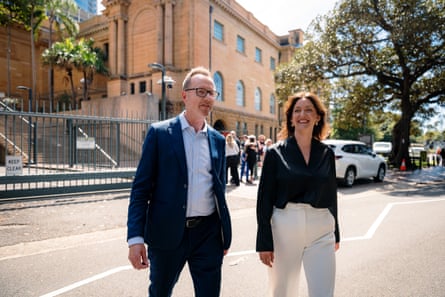
Independent senator David Pocock, who was on a gas tax committee with Hodgins-May, said it was clear she cared about the environment and climate.
“One of the points of difference is she is from a farming family and has a love of nature,” he said.
One crossbench source said Hodgins-May was very new and figuring out when public servants were “bullshitting” during estimates or committee hearings, while Andrew McLachlan, a moderate Liberal senator, said he admired her “commitment to fighting for the environment, nature and climate justice”.
McLachlan crossed the floor to support her motion for an inquiry into the alleged “petro-grooming” by fossil fuel companies in schools and sporting clubs.
“She hasn’t left her principles at the door of the Senate, she’s brought them into the chamber as an advocate, as you’d expect from an accomplished environmental lawyer,” he said.
‘We’ve got to play hardball’
Hodgins-May says its frustrating the party hasn’t been able to capitalise growing anti-establishment sentiment, but believes she and Shoebridge are up to the job, and they “don’t want to waste a moment”. She signals a more combative approach to the leadership.
“I do have that sense of urgency. Both of my parents have been killed under very sudden circumstances, and that changes you. It shifts who you are as a person and what you prioritise,” she says.
“We need to work harder, we need to work faster … we’ve got to play hardball. We know that incrementalism isn’t going to cut it.”
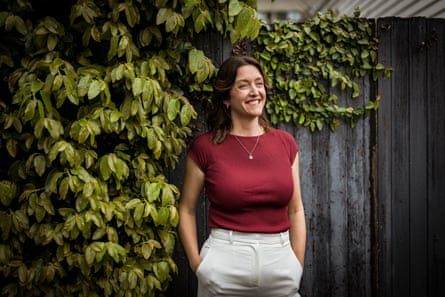
Di Natale says gaining ground is less about the leadership team itself than external factors, though a key benefit of a leadership change was giving the party a spotlight to push its platform.
“Pauline Hanson’s a good example of this. Look at the One Nation vote, and ask yourself what’s changed. The leader hasn’t changed, it wasn’t because of Barnaby Joyce, the policy hasn’t changed … what’s changed is the world around her,” he said.
“One of the biggest positives that comes with the leadership change is comes from just having the spotlight on the Greens for a brief window.”
Asked about the Mamdani-effect, and whether the Greens can hitch on his progressive bandwagon, Hodgins-May says it’s not necessarily something in her control.
“Mamdani’s done an incredible job, [UK Greens leader Zack] Polanski is doing an incredible job, but the moment comes at different times, and I don’t think there’s this secret sauce that can predict when that moment’s going to happen,” she says.
“We need to be ready to harness it when it does, and I think that moment is upon us. I truly do. I’m an optimist.”
Hodgins-May was elected deputy Greens leader on Wednesday, the 17th anniversary of her mum’s death. She says she can feel her parents’ energy with her.
“All of my mum’s old hippy mates keep messaging me ‘God they’d be proud’, and I feel that in my being. But yeah, I reckon David and I are going to get some really fun stuff done.”
KioskNews shows a cleaned-up reading view extracted from the publisher’s page — the original always lives on their site, not ours.