Largest coal mining proposal in state’s history wins approval
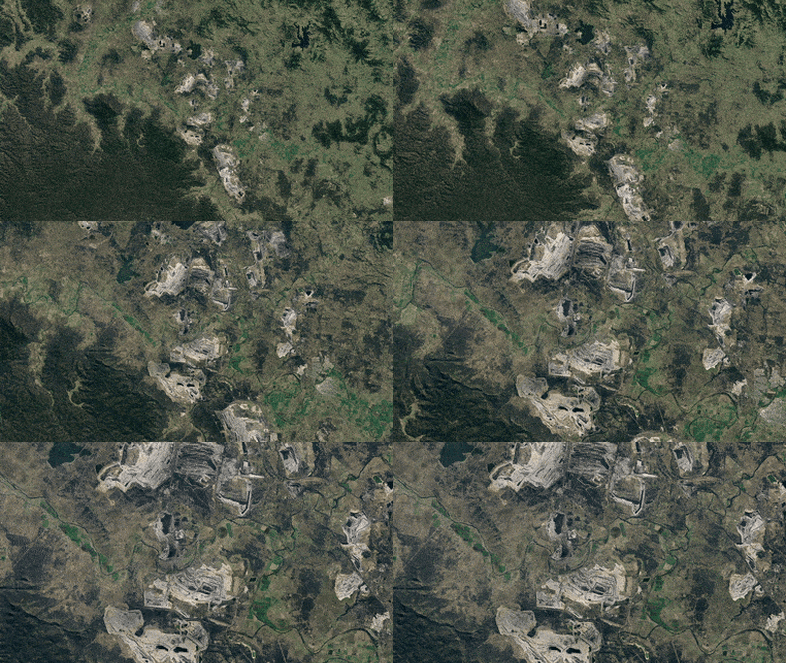
The NSW government’s independent planning body has approved the largest coal mining proposal in the state’s history, saying that, while the 800 million tonnes of greenhouse gas emissions it will cause will have impacts on the Hunter Valley, they can be managed with the conditions it has applied.
In approving the extensions of two sections of the Hunter Valley mining operation for 19 years, known as the HVO extension, the Independent Planning Commission said it had directed the owners – miners Yancoal and Glencore – to export the coal only to countries that had measures in place to limit emissions in line with the goals of the Paris Agreement, and to develop a plan to reduce emissions from the mining operation itself.
“The commission finds that the residual impacts of the project are, on balance, outweighed by its benefits to the Hunter region and NSW, including continued employment, economic activity, support for local business, ongoing royalties and taxation revenue.”
Environment groups responded furiously. Georgina Woods, NSW co-ordinator for Lock the Gate, said it was a betrayal of the Hunter Valley community and evidence of institutional failure in a state that is already off-track to meet its own legislated emission reductions of 50 per cent by 2030 and 70 per cent by 2035.
“Burning the coal produces the pollution that causes the warming,” she said. “The only way to prevent that from happening is not digging up the coal and burning it.”
Nature Conservation Council chief executive Jacqui Mumford described the decision as Premier Chris Minns’ biggest climate failure.
“This decision shows the NSW government’s complete inability to appropriately respond to the ever-growing climate crisis. Today’s approval protects the interests of two multinational coal companies at the expense of everyone else, as our hope for a safe climate future is eroded one coal mine approval at a time.”
Last year, a court overturned the approval of another Hunter Valley coal mine, ruling that the IPC must take into consideration the local impact on residents of coal from the region being burnt overseas. During deliberations over the HVO extensions, residents and environmental groups made the case that extreme weather caused by climate change was already having an impact.
“There have been fires and fires in the last five years in the Hunter Valley, we are losing beaches on the coast, there are people in the Hunter Valley who cannot insure their homes [due to climate change],” Woods said.
More to come.
Get the day’s breaking news, entertainment ideas and a long read to enjoy. Sign up to receive our Evening Edition newsletter.
KioskNews shows a cleaned-up reading view extracted from the publisher’s page — the original always lives on their site, not ours.