Children of the Wicker Man review – how the folk-horror classic haunted the family that made it
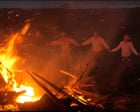
This documentary is a collaboration between Justin Hardy and Dominic Hardy, two of film director Robin Hardy’s children (he had seven in all, and was married five times), and it delves into the legacy of both their father and his most enduring work, 1973 folk-horror classic The Wicker Man. The latter still stands today, for all its imperfections and peculiarities, as one of the most unsettling and paradoxically influential British films of all time, despite being a box-office flop on its initial release. This latest work is partly an account of The Wicker Man’s troubled production – a story that’s been told in books and journalism a fair few times already – and its strange reemergence as a cult movie-cum-fetish object, and partly a therapeutic exercise for the brothers themselves, full of raw feeling that’s sometimes painful to watch.
However, while the brothers’ willingness to share their pain remains admirable, their film feels hampered by omissions and silences. On some level it is haunted by the ghosts of significant players in the story who have passed away, including Hardy himself and screenwriter Anthony Shaffer, as well as other key figures who are alive but aren’t interviewed here. Where, for example, are the brothers’ other siblings? Allan Brown, author of Inside The Wicker Man: How Not to Make a Cult Classic, is mentioned in several juicy anecdotes but is also absent, while somewhat bafflingly there’s a fair amount of an interview with Scottish actor Bill Paterson, who was almost cast in the original film but wasn’t.
Of the two brothers, Justin’s is the more prominent voice; he died in August just before the festival premiere of Wrath of the Gods, a long-nurtured semi-sequel to The Wicker Man he made with Dominic. Justin comes across as a choleric, clenched figure, understandably simmering with rage at a father who walked out of his life when he was still a child, leaving him and his sister in the care of their alcoholic mother, who was effectively bankrupted by the financial failure of The Wicker Man. Dominic, born to a different mother and raised in Canada, comes across as more tender-hearted, more forgiving of his father, thanks perhaps to both physical distance and the detachment of his training as an art historian.
There’s a little, possibly unintentional, comedy to be had at one point when Dominic goes missing during filming and we see Justin raging over it to the film’s producers. The vignette stands as a salutary reminder that film-making is bloody hard work and it’s almost a miracle anything ever gets made, let alone an accidental masterpiece like The Wicker Man.
KioskNews shows a cleaned-up reading view extracted from the publisher’s page — the original always lives on their site, not ours.