Digger's Big Twist Is A Perfect Dig At Biopics

Brandon Zachary is a Lead Writer for Screen Rant's New Movie Team. He also writes or has written for Comicbook.com, CBR, That Hashtag Show, Just Watch, and TVBrittanyF. Brandon is an Emerging Screenwriters Semi-Finalist, co-writer of a Screencraft Quarter-Finalist, a seasoned on-screen interviewer, and a MASSIVE nerd. You can reach him at bs.zachary@gmail.com
The following contains spoilers for DiggerBiopics are often a double-edged sword for filmmakers and actors, especially in the metatextual subplot of Digger. Too much of a direct replication can lead to something like Michael, a technically proficient but thematically empty impression. Straying too far from history opens up room for broad characterization or muddled inferiority, the antithesis of good characterization in biopics.
Finding that balance has always been the key to making films based on real people still function as effective stories, especially when the focus in question are infamous people who have earned the scorn of history. It's something Digger clearly has on its mind in its meta commentary about the way art can purposefully and willfully exaggerate history for the sake of a story (or, in Digger's case, a joke).
History Isn't Written By The Victors, It's The Survivors
Digger is set in a world where the actual Digger Rockwell's impact is still being felt generations later — and not in a good way. The destructive fallout of Digger's actions led to massive rises in sea levels around the world, costing the planet trillions of dollars and countless lives. At first glance, that makes sense for audiences given how much of a buffoon the movie plays him as.
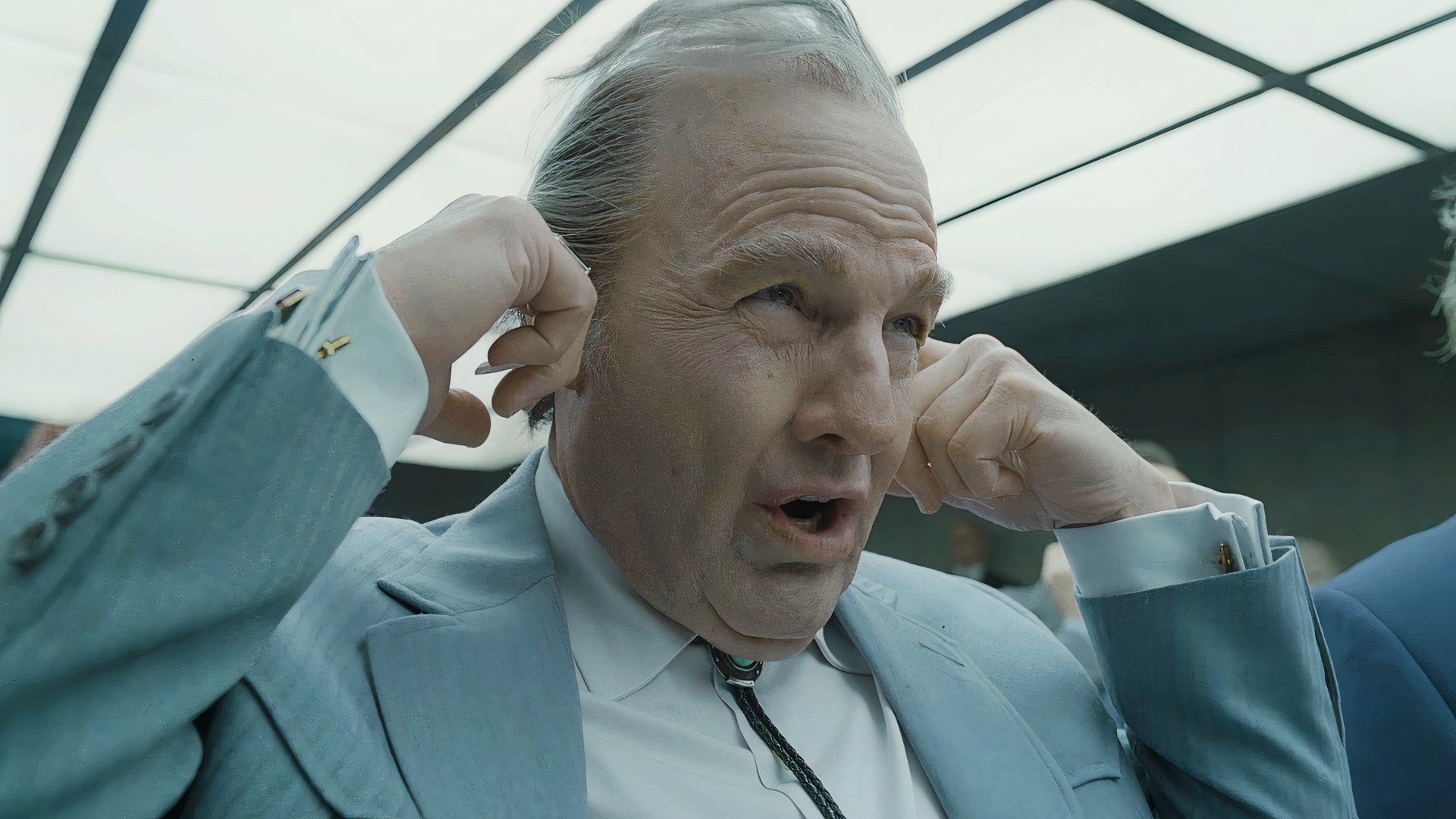
However, this turns out to be part of the movie's true intention. In reality, "Digger Rockwell" is a character being played by actor Curtis Markson. While he is based on the real version of Digger, who lived and died decades before the actual events of the film, Curtis frequently complains about the broad characterization of the role and the lack of human qualities in the character as written.
It's an interesting commentary on the inherent challenge of making art based on a real person. For the sake of a broadly effective story, especially one that is attuned to a specific genre like "Fossil Fools" being a farce, the characters need to be simplified into a form that most audiences can absorb. However, that move costs characters a layer of natural complexity and depth.
Movie versions of real-life people have to be flattened somewhat to appear on screen. This means that the filmmakers and actors are the ones deciding who this person is in the face of modern culture, something Curtis argues with the play's director about. He's frustrated by the lack of humanity afforded to the character, and Hannah argues that's the point.
Digger may have been a fearsome and complicated man, but the world hates him and sees him as the fool who doomed countless lives for his ambition and greed. Therefore, the version that survives in art isn't quite the man that his nephew Kenny knew, but an approximation of what he was and an exaggeration of what he could be, an escalation that makes him perfect for the stage and screen.
Digger highlights how that push and pull can sometimes be deliberate choices made by the filmmakers. It's up to them to decide how people are depicted, especially if they have a certain level of anger or frustration directed towards that figure. It's why there's always been an impulse to cast monstrous people from history as cartoonishly evil and unbelievably stupid caricatures of themselves.
Biopics Give The Reins Of History To Artists

Digger notes that tendency with historical fiction and highlights exactly what makes it a weapon. In the hands of someone like Hannah, "Fossil Fools" is a cutting response to the past, a giant middle finger to the people who messed up their present and doomed their future. Hannah notes to Curtis during their argument that cast and crew members lost families to the fallout of Digger's actions.
These biopics aren't even about demonizing specific people but calling out entire generations. Digger represents the powerful in an era where that status doomed countless lives in a boardroom and used military might to make a bad situation worse. It's a defiant insult, speaking to how biopics can have teeth.
On the other hand, Digger's nephew Kenny accepts the play as a condemnation of his uncle and as a means to bring people together. It creates a monster out of his family member while allowing himself to further distance himself from that legacy. At best, it's an empathetic way to bring people together. At its worst, it could be a way to shield his own actions by drawing attention to mistakes made long ago.
As with all biopics, the intention lies in the hands of the filmmaker instead of the subject. Digger's conception of that speaks to the power filmmakers have always found in calling out figures in power, from Charlie Chaplin's jabs at Nazis in The Great Dictator to the madcap mayhem of Death of Stalin. Digger underscores how that move can remove a historical figure's humanity and make them outlandish.
As with any biopic, there's a sense of disconnect between the actor, the character, and the person. "Digger" as we meet him,, is as ridiculous as possible, because that's the intention of the filmmaker. Yet, that's how he'll be remembered, whether or not Curtis wants to find the humanity in the role. As with anyone in a biopic, they stop being a person and become a character.
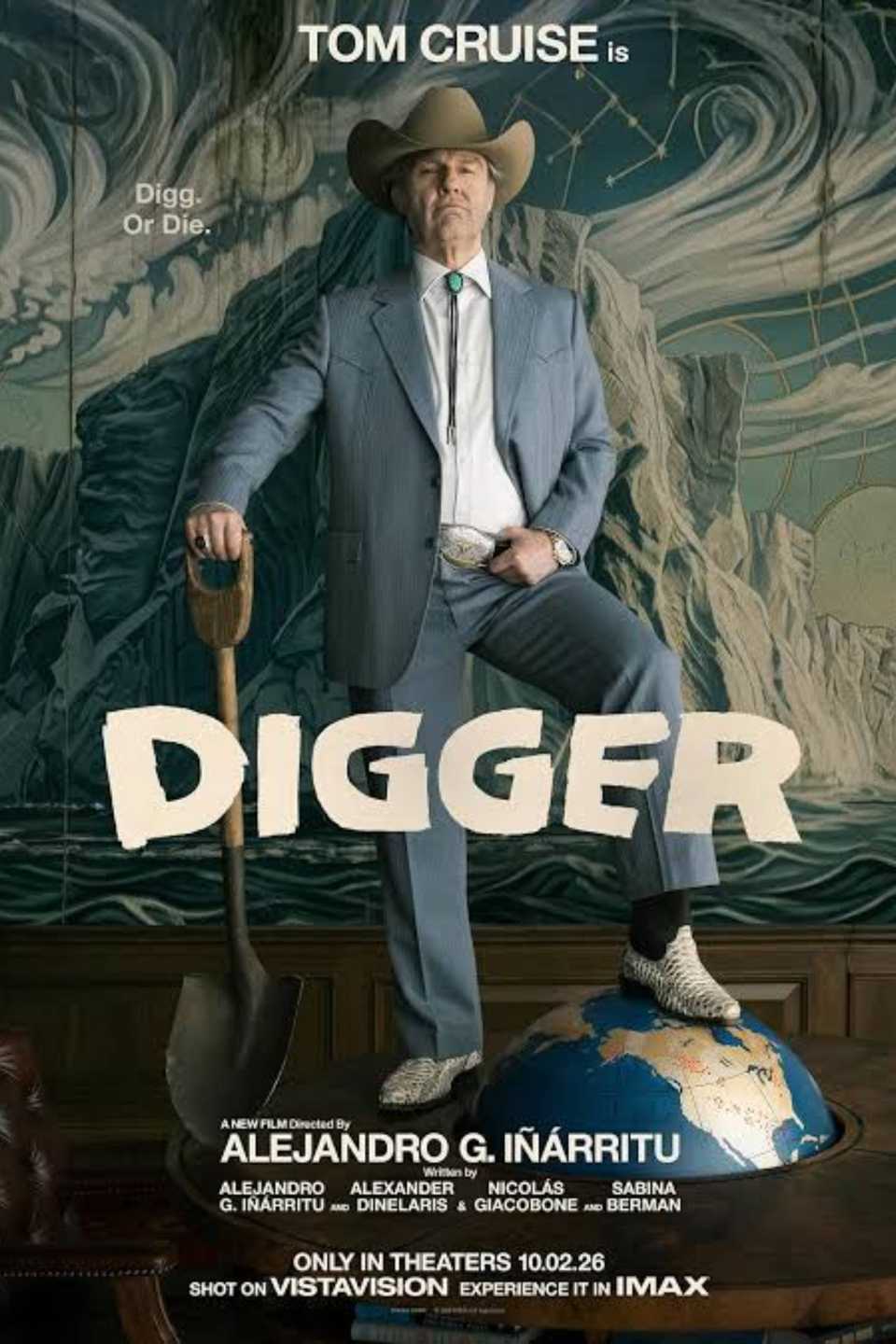
Digger
- Release Date
- October 2, 2026
- Runtime
- 128 minutes
- Director
- Alejandro González Iñárritu
- Writers
- Alejandro G. Iñárritu, Sabina Berman, Alexander Dinelaris, Nicolás Giacobone
KioskNews shows a cleaned-up reading view extracted from the publisher’s page — the original always lives on their site, not ours.