Who pays for Rodrigo Duterte's defense? ICC says he does
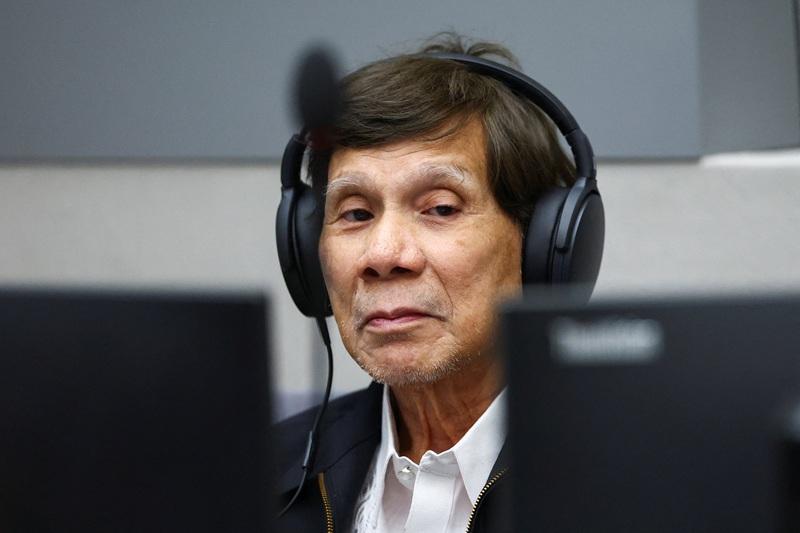
PRAGUE, Czech Republic – Former president Rodrigo Duterte bears the legal costs in the crimes against humanity case he faces before the International Criminal Court (ICC), the court has confirmed.
In a background document and the updated case page, the ICC Public Affairs Unit explained that in the court’s legal aid system, the former president is “not indigent”.
“He therefore bears the costs of his defence in the proceedings before the Court,” the document stated.
Based on the ICC legal aid policy, a person – who could be a suspect, an accused, or a victim – could be considered indigent if they “lack sufficient means, in part or in whole, to assume such costs [of legal representation].”
Indigent suspects, accused individuals, or victims have to submit a financial information form to the ICC Registry to request legal aid resources from the court.
Among the ICC’s criteria for the eligibility of indigent suspects or accused individuals are their position within a political hierarchy and the nature of their liability in crimes as confirmed by the Pre-Trial Chamber.
How much can a counsel for an indigent suspect receive?
The ICC Registry determines the “monthly disposal means” or the financial eligibility of suspects or accused individuals applying for financial aid, based on their calculated assets.
When approved, indigent suspects or accused individuals could have their legal team paid by the ICC Registry.
In the ICC legal aid policy draft in 2023, a full-time counsel and their team members are remunerated based on a scheme accounting for their eligibility, years of experience, cost of living, and taxes.
Based on this system, a counsel could receive monthly remuneration between EUR 9,543 (P668,324.92) and EUR 13,705.90 (P959,865.29), based on experience.
For an associate counsel, the monthly remuneration could range from EUR 8,151 (P570,838.98) to EUR 11,896.30 (P833,133.58).
Duterte’s legal representation
As of this writing, the ICC Registry has not released information about Duterte’s application for legal aid.
It also remains unclear how and how much Duterte pays for his legal representation.
Vice President Sara Duterte said in March 2025 that their family was mulling applying for ICC legal aid for the former president’s defense.
Later, during one of her travels to The Hague, the younger Duterte denied knowing the costs of legal arrangements between her father and his former counsel, Nicholas Kaufman.
Kaufman also avoided answering questions about how much Duterte paid him, telling GMA News that the matter was “completely irrelevant”.
Kaufman withdrew from the former president’s defense team in May 2026 and was replaced by British barrister Peter Haynes.
Freezing Duterte’s money obtained during his arrest
In May 2026, the Office of the Prosecutor asked Trial Chamber III for permission to inspect items obtained from the former president during his arrest and arrival in the Netherlands on March 12, 2025. It also asked the Court to freeze “any money in [the ICC custody] belonging to Mr. Duterte”.
The prosecution’s filing, released in late June, did not specify the items obtained but said the Registry inventoried them and transferred them to the ICC Detention Center.
The court granted the prosecution’s request to freeze Duterte’s money to avoid devaluation and ensure it is available for forfeiture and the award of reparations “should the Accused ultimately be convicted of the alleged crimes”.
The ICC legal aid policy also states that for non-indigent applicants whose money has been frozen, “legal aid resources shall be advanced” until their assets are unfrozen.
“Upon the unfreezing of assets, repayment of advanced resources may be ordered by the relevant Chamber.”
The ICC trial of Duterte will open on November 30 before Trial Chamber III.
“The trial may last several years, depending on the complexity of the case and challenges that may arise. Judges ensure that the rights of all parties and participants are respected,” the ICC’s page on the Duterte case stated.
“Cases involving crimes against humanity tend to be complex, because of the range of incidents and extended time period involved in the charges, as well as other logistical and linguistic measures that have to be taken to protect the accused’s rights, protect the witnesses and facilitate the victims’ participation. The Judges are committed to expediting the trial as much as possible.” —LDF, GMA News
KioskNews shows a cleaned-up reading view extracted from the publisher’s page — the original always lives on their site, not ours.