The best recent science fiction, fantasy and horror – review roundup
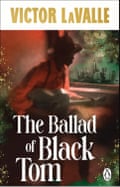
The Ballad of Black Tom by Victor LaValle (Penguin, £9.99)
This short novel won almost every genre award following its 2016 US publication. As a Black writer, LaValle had a conflicted relationship with the works of HP Lovecraft. As a child, he loved the tales of cosmic horror, but grew to recognise the racism and other prejudices of the author. Unable to “throw the man’s stories away” because of how formative they were on his own imagination, he decided to write his own response to one of the most obviously racist, The Horror at Red Hook, recasting it through the perspective of a musician and hustler from 1920s Harlem later known as Black Tom. It’s a powerful tale of horror – both everyday and the occult – told with sheer brilliance.
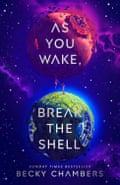
As You Wake, Break the Shell by Becky Chambers (Hodderscape, £22)
In this cosy science fiction love story set on a distant planet, life is a constant struggle for the human colonists. As the book opens, botanist Signy is yet to meet the love of her life, Cora, a rorqual pilot. Rorquals are gigantic interplanetary creatures, trained by human pilots whose implants allow them to communicate with the beasts as they transport supplies. Chapter 1 is followed by chapter 764, set more than a decade later, when the two women are blissfully married. The non-linear narrative may reflect what we’re told is the rorqual view of time, but it also removes much suspense. The characters are adorable, and the details of growing plants in an artificial environment, or Cora’s relationship with her rorqual, are enjoyable, but readers may grow impatient with the glacial pace and reiterations of their feelings for one another. Even the “naturally solitary” rorqual is given to declaring its love for Cora. In the final pages there’s a tonal shift that ends on a cliffhanger: how Cora and Signy survive is to be revealed in a sequel.
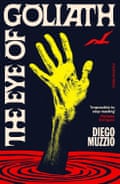
The Eye of Goliath by Diego Muzzio, translated by Rahul Bery (Pushkin, £12.99)
This first novel by an award-winning Argentinian writer is an old-fashioned tale of madness and the horrors of war. In an asylum on the outskirts of Edinburgh, circa 1920, Dr Pierce hopes to cure severely traumatised patients by hypnosis. All the men, including the doctor, carry wounds from the first world war. His latest case, David Bradley, was an engineer, but is now unable to do anything but desperately attempt to swim on dry land, until overcome by exhaustion. Bradley’s diary reveals the reason behind the man’s gradual descent into madness, as, cold and starving in an abandoned lighthouse, the rescue he expects keeps failing to arrive. Bradley’s own discovery of papers left behind by the last lighthouse keeper, a naturalist with a talent for taxidermy who murdered his family, adds another interlocking piece to this irresistible, haunting gothic horror.
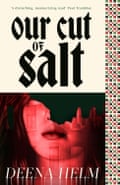
Our Cut of Salt by Deena Helm (Orbit, £22)
In 2002, Marina is a young American of mixed heritage who takes a trip to Haifa, the city where her Palestinian grandmother Nuhad was born and lived as a child, until the family was driven out by the Israeli occupation in 1948. Nuhad never spoke about that terrible time, and now that she is dead, Marina wants to understand. When she finds her grandmother’s house, it is empty, for sale, and generally known to be haunted. Previous occupants have either vanished or died in mysterious circumstances. Entering, she feels anger, but then a flood of happy memories from Nuhad’s childhood. The house is more than simply haunted – it has become a vessel for vengeance, channelling death while longing for a return of the family it loved. The author allows the house to speak, which jars with the more realistic approach taken elsewhere. Despite a few missteps, this is a powerful, affecting novel about Palestinian loss and trauma.
KioskNews shows a cleaned-up reading view extracted from the publisher’s page — the original always lives on their site, not ours.