Ukraine war briefing: German foreign minister urges Russia to abandon dangerous escalation in rare meeting
-
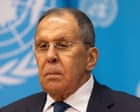
The foreign ministers of Russia and Germany met in New York on the sidelines of the UN general assembly, in the first such talks since Russia’s 2022 invasion of Ukraine. But Russia’s top diplomat dismissed Germany’s calls to ease off its “dangerous path of escalation” toward Europe, instead accusing Germany of being Ukraine’s main sponsor and seeking to be a leading military power in Europe. “Does Berlin understand what this could lead to?” the Russian foreign minister, Sergei Lavrov, asked in his speech at the gathering of world leaders on Saturday. “Didn’t they learn the lessons of world war two?”
-
German foreign minister, Johann Wadephul, used the talks to call on Russia “to abandon the dangerous path of escalation vis-a-vis Germany, Europe, and Nato”, according to a delegation source. Wadephul said incidents such as the attempted drone attack in Leipzig would not shake Germany’s resolve to support Ukraine, according to sources.
-
Relations between Moscow and Berlin have been frozen since the Russian invasion, and tensions escalated further after the drone incident at Leipzig airport. In a sign of the continued frostiness, Lavrov told a press conference on Saturday “nothing new” came from the talks with his German counterpart.
-
“I told him that frankly … you could just have called me and said: ‘read my statement’,” Lavrov said. “He simply reiterated his official public position condemning Russia … you can judge for yourself whether that counts as dialogue or not.”
-
Still, the ministers discussed bilateral ties and the war in Ukraine, officials from both sides said. Wadephul urged Lavrov to do “everything possible to reach an agreement on grain exports via the Black Sea”, a German delegation source said.
-
In a sign of the sensitivities around meeting the Russian foreign minister, Wadephul notified his European allies of the meeting afterwards in a message seen by Reuters. “I used this opportunity to reiterate our position on Russia’s war of aggression against Ukraine and to call for an immediate and complete ceasefire, most pressingly with a focus on grain exports, and the energy infrastructure,” he wrote.
-
After the meeting Lavrov addressed world leaders at the assembly, where he defended Russia’s war in Ukraine and lobbed barbs at the west — including Germany – and criticised the militarisation of Japan. He made clear that Russia will veto any attempt by Germany and Japan for permanent seats on the UN security council. The two nations fought Russia, Britain and the US in the second world war. Writing on her personal Telegram channel, Maria Zakharova, a spokesperson for Russia’s foreign ministry, said that “tens of diplomats” had come to meet Lavrov to “shake his hand and thank Russia”.
-
An overwhelming majority of general assembly member nations have repeatedly condemned Russia’s invasion of Ukraine, as Wadephul noted in his own address to the assembly Saturday. “Russia’s war targets the lives of millions of innocent people, the existence of the Ukrainian state and culture and the European peace order,” he said, urging Russia to negotiating toward ending the fighting.
-
The talks came amid an intensifying aerial war and as Donald Trump said he hoped the Ukrainian president, Volodymyr Zelenskyy, would “settle” with Russia’s Vladimir Putin. With frontline positions largely unchanged since last year, Russia has hammered Ukraine with cruise and ballistic missiles, powerful glide bombs and jet-powered drones in recent months, while Ukraine’s long-range drones have targeted Russian oil refineries and businesses.
-
“It is essential that our partners not forget: Russia is escalating every single day,” Zelenskyy wrote on Saturday. “If the Russians have chosen to make their strikes even more brutal, the world must choose stronger responses to keep the war from spreading further.”
-
Ukrainian officials said Russian attacks killed four people on Saturday, as Russian authorities said a Ukrainian drone attack killed three.
-
Residents of Kyiv are preparing for power cuts, drone attacks and a bitter cold winter by stocking up on generators, food and “dry showers”, as the Ukrainian capital becomes a frontline city.
-
And Russia has opened a new front in its campaign against Ukraine, hitting several datacentres and internet providers in Kyiv this week in an apparent attempt to weaken the digital backbone of the economy.
KioskNews shows a cleaned-up reading view extracted from the publisher’s page — the original always lives on their site, not ours.