Ridley Scott's Prometheus Is Getting A Stealth Sequel Next Month

Cathal Gunning has been writing about movies, television, culture, and politics online and in print since 2017. He worked as a Senior Editor in Adbusters Media Foundation from 2018-2019 and wrote for WhatCulture in early 2020. He has been a Senior Features Writer for ScreenRant since 2020.
While Ridley Scott's Prometheus remains one of the Alien franchise’s most divisive outings, that has not stopped Prime Video from adding another title to the prequel’s series next month. Prime Video’s superhero shows Spider-Noir and The Boys prove that the streaming service isn’t averse to ambitious sci-fi stories, but comic book adaptations are not the only entries into the genre that the streaming service is currently prioritizing.
The success of Disney’s Alien spinoff Alien: Earth in 2025 sent streaming services into overdrive searching for the next iconic ‘80s sci-fi franchise to reboot on the small screen. As such, it shouldn’t come as a surprise that Prime Video has a Robocop reboot series on the way in the near future, nor that Apple TV is finally bringing author William Gibson’s iconic cyberpunk novel Neuromancer to life as a miniseries in 2027 after the adaptation spent decades in development hell.
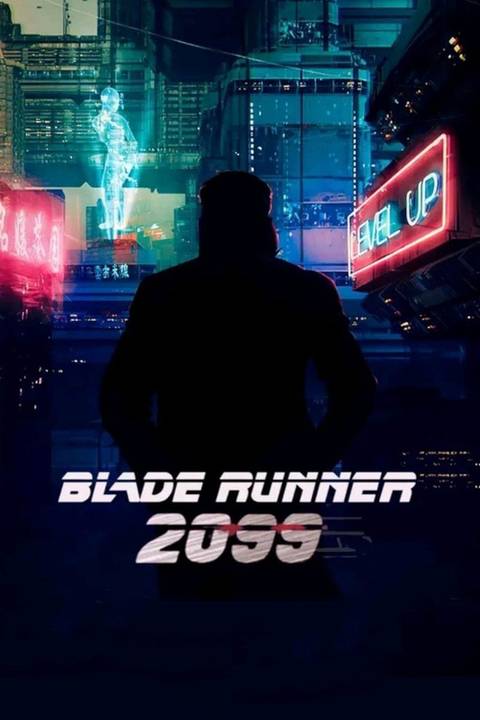
However, it is Blade Runner’s upcoming sequel Blade Runner 2099 that will be 2026’s most exciting sci-fi spinoff for many viewers. Starring Michelle Yeoh as the Replicant Olwen and Hunter Schafer as her secretly human partner Cora, Blade Runner 2099 picks up long after the events of 2017’s sequel Blade Runner 2049. An offscreen Replicant revolution has upended the power balance in the world of the franchise, with Replicants now ruling over humans in this miniseries.
Blade Runner 2099 Is Set Between Prometheus & Alien: Covenant

While Ridley Scott directed both 1979’s original Alien and 1982’s Blade Runner, an adaptation of author Philip K. Dick’s novel Do Androids Dream of Electric Sheep, this isn’t the only link between the two franchises. In Alien’s deleted scenes, there are references to Blade Runner’s Tyrell Corporation, while Prometheus includes a scene where Peter Weyland of Weyland-Yutani Corporation obliquely references Tyrell himself.
These Easter eggs make it clear that the Blade Runner movies and the Alien series may take place in a shared universe, although their two timelines also seemingly contradict each other. As any Alien fan can attest, humans don’t end up enslaved by human-like robots in the Alien series, although numerous nefarious synthetic characters like Prometheus’s David and Alien’s Ash do end up betraying and even killing humans in service of the Weyland-Yutani Corporation’s aims.
In contrast, Blade Runner 2099’s entire story revolves around a reversal of the dynamic shared between human and Replicant characters in the first two movies of the franchise. With Replicants running things in Blade Runner 2099, it is tough to see how the Prime Video show could confirm that the events of Prometheus and Alien: Covenant are happening concurrently in the show's reality. To be specific, Blade Runner 2099 takes place six years after Prometheus ends, but 11 years before Alien: Covenant begins.
A Brief History Of The Blade Runner/Alien Crossover

Since both franchises began life, on screen at least, as Ridley Scott movies, and both depict grim, dystopian futures ruled by uncaring, untrustworthy super corporations, it is no surprise that the Alien and Blade Runner franchises could share the same continuity. Eagle-eyed viewers will point out that this ought to be impossible, since Replicants don’t rule the Earth of the Alien movies circa 2099, but that’s not necessarily accurate.
For one thing, it is not yet clear whether Blade Runner 2099’s Replicant takeover applies globally, or if this new social hierarchy is contained to a few cities. Since many of the Alien franchise’s movies take place in space or, in the case of 2024’s reboot Alien: Romulus, on a grim mining planet adjacent to earth, it’s entirely possible that Replicants do rule portions of the Alien franchise’s setting offscreen.
Moreover, there is the question of the franchise’s ever shifting, changing canon. Prometheus and Alien: Covenant completely retconned the Alien Vs Predator movies, only for Alien: Earth to then completely retcon Scott’s prequel movies. As such, it is not entirely clear which parts of the Alien timeline are even officially canon at this stage, although the Blade Runner nods in Alien are fairly firmly set in stone, since few viewers would argue Scott’s original movie isn’t franchise canon.
How Blade Runner 2099 Could Reference The Alien Franchise

Almost all the Alien movies feature synthetic characters created by the Weyland-Yutani Corporation, and these characters occupy a complicated space between human autonomy and robotic compliance. As such, Blade Runner 2099 could reference the androids of the Alien movies as either a competitor of the Tyrell Company’s Replicants, or a precursor of the more advanced technology. This would raise an interesting in-universe question as it draws attention to the capitalist interests underlying the existence of Replicants.
By the time Blade Runner 2099 takes place, Replicants are omni present enough to force humans into an underclass role for the first time in the history of the sci-fi franchise. However, back in Blade Runner, they weren’t viewed as a class of independent being at all, but rather a product to be purchased from a company. By confirming the existence of the Weyland-Yutani Corporation in its setting, Blade Runner 2099 could justify why the Tyrell Corporation continued to invest in increasingly advanced Replicants despite the risk.
When Netflix’s anime spinoff Terminator: Zero introduced a programmer creating an AI designed to stop SkyNet, the series reminded viewers that the killer robots of the original movies were, at one point, a product in a marketplace with competitors. In Blade Runner 2099, Prime Video’s prequel can confirm once and for all that the Weyland-Yutani Corporation acts as an in-universe competitor to the Tyrell Corporation.
This would serve two functions. One, the twist would elegantly marry the canon of the two franchises after years of speculation, hints, and retcons, and two, it would clarify just why the Tyrell Corporation continued to develop hyper-intelligent, independent Replicants once it was clear that they could potentially escape containment. Much like the Weyland-Yutani Corporation can’t stop investing in Xenomorphs even when they wipe out dozens of valuable employees across numerous different movies.
Thus, Blade Runner 2099’s dystopian story can finally justify the existence of the franchise’s Replicants and explain the links between Alien’s canon and the Blade Runner franchise. As a fringe benefit, this Blade Runner 2099 twist would also serve to remind viewers that, like the Alien movies, Prometheus, and Blade Runner itself, the sequel is concerned, at its core, with the human cost of capitalism.
- Release Date
- 2026 - 2026-00-00
- Network
- Prime Video
- Showrunner
- Silka Luisa
Cast
-

Hunter Schafer
Cora
-

Olwen
-

Dimitri Abold
-
Lewis Gribben
- Directors
- Jonathan van Tulleken
- Writers
- Silka Luisa, Ryan Willison, Claire Kiechel, Kirsa Rein, Tom Spezialy
- Franchise(s)
- Blade Runner
- Creator(s)
- Silka Luisa
KioskNews shows a cleaned-up reading view extracted from the publisher’s page — the original always lives on their site, not ours.