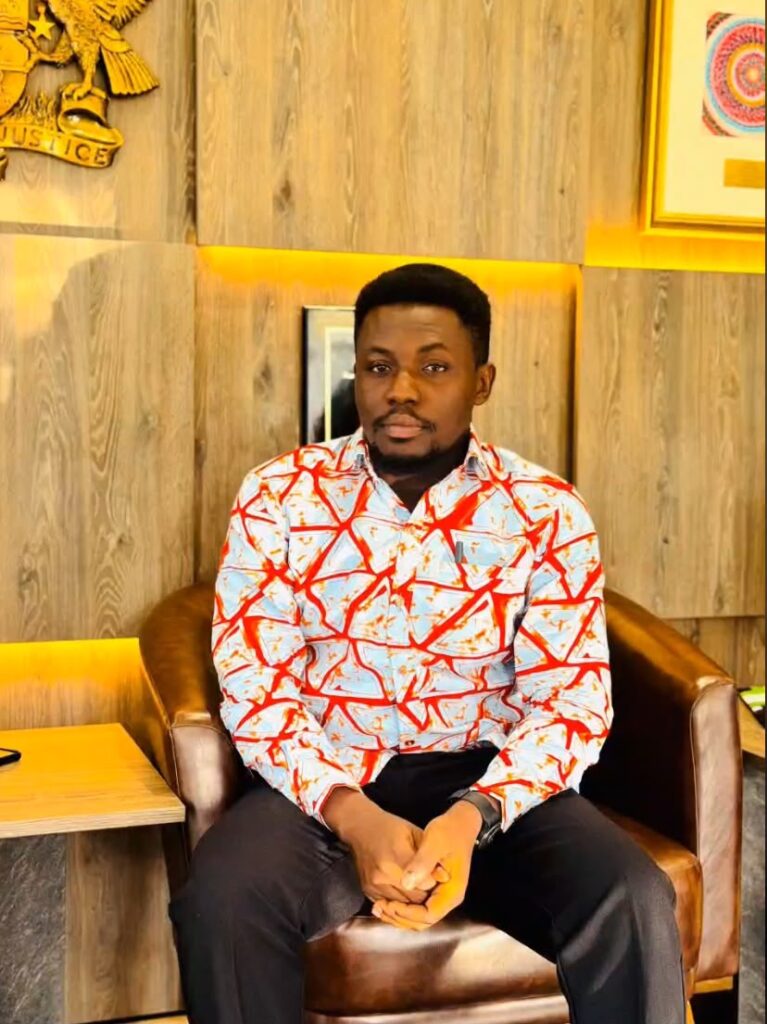
Bright Ofori writes: Who should hold Africa’s at least two permanent seats on a reformed UN Security council?
As world leaders gather in New York this week for the United Nations General Assembly, the conversation on Security Council reform has once again returned to the centre of global diplomacy. The current Secretary-General of the United Nations, Antonio Guterres, has repeatedly reminded member states that the architecture built in 1945 no longer reflects the world of today, and nowhere is that gap more glaring than in the continued absence of permanent African representation on the Council, which we all agree. It is a democratic deficit that the international community can no longer explain away, and one that Africa itself must now insist on correcting.
My advocacy is simple in principle but deliberate in design. Africa, a continent of fifty-four countries, should be granted a minimum of two permanent seats on a reformed Security Council. The first should belong to the African Union, representing the continent as a single political voice. The second should rotate every two years among Africa's recognised regional economic blocs, such as ECOWAS, SADC, the East African Community and others, so that no single geographic zone of the continent is left permanently on the margins of power. I describe this as a minimum deliberately. Two seats are the floor of what fairness demands for a continent of this size and consequence, not the ceiling of what Africa should ultimately expect from a genuinely reformed Council.
Some will ask why I favour regional blocs over individual states for this second seat. The answer lies in arithmetic as much as principle. If the seat were rotated among Africa's fifty-four states individually, even on a strict one-year basis, it would take more than half a century for every nation to have its turn. That defeats the entire purpose of permanent representation, which is to give Africa a consistent, reliable, and continuous voice at the table where decisions of war, peace, and global security are made. We already have a mechanism for individual countries to contest and serve, through the existing non-permanent seats open to all UN member states, Africa included. What Africa lacks is permanence, and permanence should belong to structures that outlast any single administration or election cycle.
There is also a unity argument that I consider just as important as the technical one. Africa has spent decades being negotiated with in fragments, courted bilaterally, and at times played off against itself by external powers. A Security Council seat rotated among regional blocs forces the continent to speak with a coordinated voice within each bloc before that voice reaches the global stage. It rewards cooperation over competition. If the Security Council is meant to be an instrument of global unity, then Africa's own representation on it should model the unity we are asking the world to respect.
Should the Council eventually expand to allow additional permanent seats for individual African states, a question that remains open and contested, I believe the strongest candidates would be Egypt, Ethiopia and Ghana. Each brings a distinct and long-standing record of diplomatic engagement, peacekeeping contribution and multilateral leadership that has shaped African and global affairs well beyond their own borders. Egypt's diplomatic history stretches across the Arab world, the African Union, and decades of mediation in regional conflicts. Ethiopia hosts the African Union itself and has anchored continental diplomacy from Addis Ababa for generations, alongside a substantial peacekeeping footprint. Ghana carries a legacy dating back to the earliest days of African independence and non-alignment, reinforced today by a consistent record in peacekeeping, election observation and constitutional stability that has made it a reference point for democratic governance on the continent.
I raise this with full respect for Nigeria and South Africa, both of which remain undeniably formidable powers on the continent in economic weight and military capacity. But an additional permanent seat is fundamentally about who is best placed to speak for the continent on matters of peace and security, and on that specific test, recent history raises legitimate concerns about both. South Africa has, in recent years, faced recurring waves of xenophobic violence directed at fellow Africans living and working within its borders, a pattern that sits uneasily with the idea of a nation being entrusted to speak for African solidarity on the world's foremost security stage. Nigeria, for its part, continues to contend with serious and persistent internal security challenges of its own, from insurgency to widespread banditry, that call into question its readiness to lead global deliberations on security when the same issue remains an unresolved and pressing concern at home. These are not judgments on the overall standing of either country, both of which have made real contributions to African diplomacy and peacekeeping over the years.
They are, however, relevant considerations when the question is which nations are best positioned, at this moment, to carry the continent's voice in a seat defined specifically by peace and security. Measured against that standard, Egypt, Ethiopia and Ghana currently present a steadier and more credible case.
Africa does not merely deserve a voice in the decisions that shape the international order. It deserves permanent, structured and unified representation at the table where those decisions are made. The debates unfolding this week in New York offer a timely opportunity for African leaders, the African Union and the wider international community to move this conversation from rhetoric to reform. The world has waited long enough. So has Africa.
DISCLAIMER: The Views, Comments, Opinions, Contributions and Statements made by Readers and Contributors on this platform do not necessarily represent the views or policy of Multimedia Group Limited.
Tags:
DISCLAIMER: The Views, Comments, Opinions, Contributions and Statements made by Readers and Contributors on this platform do not necessarily represent the views or policy of Multimedia Group Limited.
KioskNews shows a cleaned-up reading view extracted from the publisher’s page — the original always lives on their site, not ours.